This dual-prep recipe demonstrates something most buyers overlook: food processor torque sequencing.
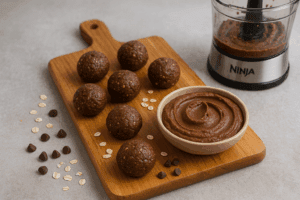
Instead of using multiple bowls, this method intentionally layers two recipes back-to-back inside the Ninja Mega Kitchen System’s 8-cup processor. First, a dense oat compression blend for chewy chocolate bites. Second, a smooth legume-based chocolate spread that requires emulsification rather than chopping.
Switching textures without cleaning highlights why processor bowl design and blade geometry matter more than raw wattage.
If you’re comparing multi-function countertop systems for dough formation, nut butter binding, and chickpea emulsification under sustained load, our cross-brand blender and processor performance comparison index breaks down which machines truly handle heavy attachments without motor strain.
This recipe falls under high-density processor applications rather than traditional blending.
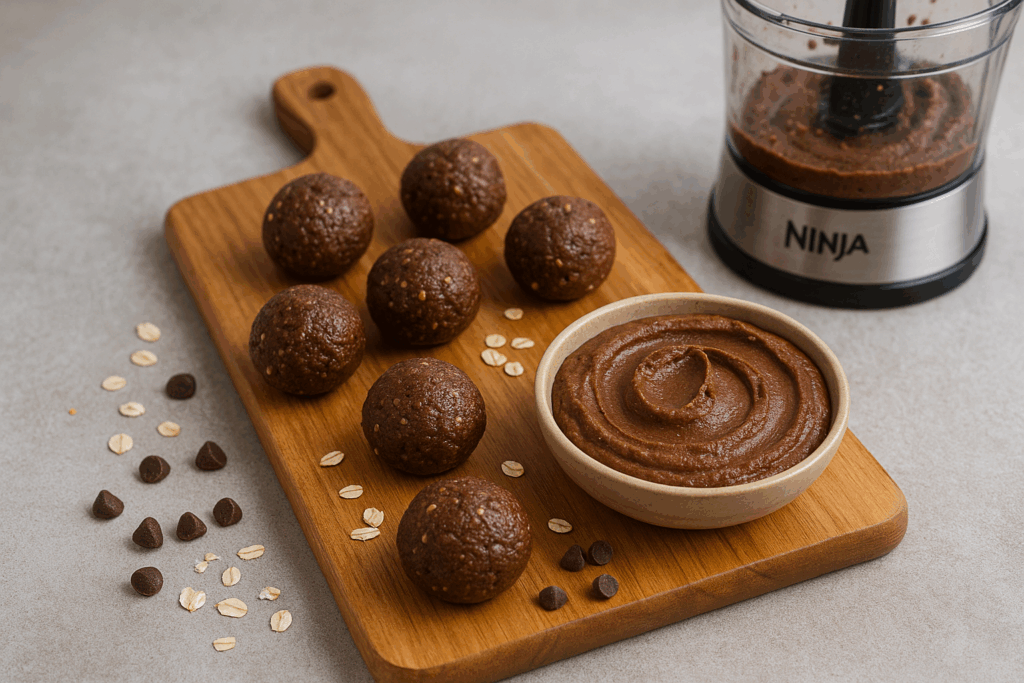
Table of Contents
Part 1: Chocolate Peanut Energy Bites
(Makes ~12 balls)
Ingredients
1 cup rolled oats
½ cup natural peanut butter
¼ cup honey or maple syrup
2 tablespoons cocoa powder
¼ cup mini dark chocolate chips
1 tablespoon chia seeds
Pinch of salt
Processor Method
- Add oats, cocoa, chia, and salt to the processor bowl. Pulse 4–5 times to partially break down the oat structure.
- Add peanut butter and sweetener. Pulse until the mixture begins forming a cohesive mass.
- Stop once the dough compresses against the bowl wall.
- Fold in chocolate chips manually or pulse once briefly.
- Roll into balls and chill 20 minutes.
Why Do Energy Bites Sometimes Turn Crumbly
Dry texture happens when:
• Oats remain too coarse
• Insufficient sweetener binds particles
• Over-processing drives moisture outward
The Mega’s processor blade creates compression rather than vortex shear. That is ideal for binding oat clusters without liquefying fats.
If the mixture looks crumbly, add one teaspoon of liquid and pulse briefly.
Understanding Processor Torque vs Blade Shear
Blenders create downward vortex motion. Processors create lateral chopping and compression.
The Ninja Mega’s processor bowl is engineered for structural breakdown rather than liquid suspension. That’s why it transitions from sticky oat dough to chickpea emulsification without requiring blade swaps.
We tested how its processor attachment handles dense mixtures, sticky fats, and legume emulsification in our detailed mechanical evaluation of the Ninja Mega Kitchen System attachment design.
Knowing this difference prevents over-processing and overheating.
Part 2: Creamy Chocolate Hummus
(Yield: ~1½ cups)
No rinsing required. The chocolate-peanut base enhances the hummus flavor profile.
Ingredients
1 can chickpeas (drained)
¼ cup cocoa powder
¼ cup maple syrup
2 tablespoons tahini or peanut butter
1 teaspoon vanilla
2–3 tablespoons cold water
Pinch of salt
Processor Method
- Add chickpeas first.
- Add cocoa, sweetener, and tahini.
- Process on High until paste begins smoothing.
- Add water gradually until a creamy consistency forms.
Scrape bowl once mid-process for uniform emulsification.
Why Does Chocolate Hummus Sometimes Taste Grainy
Graininess occurs when chickpea skins remain intact or cocoa hydrates unevenly.
The processor’s horizontal blade reduces legumes efficiently, but scraping ensures even distribution.
For ultra-smooth texture:
• Remove loose skins before processing
• Allow 20–30 seconds of sustained blending
• Add liquid gradually rather than all at once
Batch Workflow Efficiency
Running energy bites first and hummus second works because flavor crossover is complementary.
This workflow reduces prep time while demonstrating the versatility of the Mega’s processor bowl.
If you’re building a snack-prep rotation that mixes spreads, doughs, dips, and frozen blends, our categorized high-powered blender recipe system, organized by attachment type, helps match recipes to processor, pitcher, or personal cup usage.
Matching recipe type to attachment improves consistency.
Can the Processor Handle Double Batches?
Yes, but do not exceed the max-fill line.
Doubling oat mixtures increases compression resistance. Process in shorter pulses rather than one extended run.
For hummus, overfilling reduces blade contact with chickpeas. Scrape sides and rotate contents if increasing volume.
Processor Heat & Load Management
• Avoid running continuously longer than 60 seconds on dense mixtures
• Let the motor cool between heavy back-to-back cycles
• Keep bowl centered and lid locked
Most strain issues stem from capacity misuse, not recipe density.
Attachment Contrast Strategy
If you want to compare compression-heavy processor dough with frozen-fruit vortex blending, prepare the freezer-ready banana smoothie pack method built for the Ninja Mega pitcher system to evaluate attachment differences in real-world prep.
Switching between processor and pitcher builds practical appliance mastery.
What Readers Ask About Dual-Prep Processor Recipes
Can I skip cleaning between recipes?
Yes. The chocolate-peanut flavor complements the hummus base.
Is the processor stronger than the blender pitcher?
They serve different functions. The processor compresses and chops. The pitcher suspends and shears.
Can I use sunflower seed butter?
Yes. Slight liquid adjustment may be needed.
How long do these last?
Up to 5 days refrigerated in airtight containers.
Is this meal-prep friendly?
Yes. Both store well and travel easily.
Final Takeaway
This dual-prep workflow highlights why processor attachments matter.
Chocolate Energy Bites test oat compression torque. Chocolate Hummus tests legume emulsification under sustained load.
Mastering both demonstrates the Ninja Mega Kitchen System’s full capacity beyond simple smoothies.