Choosing between two blenders can be difficult when their product pages emphasize similar features. Both models may promise powerful blending, simple cleaning, and versatile controls while differing in capacity, included accessories, warranty coverage, and ownership requirements.
This hub brings together our side-by-side blender comparisons. Use it when you have narrowed your choices to two models, product lines, or blender types and need help identifying the differences that matter.
IMSolutionRealm does not operate a testing laboratory or claim to physically test every blender we compare. Our comparisons use manufacturer documentation, verified specifications, product manuals, warranty terms, replacement-part availability, retailer information, and recurring patterns in publicly available owner feedback.
If you need to understand one product before placing it beside another, you can research a specific model in our blender review library.
Table of Contents
Latest Blender Comparisons
The comparisons below examine specific models and blender types side by side. Each one focuses on differences that could change a buying decision rather than repeating two shortened product descriptions.
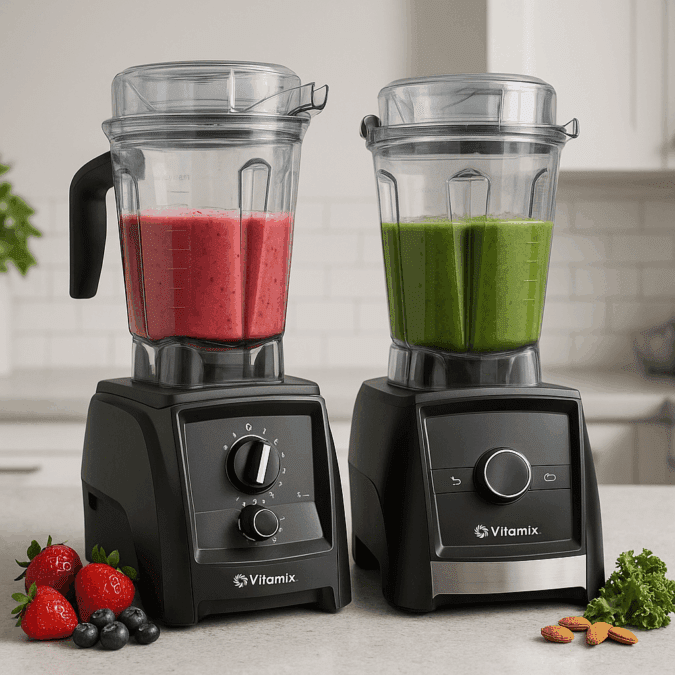
How Our Blender Comparisons Work
A useful comparison should answer a direct question: which of these two options better fits a particular user, kitchen, or routine?
We begin by confirming exact model numbers. This matters because manufacturers often use similar names across several generations or packages. Two products with nearly identical names may include different pitchers, personal cups, programs, blades, or warranties.
We then organize verified information around practical decision factors. We do not assume that a larger power number, longer feature list, or higher price automatically makes one blender better.
When information conflicts between retailer listings and official documentation, we give greater weight to the manual or manufacturer material that applies to the exact model.
Capacity and Included Containers
Container size affects more than the maximum amount a blender can hold. It also influences storage, portion size, cleaning, and the types of recipes the appliance can accommodate.
A large pitcher may suit family smoothies and shared frozen drinks. A personal cup can be more convenient for one serving. Some systems include both, while others require compatible cups to be purchased separately.
We compare:
- Stated container capacity
- Maximum liquid capacity when available
- Number and size of included cups
- Included travel lids
- Available replacement containers
- Compatibility with optional accessories
Advertised pitcher size and usable liquid capacity are not always identical. We identify that distinction when the manufacturer provides both measurements.
Controls and Automatic Programs
Two blenders can use similar motors while offering different control systems.
One model may provide several manual speeds and a pulse switch. Another may rely on preset programs that control blending time and pulsing patterns. Some systems combine both approaches.
Manual speed control can suit users who want to adjust texture during operation. Automatic programs may appeal to buyers who prefer a timed cycle without monitoring every step.
We compare what the controls allow rather than assuming that a larger number of buttons provides more value. Several programs may use similar operating patterns, and some buyers may only need a few basic functions.
Pitcher and Blade Design
Blade and container designs vary between brands and product lines. Some blenders use blades fixed to the bottom of the container. Others use a removable stacked assembly that extends upward through the pitcher.
A removable assembly may require extra care during pouring, handling, and cleaning. A fixed-blade container avoids removing the sharp assembly but can be more difficult to reach by hand.
Personal cups often use a separate screw-on blade component. This adds convenience for individual drinks but also creates another part that must be cleaned and stored.
Our research identifies these structural differences without claiming independently measured blending results.
Appliance Size and Storage
Online photographs can make blenders appear smaller than they are. We compare the listed height, width, depth, weight, and number of included components when that information is available.
Height matters when a blender will sit beneath an upper cabinet. Depth and width affect how much working space remains on the counter.
Kitchen systems require additional room for processor bowls, cups, lids, blades, and dough tools. One motor base may replace several appliances, but the complete package can still occupy substantial cabinet space.
Portable and personal blenders require less room but sacrifice pitcher capacity. The correct choice depends on which compromise fits the household.
Cleaning and Maintenance Requirements
We review the manufacturer’s cleaning instructions for each model. This includes whether containers, lids, blades, seals, and accessories are listed as dishwasher safe.
“Dishwasher safe” does not always mean the entire appliance can go into the dishwasher. A motor base must never be submerged, and some components may require placement on a particular rack or washing at a lower temperature.
We also consider the number of components that need cleaning. A pitcher-only blender may require less cleanup than a kitchen system with several blades and containers.
Maintenance extends beyond washing. Gaskets, lids, blade assemblies, and containers may wear or become damaged. Replacement-part availability can influence whether a small problem requires one new component or an entirely new blender.
Hot-Liquid and Ingredient Restrictions
Not every blender can safely process hot liquids. Sealed personal cups can present a particular concern because heat may create pressure inside the container.
We compare instructions for hot ingredients, maximum temperatures, vented lids, operating times, and other restrictions when the manufacturer provides them.
A model with a soup program may use blade friction to warm ingredients rather than a heating element. Another appliance may cook and blend within the same container. Those are different capabilities and should not be described as interchangeable.
We also review documented guidance involving ice, frozen ingredients, thick mixtures, and recommended loading order. We do not extend a manufacturer’s stated capability to a model that uses a different container or blade system.
Warranty and Replacement Parts
Warranty length can help distinguish two otherwise similar blenders, but the number of years does not tell the whole story.
We examine:
- Which components receive coverage
- Important exclusions
- Registration or proof-of-purchase requirements
- Shipping or service responsibilities
- Separate warranty terms for accessories
- Current replacement-part availability
A longer warranty may provide more protection, but it should not be presented as proof that a product will last for a specific number of years.
Replacement containers, lids, cups, gaskets, and blade components can add practical value. Compatibility must be confirmed carefully because similar-looking parts may not fit every model from the same brand.
How We Use Owner Feedback
Public owner feedback can identify questions that official product pages do not fully address. Common topics include confusing controls, difficult cleaning, leaking containers, unavailable parts, excessive size, or accessories that receive little use.
An individual customer comment does not prove that every unit has the same problem. Owners may review the wrong variation, receive a defective product, or use the appliance outside the manufacturer’s instructions.
We look for repeated themes across more than one source. We then compare those themes with the product’s design, manual, warranty, and available support information.
Owner feedback adds context. It does not become an independently verified measurement of noise, blending, texture, durability, or performance.
You can review the standards we use when evaluating product evidence for a fuller explanation of how manufacturer claims, specifications, public feedback, and editorial judgment are handled.
Comparing Price and Practical Value
Prices change frequently, so a comparison should not depend entirely on a temporary discount.
Instead, we consider what each package includes and whether those features support the buyer’s intended use. A less expensive pitcher-only blender may provide better value for large frozen drinks. A more expensive system may make sense when its processor bowl and personal cups replace appliances the buyer would otherwise purchase separately.
The higher-priced option does not automatically win. Added programs, larger accessory collections, and digital controls provide little value when they do not fit the user’s routine.
Before buying, confirm the current price, seller, package contents, return policy, and warranty. Retailer listings sometimes combine several colors or configurations on one product page.
Compare Similar Products First
The most useful matchups compare products that could realistically serve the same buyer.
A portable blender and a full-size countertop machine may both make smoothies, but they solve different problems. One emphasizes travel and individual portions. The other provides greater capacity and requires a regular electrical outlet.
Similarly, a pitcher-only blender should not be judged solely by the number of accessories included with a kitchen system. The simpler product may be the better choice for someone who does not need food-processing tools.
When comparing two products, begin with these questions:
- Do both support your primary task?
- Which capacity fits the amount you normally prepare?
- Which controls would you actually use?
- Where will the appliance and its accessories be stored?
- What cleaning process does each require?
- Can common components be replaced?
- What does each warranty cover?
These questions prevent an impressive feature list from distracting from the requirements that affect ownership.
When to Use a Review or Buying Guide Instead
A comparison works best when you are choosing between known options. If you do not have specific models in mind, a direct matchup may be premature.
Start with our blender recommendations organized around specific uses when you need to narrow a large field by capacity, appliance type, ingredients, or kitchen routine.
Use the review library when you want to investigate one model. Return to the comparisons on this page after narrowing your list to two realistic choices.
Make the Final Decision
The better blender is the one whose capacity, controls, accessories, restrictions, warranty, and maintenance needs match your routine.
Confirm exact model numbers before ordering. Check that the selected package includes the containers and accessories discussed in the comparison. Similar names and retailer listings can make different configurations appear interchangeable.
Use the comparison guides above to identify meaningful differences. Then verify current product details with the manufacturer and seller before purchasing.