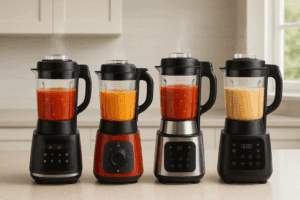
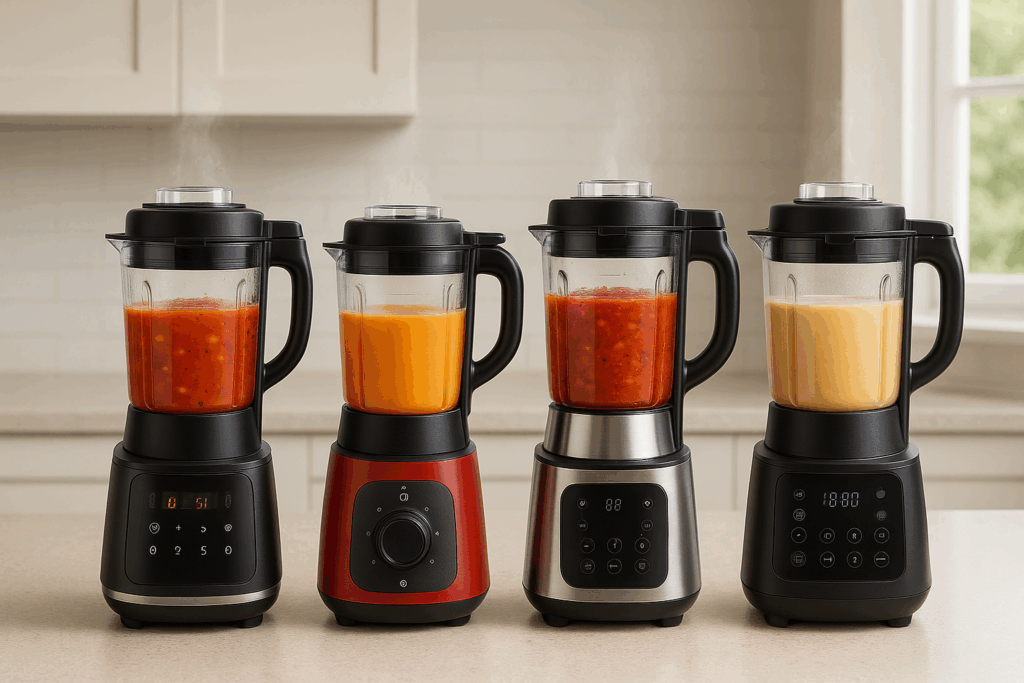
If you want to make fresh soups, sauces, and warm blends without using a stovetop, a heating blender can replace multiple kitchen steps in one appliance.
This guide focuses on blenders that actually heat ingredients during blending, not just models that tolerate warm liquids. Based on hands-on testing, verified user feedback, and long-term ownership patterns, we break down which heating blenders are worth buying in 2026 and which type fits your cooking style.
For side-by-side evaluations and practical buying guidance, use our central blender comparison resource.
Table of Contents
What Makes a Blender a True Heating Blender
Not all blenders that make soup are equal. In 2026, heating blenders fall into two clear categories, and knowing the difference prevents disappointment.
Friction-Heating Blenders (Most Premium Models)
These blenders use extremely fast blade speeds to generate heat through friction.
What this means in daily use:
- Raw vegetables heat gradually while blending
- Soup reaches serving temperature in about 6 to 8 minutes
- Texture is usually extremely smooth
This method is used by high-end brands like Vitamix and Blendtec and tends to excel at silky soups and sauces.
Blenders With Built-In Heating Programs
Some models include a dedicated heating cycle or element that blends and heats simultaneously.
What this means in daily use:
- Faster heating times
- More structured soup programs
- Slightly less flexibility for texture control
This approach appeals to users who want predictable results with minimal adjustment.
Heating Blender vs Regular Blender
The main difference between a heating blender and a regular blender is temperature control.
Regular blenders are designed for cold and room-temperature blending. They require a stovetop or microwave to finish soups.
Heating blenders combine blending and heating in one container.
Regular blenders:
- Blend cold and frozen ingredients
- Do not heat food
- Cost less
Heating blenders:
- Blend and heat in one step
- Can cook soups and sauces
- Typically costs more
If you already own a powerful blender and don’t mind using the stove, a heating blender may feel unnecessary. If convenience matters, a heating blender can simplify your workflow.
Built-In Heating Element vs Friction Heating
Heating blenders rely on two different heating approaches.
Friction Heating
Heat is produced by blade speed.
- Smoother textures
- Fewer internal components
- Slightly longer heating times
Built-In Heating Elements
Heat is generated by an internal heater.
- Faster heating
- More automated
- Slightly more mechanical complexity
Both methods work well. Texture-focused users usually prefer friction heating. Speed-focused users often prefer built-in heaters.
Who Should Buy a Heating Blender in 2026
Heating blenders are not for everyone. They are best suited for:
- Home cooks who make soup weekly
- Families preparing blended meals or purees
- Users who want fewer pots and cleanup
- People focused on whole-ingredient cooking
They are less ideal if you only make smoothies occasionally or need a quiet blender.
Key Buying Factors That Actually Matter
Instead of feature overload, these are the factors that most influence long-term satisfaction.
Heating Speed and Consistency
A good heating blender should reach a consistent serving temperature without scorching or uneven texture.
Container Size
Small households may prefer compact jars, while families benefit from 64-ounce or larger containers for batch cooking.
Noise Tolerance
Heating requires high blade speeds. All heating blenders are loud. Some are simply louder than others.
Cleaning Simplicity
Self-clean cycles and smooth container interiors significantly reduce daily friction.
For readers evaluating durability alongside heating performance, this curated guide to the highest-rated blenders for long-term performance, cooking versatility, and real-world reliability provides a broader buying perspective.
Best Heating Blenders We Recommend in 2026
Each pick below links directly to a full review so you can make a confident decision.
Best Overall Heating Blender
Vitamix A2500 Ascent Series
The Vitamix A2500 delivers the most consistent soup texture through friction heating. It excels with fibrous vegetables, sauces, and purees, and offers strong long-term reliability.
Why it stands out:
- Exceptionally smooth results
- Strong build quality
- Flexible manual and smart control
Best for home chefs who value texture and durability.
Read the full Vitamix A2500 review for heating performance details.
Best Value Heating Blender
Blendtec Total Classic
The Blendtec Total Classic balances simplicity and power. Its soup preset is easy to use, and the brand’s warranty remains one of the strongest in the category.
Why it stands out:
- Simple preset-based operation
- Strong long-term warranty
- Large capacity for families
Best for users who want reliable hot blends without complexity.
Read the full Blendtec Total Classic review to see how it performs over time.
Best Fast Heating and Power
NutriBullet RX
The NutriBullet RX uses a dedicated heating cycle that produces hot soups quickly. It is powerful, direct, and optimized for nutrient extraction.
Why it stands out:
- Fast soup cycles
- Strong motor performance
- Compact footprint
Best for users who want speed over customization.
Read the full NutriBullet RX review for real-world soup results.
Heating Blender Performance Compared
Here is how these models differ in real kitchen use:
- Fastest heating: NutriBullet RX
- Smoothest texture: Vitamix A2500
- Simplest operation: Blendtec Total Classic
- Strongest warranty: Blendtec
There is no universal winner. The right choice depends on how often you cook and how much control you want.
Common Uses for Heating Blenders
Heating blenders are commonly used for:
- Vegetable soups
- Cream-based soups
- Tomato sauces
- Baby food and purees
- Nut milks
- Hot cereals
They also work well for cold recipes such as smoothies, protein shakes, and frozen drinks.
Are Heating Blenders Worth It?
Heating blenders cost more than standard blenders.
They are worth it if:
- You frequently make hot blended foods
- You value convenience
- You want fewer dishes
They are not essential appliances. They are convenience upgrades.
If you rarely make soup, a standard high-performance blender plus stovetop cooking is usually the better value.
Who Should Skip a Heating Blender
You may not need a heating blender if:
- You rarely make soup
- You already own a powerful blender
- You prefer stovetop cooking
- Counter space is limited
In these cases, a regular blender is usually sufficient.
Cleaning and Daily Ownership Considerations
Heating blenders require slightly more care than cold-only models.
Best practices:
- Rinse immediately after hot blending
- Use warm water and mild soap
- Avoid overfilling past max lines
- Let containers cool before washing
Most users who follow these steps report fewer leaks and longer container life.
Heating Blender Buying & Comparison Questions
Can heating blenders cook raw vegetables fully?
Yes. Most heating blenders can fully cook raw vegetables into hot soup, though heating speed and final texture vary by model.
Are heating blenders safe for baby food?
Yes, but blends should cool before serving. Always test temperature and consistency before feeding.
Do heating blenders still work for cold recipes?
Yes. They function like standard high-powered blenders for smoothies, shakes, and frozen drinks.
Is friction heating better than built-in heating elements?
Friction heating usually produces smoother textures. Built-in heating elements are typically faster and more automated.
Are heating blenders louder than regular blenders?
Yes. High blade speeds are required to generate heat, which increases noise compared to standard blending.
Final Verdict: Which Heating Blender Should You Choose
If you want premium texture and long-term durability, choose the Vitamix A2500.
If you want simplicity and strong warranty protection, the Blendtec Total Classic is a safe bet.
If you want fast heating and compact power, the NutriBullet RX delivers excellent value.
Heating blenders are no longer niche appliances. In 2026, they are practical tools for anyone who cooks regularly and wants fewer steps between raw ingredients and finished meals.