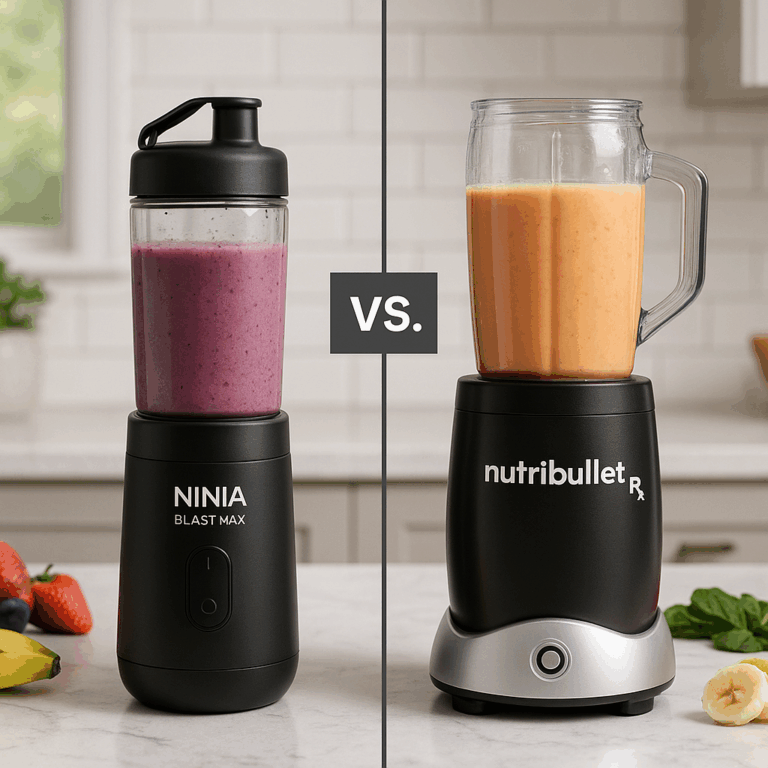
Most people asking whether they should buy a portable blender or a countertop blender are not confused about features.
They are confused about fit.
They already know:
- Portable blenders are small and cordless
- Countertop blenders are powerful and stationary
What they are unsure about is which one matches how they actually live.
Do they need power every day, or just convenience sometimes?
Will they blend thick smoothies or just quick shakes?
Is this a long-term kitchen tool, or a lifestyle accessory?
This guide exists to answer those questions clearly, without forcing you to compare specs that do not matter.
Before narrowing the choice, it helps to understand how modern blenders are designed around different routines and behaviors. This overview of how today’s blender categories are structured and reviewed provides useful context.
Table of Contents
Portable and Countertop Blenders Solve Different Problems, Not the Same One
The biggest mistake buyers make is assuming portable and countertop blenders compete with each other.
They do not.
They are built to solve different problems.
Portable blenders solve:
- “I need something right now”
- “I don’t want cleanup”
- “I’m not in my kitchen”
- “One serving is enough”
Countertop blenders solve:
- “I need consistent results”
- “I blend for more than one person”
- “I use frozen or dense ingredients”
- “This is part of cooking, not just drinking”
Once you understand that distinction, the decision becomes much easier.
What a Portable Blender Is Actually Designed to Do Well
Portable blenders are not miniature countertop blenders.
They are single-purpose tools optimized for speed, mobility, and minimal effort.
A typical portable blender includes:
- A battery-powered motor
- A single blending cup (12–20 oz)
- One blending mode
- Lightweight construction
They are designed for:
- Protein shakes
- Simple smoothies
- Soft fruits
- Pre-mixed ingredients
They are not designed for:
- Ice crushing
- Nut butters
- Thick green smoothies
- Daily heavy use
Understanding this boundary prevents most buyer regret.
What a Countertop Blender Is Built to Handle Long-Term
Countertop blenders are kitchen appliances, not accessories.
They are designed for:
- Daily use
- Dense ingredients
- Batch blending
- Cooking tasks
Most include:
- Motors over 1000 watts
- Large pitchers (48–72 oz)
- Variable speed control or presets
- Durable blade assemblies
They are built to:
- Crush ice repeatedly
- Break down seeds and greens
- Handle low-liquid blends
- Run longer without overheating
They demand more space, but they return more capability.
Power Differences Matter Less Than Control Differences
Many buyers fixate on wattage.
This is understandable, but misleading.
Portable blenders fail not because of wattage alone, but because they lack:
- Torque
- Speed control
- Jar geometry for circulation
Countertop blenders succeed not just because of power, but because they allow:
- Gradual speed ramping
- Texture control
- Continuous blending without stalling
If you blend anything thicker than a shake, control matters more than raw power.
Texture Is Where the Gap Becomes Obvious
Texture is the first place users notice the difference.
Portable blenders often produce:
- Slightly gritty results
- Uneven blends
- Air pockets
- Foam in fruit smoothies
Countertop blenders produce:
- Creamier textures
- Fully broken-down fibers
- Consistent results
- Better mouthfeel
If texture does not bother you, a portable blender may be enough.
If texture matters even a little, it will eventually bother you.
Real-World Use Cases Where Portable Blenders Win
Portable blenders are best when blending is occasional or situational, not foundational.
They excel when:
- You want a post-workout shake
- You blend at the office
- You travel frequently
- You live in a dorm or small apartment
- You hate washing pitchers
A good example is the Ninja Blast Max, which is designed for single-serve convenience without counter commitment. For users who value portability over versatility, this breakdown of how the Ninja Blast Max performs in real daily routines is helpful.
Portable blenders shine when blending needs to disappear into your routine.
Real-World Use Cases Where Countertop Blenders Are Necessary
Countertop blenders become necessary when blending is part of how you eat, not just what you drink.
They are the right choice if:
- You blend daily
- You use frozen fruit regularly
- You make green smoothies
- You prepare meals or sauces
- You blend for more than one person
Countertop models handle:
- Ice without hesitation
- Thick recipes without stalling
- Longer blend cycles without overheating
If blending supports your nutrition or cooking goals, a countertop is not optional.
Cleaning Is Easier Than You Think for Both, But for Different Reasons
Portable blenders clean easily because they have:
- Fewer parts
- Smaller cups
- Short blend cycles
Countertop blenders clean easily because:
- Many have self-cleaning modes
- Larger pitchers rinse more easily
- Durable blades tolerate soap cycles
Over time, cleaning effort depends more on what you blend than on what blender you own.
For users who blend nut butters, seeds, or thick mixtures, cleaning habits directly affect performance over time. This detailed comparison of how blender design differences influence wear patterns, motor strain, and long-term reliability across categories adds important ownership context
Durability and Lifespan Are Not Comparable
Portable blenders are disposable by design.
They are meant for:
- Light use
- Short blending sessions
- Occasional replacement
Countertop blenders are investments.
They are built for:
- Years of daily use
- High torque loads
- Heavy ingredients
Expect:
- Portable blenders to last 1–3 years
- Countertop blenders to last 7–15 years
Comparing prices without lifespan leads to false conclusions.
Noise Is a Tradeoff Between Time and Volume
Portable blenders are quieter, but slower.
Countertop blenders are louder, but faster.
In practice:
- Portable blending takes longer and may require shaking
- Countertop blending finishes quickly but loudly
If you blend early in the morning or in shared spaces, this matters.
Why Some People End Up Owning Both
Many experienced users end up with one of each.
They use:
- A countertop blender at home for serious blending
- A portable blender for travel or work
This avoids compromise.
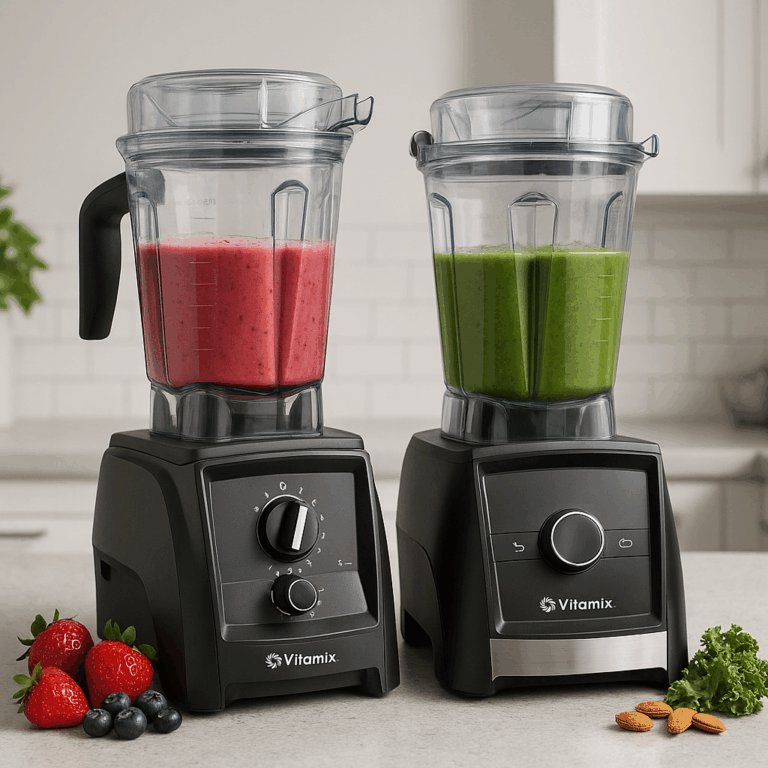
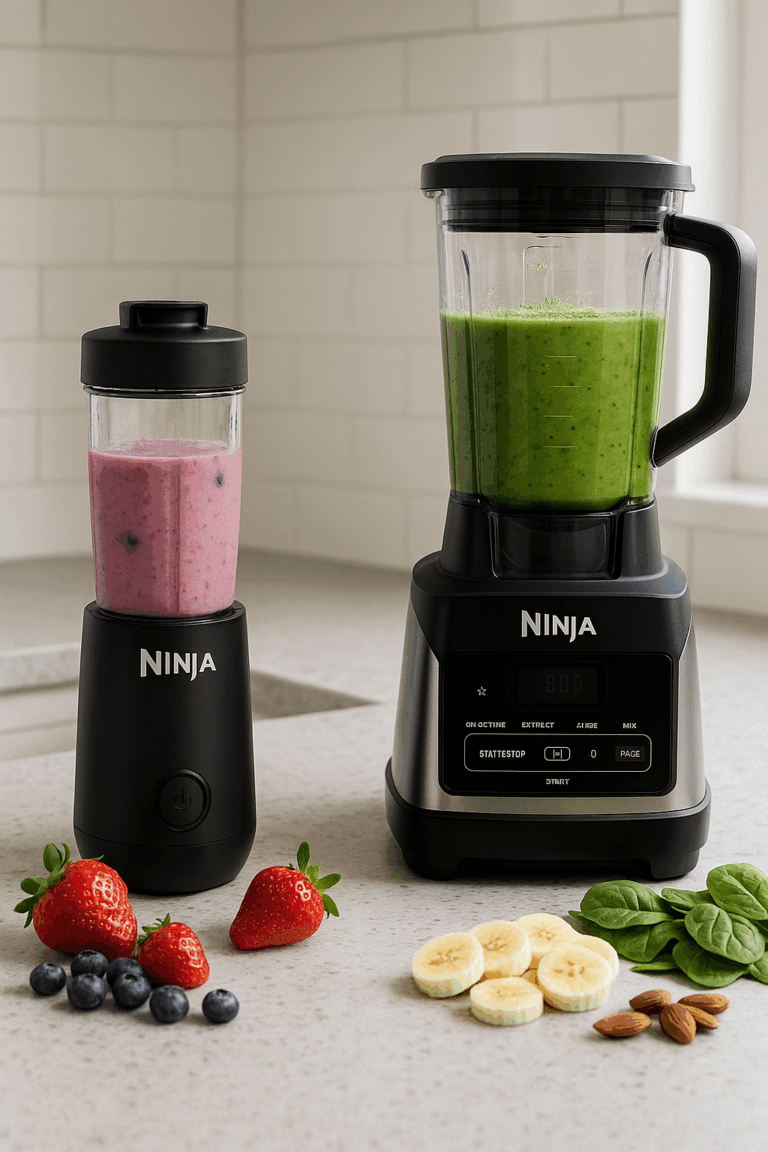
If you want an example of a countertop blender built for versatility and daily power, models like the Ninja Detect Power Blender or Vitamix Ascent series are designed for exactly that role. A closer look at how advanced countertop blenders handle variable recipes can clarify whether that level of capability matters to you.
The Most Common Regret Scenarios
People regret buying a portable blender when:
- They try to blend frozen fruit regularly
- They want thicker smoothies
- They expect countertop performance
- They start blending more often
People regret buying a countertop blender when:
- They rarely blend
- They only make protein shakes
- They have limited space
- They hate appliance clutter
Regret comes from overestimating or underestimating your routine.
Pros and Cons, Without the Marketing Spin
Portable Blenders
Pros
- Lightweight
- Cordless
- Easy cleanup
- Low commitment
Cons
- Limited power
- Inconsistent texture
- Shorter lifespan
- Not versatile
Countertop Blenders
Pros
- Powerful
- Versatile
- Consistent results
- Long lifespan
Cons
- Takes space
- Louder
- Higher upfront cost
- More parts
How to Decide in 60 Seconds
Choose a portable blender if:
- You blend fewer than 3 times per week
- You only make shakes or simple smoothies
- You value convenience over texture
- You travel or blend away from home
Choose a countertop blender if:
- You blend most days
- You use frozen or fibrous ingredients
- You care about texture
- Blending supports cooking or nutrition goals
If you are still unsure, a lean countertop.
Under-buying creates more regret than over-buying.
Questions People Still Ask Before Buying
Can a portable blender replace a countertop blender?
No. It can complement one, but not replace it, for most users.
Are portable blenders powerful enough for frozen fruit?
Soft frozen fruit, yes. Ice and dense blends, no.
Are countertop blenders worth the cost?
Yes, if you use them regularly.
Which is easier to clean?
Portable blenders clean faster. Countertop blenders clean thoroughly.
Which lasts longer?
Countertop blenders by a wide margin.
Final Verdict: Buy for Your Habit, Not the Hype
Portable blenders are convenience tools.
Countertop blenders are kitchen foundations.
Neither is better.
One is more appropriate.
If blending is occasional, portable works.
If blending is routine, a countertop is essential.
The right choice removes friction from your life instead of adding it.