The Ninja SS151 Twisti Blender DUO is engineered for thick blends, high torque loads, and controlled ingredient movement. Its hybrid pitcher and twist tamper system create performance advantages. They also create maintenance demands that most owners underestimate.
This guide addresses what owners actually search for:
- Ninja SS151 is leaking from the bottom
- Ninja SS151 smells like burning
- Ninja SS151 not turning on
- Ninja SS151 overheating
- Ninja SS151 blade not spinning
You will learn how to clean it correctly, prevent early wear, and extend motor life beyond the average ownership cycle.
If you want a detailed breakdown of motor strength, torque behavior, and blending performance, review in-depth Ninja SS151 Twisti performance testing and design analysis before diving into long-term care.
Now let’s focus on protecting your investment.
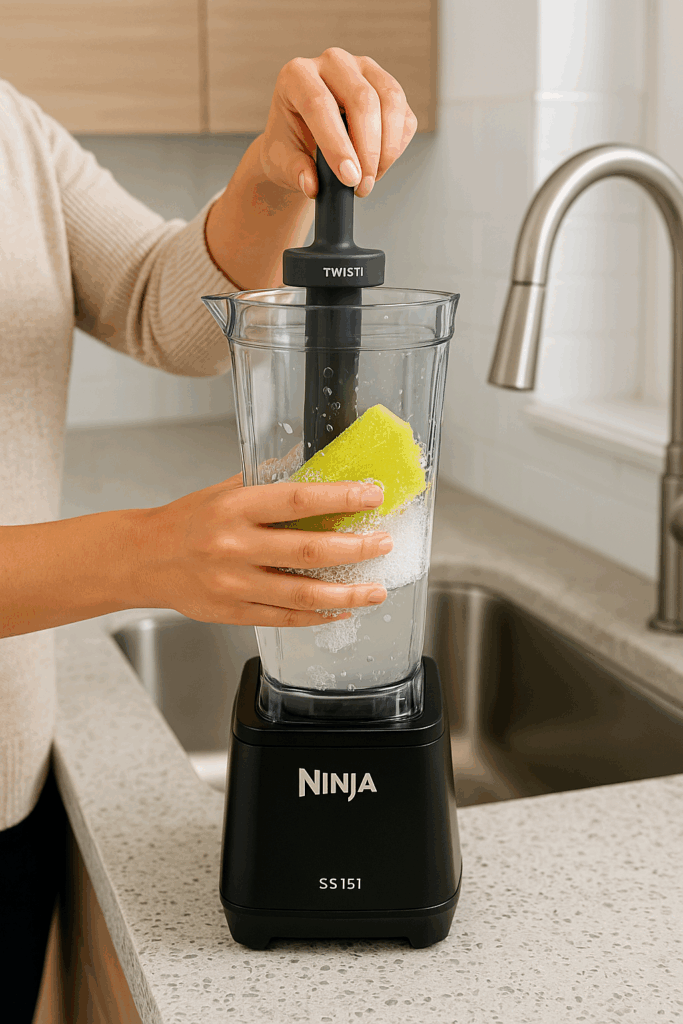
Table of Contents
Why Proper Maintenance Matters for the Ninja SS151 Twisti
The SS151 uses SmartTORQUE motor load control. It pushes thick ingredients without stalling. That means the motor runs under sustained resistance.
Sustained resistance produces heat.
Heat is the primary cause of early failure.
Here is what typically wears first in this model:
- Silicone lid gasket compression
- Tamper shaft seals
- Lower blade bearing housing
- Motor cooling vents
- Drive coupling interface
Most failures trace back to residue buildup and airflow blockage.
Maintenance is not cosmetic. It is mechanical preservation.
Understanding the SS151 Mechanical Design
Before cleaning, understand how this blender is built.
SmartTORQUE Motor System
This motor adjusts power under load. It prevents shutdown during thick blends. However, high torque increases internal heat if airflow is restricted.
Blocked vents lead directly to overheating.
Hybrid Blade Stack
The SS151 uses a multi-level blade column. Food traps between blade tiers. Rinsing alone rarely removes residue at the lower hub.
Dried residue increases drag. Drag increases motor strain.
Twist Tamper System
The twist mechanism pushes ingredients downward. The shaft passes through the lid. A gasket seals this connection.
If residue builds inside the shaft cavity, rotation stiffens. Owners often force it.
Forcing it damages the internal seal.
Daily Cleaning Protocol After Every Blend
Immediate cleaning prevents most odor and seal issues.
Step 1: Immediate Rinse
Rinse the jar within two minutes of use. Warm water works best.
Do not use hot water immediately after blending frozen ingredients. Rapid temperature shifts stress plastic.
Step 2: Soap Pulse Cycle
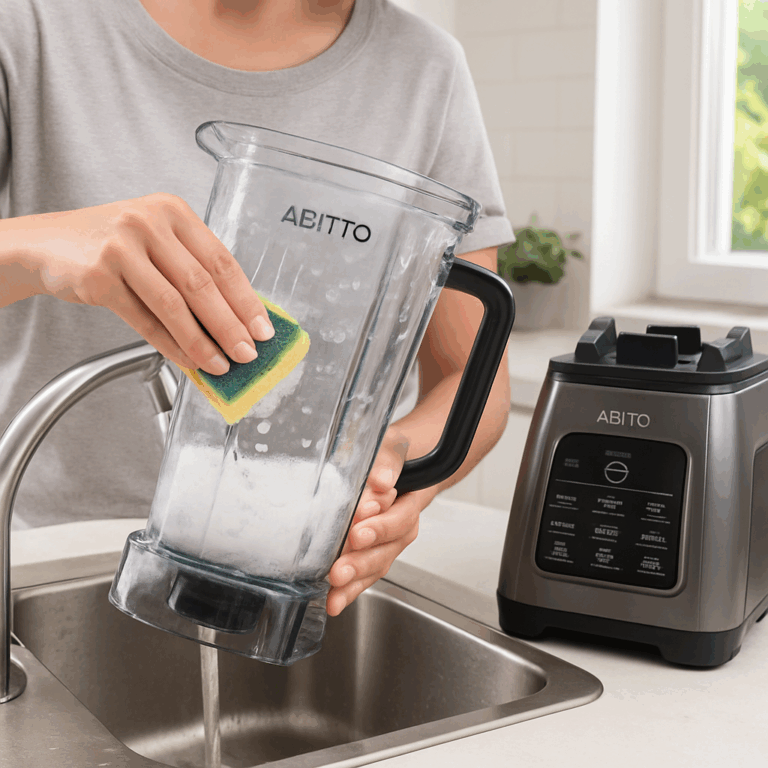
Fill the jar halfway with warm water. Add two drops of dish soap.
Run a 30-second pulse cycle.
This dislodges protein, nut butter oils, and fruit sugars.
Step 3: Manual Blade Rinse
Empty the jar. Rinse under running water. Rotate the blade stack gently using external base movement only.
Never place fingers near blades.
Step 4: Air Dry Inverted
Place the jar upside down on a rack. Leave the lid off. Airflow prevents trapped moisture.
Avoid towel drying the blade assembly. Cloth fibers catch on edges.
Weekly Deep Cleaning System
Owners blending protein, nut butters, or frozen fruit need weekly deep cleaning.
Removing Odors from the Jar
Odors form when oils absorb into micro-scratches.
Use this method:
- Mix 50 percent white vinegar with 50 percent warm water
- Fill the jar halfway
- Let soak 20 minutes
- Run 20 second pulse
- Rinse thoroughly
Vinegar breaks down oil residue without damaging plastic.
If odor persists, repeat once.
For broader long-term prevention methods that apply across high-performance models, review advanced blender maintenance strategies for preventing mold, odor, and seal damage to strengthen your ownership routine.
Removing Protein Powder Buildup
Protein powders harden near the blade hub.
Make a baking soda paste using:
- 1 tablespoon baking soda
- A small amount of water
Apply with a soft sponge. Focus on the blade base area.
Never use abrasive pads. Scratches trap more residue later.
Cleaning the Twist Tamper Assembly
The twist tamper must be separated from the lid.
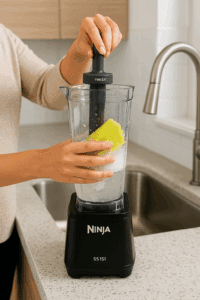
Wash with warm soap water. Use a narrow brush to clean internal threads.
Dry completely before reinstalling.
Moisture inside the shaft leads to mold growth and gasket deterioration.
Gasket Maintenance and Compression Prevention
The silicone gasket under the lid prevents leaks.
Over time, gaskets compress.
Compression reduces elasticity. Reduced elasticity causes leaks.
How to Prevent Gasket Compression
- Remove the gasket weekly
- Wash with mild soap
- Rinse thoroughly
- Air dry completely
- Store the lid separately from the jar
Never store the blender fully assembled long-term.
Continuous pressure flattens the seal.
Blade Assembly Care
The blade stack is not removable like traditional bottom-mounted blades.
Preventing Blade Drag
If blades feel stiff:
- Soak the jar in hot, soapy water for 15 minutes
- Rotate blades gently usingthe external base contact
- Never use metal utensils
Residue near the bearing housing increases resistance.
Resistance increases heat.
Heat reduces motor lifespan.
Motor Base Cleaning and Airflow Protection
Most overheating complaints relate to airflow blockage.
The motor pulls air from the underside vents.
If dust accumulates, airflow drops.
Cleaning Motor Base Safely
- Unplug unit
- Turn upside down
- Use a soft brush to clean vents
- Wipe exterior with a damp microfiber cloth
Never spray cleaners directly onto the base. Liquids can enter housing and damage electronics.
Why the Ninja SS151 Leaks From the Bottom
Leak issues increase when users overfill.
Common causes include:
- Over max fill line
- Gasket not seated correctly
- Lid not locked
- Gasket compressed or cracked
If leaking occurs near the base, inspect the lower jar seal.
If leaking occurs at the lid, inspect the tamper shaft gasket.
Replace worn gaskets immediately.
Why the Ninja SS151 Smells Like Burning
A burning smell indicates excessive heat.
Common causes:
- Food overload is causing motor strain
- Blocked cooling vents
- Blade drag from residue
Immediately stop blending if the smell appears.
Unplug and allow 20 minutes to cool.
Inspect vents and blade movement.
Repeated overheating significantly shortens motor life.
Why the Ninja SS151 Is Not Turning On
This model includes safety interlocks.
If it will not start:
- Confirm the jar is locked
- Confirm the lid clicks into position
- Ensure the tamper is aligned
- Unplug for 30 seconds
If the motor hums but does not spin, check for blade drag.
Why the Blade Is Not Spinning
Common causes:
- Thick frozen block
- Jammed blade from dried residue
- Overfilled jar
- Motor overheated and locked
Allow a full cool-down period.
Remove contents.
Inspect blade rotation manually from the base.
Never force rotation with tools.
Overheating Prevention Strategy
The SS151 can handle thick blends. It still requires airflow discipline.
Safe Blending Limits
- Do not run longer than 60 seconds continuously for thick blends
- Allow 2 minutes’ rest between heavy cycles
- Add liquid first
- Use the tamper properly
Adding liquid reduces torque stress.
Unsafe User Behaviors That Shorten Lifespan
Avoid these common mistakes:
- Storing with the lid tightly sealed
- Using metal spoons inside the jar
- Ignoring odor buildup
- Blocking the underside vents
- Washing the motor base under the sink
These behaviors accelerate gasket wear and motor overheating.
Monthly Deep Maintenance Routine
Once per month, perform:
- Full vinegar soak
- Gasket removal and inspection
- Vent cleaning
- Drive coupling inspection
- Blade resistance test
If the coupling shows rounding or wear, monitor closely.
Early detection prevents total failure.
If you are evaluating alternatives based on durability and motor architecture, explore research on powerful countertop blenders by brand, wattage, and build quality to understand how design impacts maintenance needs.
Long-Term Storage Best Practices
If storing for weeks:
- Clean thoroughly
- Dry all parts
- Remove gasket
- Store lid separate
- Cover the base loosely to prevent dust
Never seal moisture inside a jar.
Longevity Timeline Expectations
With proper maintenance:
- Gasket lifespan: 18 to 36 months
- Motor lifespan: 4 to 6 years
- Blade performance peak: 3 to 4 years
Heavy protein blending reduces lifespan without cleaning discipline.
Troubleshooting Questions Owners Ask About the Ninja SS151
Why is my Ninja SS151 overheating during thick smoothie bowls?
Torque demand increases internal heat. If airflow is restricted, the motor temperature rises quickly. Reduce batch size and allow cooldown between cycles.
Why is my Ninja SS151 leaking after dishwasher cleaning?
High heat can warp silicone seals. Hand washing gaskets preserves elasticity and prevents compression leaks.
Why is the twist tamper hard to rotate?
Residue buildup inside the shaft cavity increases friction. Disassemble and clean threads thoroughly before reassembling.
Why does the motor shut off mid-blend?
Thermal protection activates during overheating. Wait at least 20 minutes before restarting.
Why does odor return after deep cleaning?
Oil absorbs into micro-scratches in plastic. Repeat the vinegar soak and air dry completely with the lid removed.
Ownership Optimization Strategy
The SS151 performs best when:
- Cleaned immediately
- Air-dried properly
- Used within safe runtime windows
- Stored unsealed
Proper maintenance protects torque performance, prevents overheating, and eliminates odor buildup.
Neglect causes heat.
Heat causes wear.
Control heat, and you control lifespan.