The Vitamix 5200 is a high-torque blender built for dense blends and long sessions. Its tall container design creates strong circulation, and the manual dial gives you precise control.
Power still creates friction.
Friction creates heat.
Heat is what ages blenders.
Owners commonly search:
Vitamix 5200 overheating
Vitamix 5200 smells like burning
Vitamix 5200 is leaking from the bottom
Vitamix 5200 blade not spinning
Vitamix 5200 not turning on
This guide is a full ownership maintenance manual. You will learn how to prevent blade drag, protect the motor base vents, reduce seal compression, and extend lifespan beyond average home use.
If you want performance context first, including torque behavior and how this model handles thick loads, start with this real-world test-driven breakdown in the Vitamix 5200 performance and reliability review before you lock in your care routine.
Now let’s protect your blender the right way.
Table of Contents
Why Vitamix 5200 Maintenance Prevents Overheating and Early Wear
The 5200 does not use smart load sensing. It uses raw torque and airflow cooling. When resistance rises, heat rises.
Heat slowly damages predictable parts:
- Motor winding insulation
- Bearing lubrication
- Container base seal elasticity
- Drive socket teeth and coupling fit
Most “sudden” failures are slow wear that finally shows up. That wear accelerates when residue increases drag, or when vents clog with dust.
Maintenance is heat management.
Daily Cleaning Routine That Prevents Blade Drag
Cleaning right after blending prevents hardened buildup under the blade hub. That buildup is what makes the motor work harder next time.
Step 1: Rinse Within Two Minutes
Rinse with warm water right after you pour your blend. Do not shock a cold container with boiling water. Thermal stress weakens plastic over time.
Step 2: Run a Soap Blend Cycle
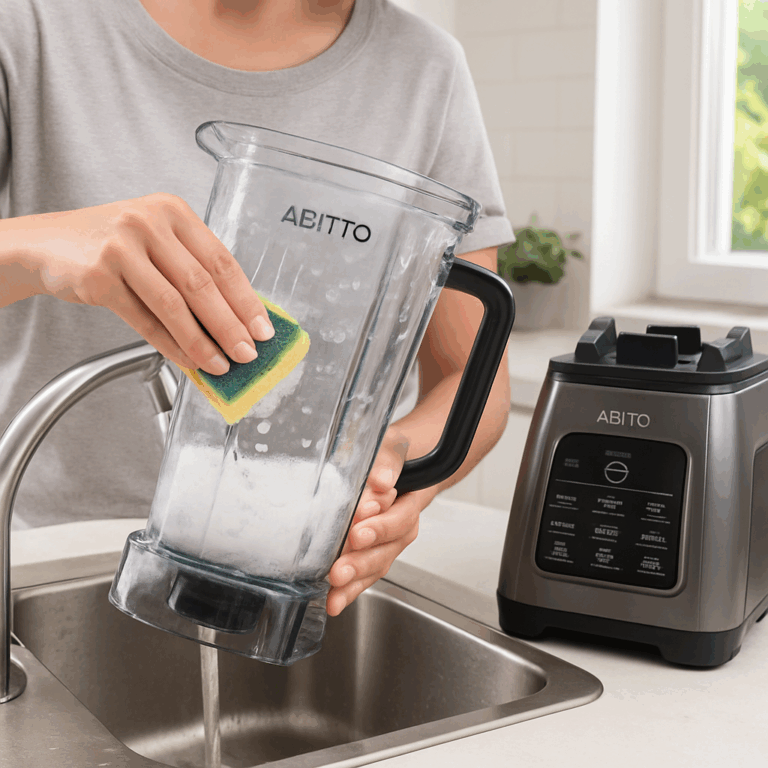
Fill the container halfway with warm water. Add one drop of dish soap. Blend on high for 30 to 45 seconds.
This removes:
- Protein film
- Nut oil residue
- Fiber strands
- Dairy coating
Step 3: Air Dry Completely
Rinse with clean water and invert the container on a rack. Leave the lid off. Never store it sealed while damp, because trapped moisture softens silicone and causes odor.
If you want a system you can follow for every blender you own, use this step-by-step resource on how to keep any blender clean, dry, and odor-free long term and apply the same airflow and seal rules across models.
Deep Cleaning the Vitamix 5200 Container Without Causing Cloudiness
Cloudiness usually comes from mineral deposits and detergent micro-etching. This is more common in hard water homes.
Biweekly Vinegar Method
Fill halfway with warm water. Add 1 cup of white vinegar. Let it sit for 15 minutes. Blend for 20 seconds, then scrub gently with a soft sponge.
Rinse thoroughly and air dry upside down.
Avoid abrasive pads. Micro-scratches trap residue and make haze return faster.
Why the Vitamix 5200 Smells Like Burning
A burning smell is almost always a load problem. The motor is working too hard for too long, or the airflow is restricted.
The most common causes:
- Thick nut butter without enough oil
- Long continuous soup blending
- Ice jams that stall circulation
- Dust buildup is blocking vents
Stop blending immediately. Unplug the base. Let it cool for 20 to 30 minutes.
If you keep blending through the smell, you shorten insulation life and accelerate bearing wear.
Why the Vitamix 5200 Is Overheating During Thick Blends
Overheating happens when torque demand stays high, and the base cannot shed heat fast enough.
Prevent it with three rules:
- Always build a vortex with enough liquid.
- Blend in short bursts for dense mixes.
- Keep the underside vents dust-free.
A thick blend that does not circulate is a warning sign. The blade is pushing a stuck mass, not cutting through moving ingredients.
Motor Base Cleaning That Protects the Cooling System
Unplug first.
Wipe the base with a slightly damp microfiber cloth. Use a soft brush around the dial and switches. Then dry immediately.
Never spray cleaner onto the base. Mist travels into seams and can corrode the internal board.
Once per month, flip the base and inspect the underside vents. Dust and pet hair can form a felt layer that blocks airflow.
Why the Vitamix 5200 Is Leaking From the Bottom
Bottom leaks usually mean the container base seal is no longer sealing perfectly. That can happen from heat cycling, heavy torque use, and residue buildup around the blade hub.
Do this test:
Fill the container with water and set it on a dry paper towel for five minutes. If moisture appears beneath, the leak is from the base seal area.
Do not ignore a leak. Drips can reach the drive socket and cause slipping or corrosion over time.
Why the Vitamix 5200 Blade Is Not Spinning Smoothly
Vitamix blades are intentionally not razor sharp. They rely on speed and turbulence. When performance drops, the usual cause is drag.
Drag comes from:
- Hardened smoothie residue near the hub
- Nut oil film around seals
- Mineral scale buildup
- Fibers wrapped around the blade area
Soak the container with warm soapy water for 20 minutes. Run a short blend cycle. Rinse and test the rotation gently with a silicone spatula.
Never use metal utensils inside the container. Metal contact risks blade imbalance, which increases vibration and bearing wear.
Unsafe Habits That Shorten Vitamix 5200 Lifespan
Avoid these behaviors:
- Dry blending with no liquid
- Running high speed nonstop on thick loads
- Storing the container sealed while damp
- Ignoring vent dust buildup
- Using boiling water right after frozen blends
Heat plus moisture is what breaks seals early.
Monthly Inspection Routine for Long-Term Reliability
Once per month:
- Vinegar deep clean
- Baking soda deodorizing cycle
- Lid and plug wash
- Vent inspection and dust removal
- Blade drag test
- Drive socket check
- Cord inspection
If you are comparing which blender platforms hold up best over ten years of use, browse this expert blender reviews hub for durability, motor class, and ownership experience to see how different models age under thick blending loads.
Troubleshooting: The 5 Vitamix 5200 Problems Owners Search Most
Why is my Vitamix 5200 overheating when blending thick smoothies?
Overheating happens when resistance stays high, and airflow cannot cool the motor fast enough. Thick blends that do not circulate force constant torque load. Add liquid to form a vortex, reduce batch size, and clean underside vents before restarting.
Why does my Vitamix 5200 smell like burning during nut butter?
Nut butter can stall circulation and trap the blade in a dense mass. The motor keeps pushing, which creates friction heat and a hot electrical smell. Stop immediately, cool the base for 30 minutes, then restart in short bursts with more oil.
Why is my Vitamix 5200 leaking from the bottom?
Bottom leaks usually indicate seal compression or residue preventing a full seal. Heat cycling expands and contracts the base gasket until elasticity drops. Clean and dry the base area, then run the water towel test to confirm true seal leakage.
Why is my Vitamix 5200 not turning on?
Confirm outlet power and fully seat the container. If the motor overheated earlier, thermal protection may trigger a temporary shutdown. Let it cool for 30 minutes, then restart with a thinner blend.
Why is the Vitamix 5200 blade not spinning, but the motor sounds on?
A jam from frozen blocks or hardened residue can prevent rotation. High resistance may also cause coupling slip to protect internal parts. Unplug, soak with warm soapy water, and confirm smooth manual rotation before blending again.
Long-Term Ownership Strategy
The Vitamix 5200 lasts when you control three things: drag, moisture, and heat.
- Clean immediately.
- Dry completely.
- Protect airflow.
- Respect the thick blend runtime.
That is how owners get 10 to 15 years from this platform.