Heat changes blender behavior.
Cold smoothies rely on ice fracture and vortex lift. Hot vegetable blends rely on sustained blade rotation and friction transfer. Broccoli and cauliflower break down easily once soft, but fiber density can stall weak circulation if liquid balance is off.
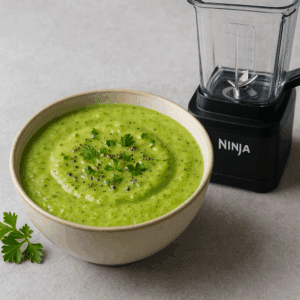
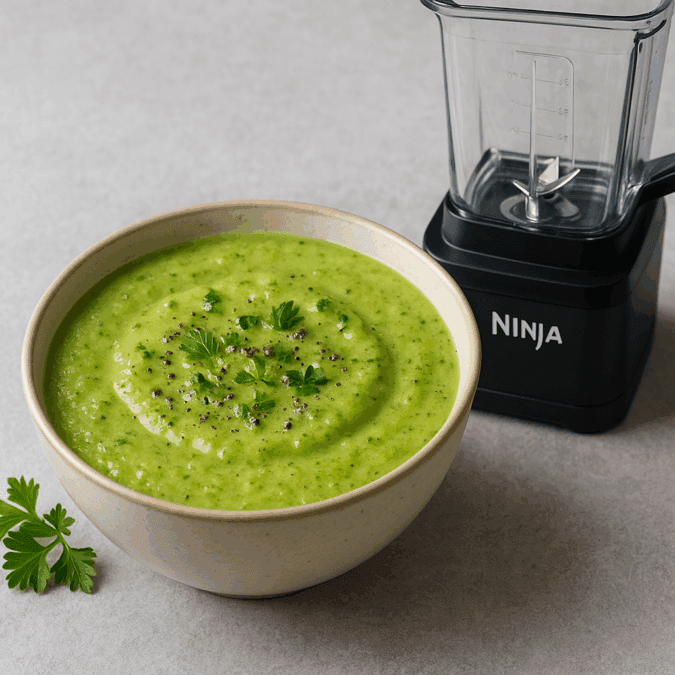
This Creamy Broccoli Cauliflower Soup is engineered as a thermal friction and fiber-reduction test for the Ninja BN401. It evaluates whether sustained blending can generate warmth while maintaining smooth, velvety texture without dairy.
If you’re comparing countertop systems based on their ability to produce smooth hot purées without relying on a stovetop, study controlled blender heating and fiber-breakdown evaluations across models before deciding which machine fits your cooking style.
This recipe teaches how friction heat builds gradually under consistent RPM rather than instant temperature spikes.
Performance Framing: Why Cruciferous Vegetables Test Blending Stability
Cooked broccoli and cauliflower appear soft, but their internal fiber strands remain structured. When blended aggressively, those strands can trap air or create uneven thickness.
To create silky soup, the blender must:
• Maintain uninterrupted blade rotation
• Break down vegetable fiber fully
• Prevent cavitation in thick mixtures
• Transfer enough friction energy to raise the temperature
The BN401’s wider pitcher allows greater ingredient spread compared to the personal cup. That change alters the circulation pattern. Instead of vertical confinement, you get a broader vortex sweep.
This recipe intentionally uses moderate broth volume. Too much liquid produces a thin soup. Too few risks stalled movement.
Table of Contents
Ingredients (Serves 2–3)
2 cups cooked broccoli florets
1½ cups cooked cauliflower florets
1 garlic clove (roasted or raw)
2 tablespoons nutritional yeast or shredded cheese
1½ cups low-sodium vegetable broth
¼ teaspoon black pepper
¼ teaspoon sea salt
Optional: pinch nutmeg or cayenne
Step-by-Step Instructions With Thermal Cues
Load Warm for Maximum Friction
Add cooked vegetables first.
Add broth next.
Add seasoning and nutritional yeast last.
Warm ingredients accelerate friction heating. Cold ingredients delay temperature rise.
Begin Low, Then Increase
Pulse briefly to break the structure.
Blend on High for 4–6 minutes.
Thermal cue:
Steam may begin escaping from the lid vent. Sound becomes smoother as the fiber fully breaks down.
Check Texture and Temperature
Soup should be silky with no fibrous strands visible.
If the texture feels slightly grainy, blend another 20–30 seconds.
If you want to explore additional functional meals sorted by texture target and blending intensity, browse the categorized Ninja recipe collection built around real appliance stress profiles.
Why This Model Handles Hot Blends Effectively
The Ninja BN401 sustains high blade speed long enough to generate friction warmth without overheating under moderate vegetable loads.
Unlike high-end thermal blenders that exceed boiling temperatures, the BN401 produces serving-level warmth ideal for immediate eating.
For a mechanical breakdown of sustained rotation performance, container geometry, and load testing across frozen and hot blends, review the Ninja BN401 motor and blade stress evaluation.
Understanding this distinction helps you adjust blending time based on volume and thickness.
Fiber Breakdown Without Cream
Traditional cream soups rely on dairy fat to create mouthfeel. This recipe relies on complete fiber breakdown instead.
To improve silkiness:
• Blend for 5–6 minutes
• Maintain consistent speed
• Avoid overloading the pitcher
• Use cooked vegetables only
Friction heat thickens slightly as water evaporates during blending.
Adjusting Thickness
For thicker soup:
• Reduce broth by ¼ cup
• Add 1 tablespoon olive oil
For a thinner consistency:
• Add 2–4 tablespoons hot broth
• Blend briefly again
Small liquid adjustments dramatically affect flow in hot blends.
Storage and Reheating
Refrigerate up to 3 days in an airtight container.
When reheating, warm gently and re-blend for 15 seconds to restore texture.
For contrast, if you want to test how the same motor handles dense fruit loads and high natural sugar viscosity instead of cruciferous fiber, prepare the mango coconut smoothie bowl built to evaluate frozen fruit resistance in the BN401.
Comparing hot fiber reduction and frozen fruit resistance builds complete blending control.
How Hot Can the BN401 Actually Get Soup?
Many people search for whether compact blenders can replace stovetop cooking. The Ninja BN401 generates warmth through sustained blade friction, not direct heating elements. That means temperature rises gradually over 4–6 minutes rather than instantly.
In most cases, you can expect soup to reach a comfortably hot serving range when starting with warm ingredients. However, it will not reach rolling boil levels like high-end thermal blenders. The goal here is smooth warmth, not aggressive cooking.
If a higher temperature is required, briefly preheat the vegetables and broth before blending.
Why Thick Soups Sometimes Stall Mid-Blend
Dense vegetable mixtures can interrupt circulation if liquid levels are too low. When fiber concentration increases, vortex formation weakens, and ingredients may settle around the blade hub.
If the soup stops moving:
• Add 2–3 tablespoons warm broth
• Pulse briefly before returning to High
• Avoid overfilling past the maximum line
Blenders rely on fluid movement to maintain rotation efficiency. Proper liquid balance restores circulation immediately.
This awareness prevents unnecessary strain and improves long-term motor performance.
Hot Blend Performance Questions Answered
Can the Ninja BN401 actually heat soup?
Yes. Sustained high-speed blending generates friction heat over several minutes. Starting with warm ingredients ensures you reach serving temperature efficiently.
Will it reach boiling temperature?
No. The BN401 produces warm soup, not boiling temperatures. It is ideal for comfort meals but not designed for high-heat cooking.
Why does my soup sometimes feel slightly airy?
Air pockets form when vegetables are not fully submerged in liquid. Proper broth balance prevents trapped bubbles.
Can I blend raw vegetables instead?
Raw vegetables require longer blending and may not soften enough without pre-cooking. Light steaming improves the final texture dramatically.
Will long blending harm the motor?
Not within recommended cycle limits. Avoid repeated back-to-back extended runs without brief cooling intervals.
Skill Building: Understanding Friction Heat
This recipe teaches how friction heat builds gradually through sustained blade rotation. You learn to recognize when fiber breakdown is complete based on sound and texture.
Mastering hot blends improves your ability to control thickness without dairy. It also builds awareness of how container size influences vortex behavior.
Understanding both frozen fruit extraction and hot fiber reduction transforms you from a casual user to a confident operator.
Final Takeaway
The Creamy Broccoli Cauliflower Soup is not just a healthy meal. It is a thermal friction and fiber-reduction test for the Ninja BN401.
Blend long enough to generate warmth. Maintain proper liquid balance. Monitor texture rather than relying solely on time.
Master this technique, and warm blended meals become predictable, efficient, and consistently smooth.