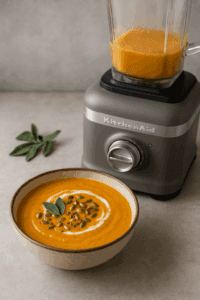
Traditional butternut squash soup requires stovetop simmering and constant monitoring.
This method uses the KitchenAid K400’s Soup preset to blend and heat simultaneously. Friction from the blade creates heat while the vortex smooths fibrous vegetables.
The result is a velvety soup without splatter or manual stirring.
If you’re comparing high-powered countertop systems for hot blending performance, this in-depth evaluation of premium blender motor strength and jar engineering across major brands explains how vortex control impacts thick, heated blends.
This recipe leverages jar geometry and preset ramp timing to achieve a fully emulsified finish.
Table of Contents
Ingredients (Serves 4)
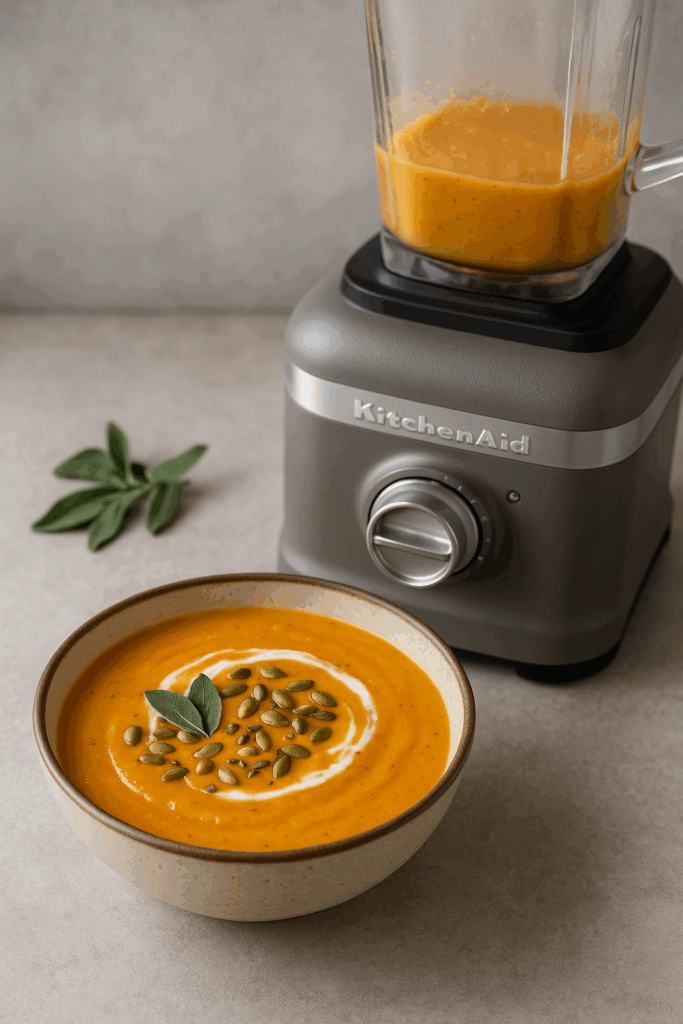
- 3 cups roasted butternut squash chunks
- 1 medium apple, peeled and chopped
- 1 small onion, sautéed until soft
- 2 cups warm vegetable broth
- ½ cup full-fat coconut milk
- ½ teaspoon cinnamon
- ¼ teaspoon nutmeg
- Salt and pepper to taste
Optional garnish: toasted pepitas, fresh sage, swirl of coconut cream
Roasting the squash first enhances sweetness and reduces raw starch density.
Step-by-Step Instructions
- Add warm vegetable broth to the jar first.
- Add roasted squash, apple, and sautéed onion.
- Add coconut milk and spices.
- Secure the lid tightly.
- Select the Soup preset.
- Allow the full cycle to complete (about 5 minutes).
- Let the steam settle briefly before opening.
- Adjust seasoning and serve hot.
If not using a preset, blend low to high for 4–5 minutes until steam visibly releases.
For more appliance-matched hot and cold blends organized by function, explore the structured blender recipe archive sorted by meal type and texture goal.
Matching recipe density to preset design improves consistency.
Texture & Technique: How the K400 Creates Heat Through Friction
Hot blending relies on blade speed and containment.
The K400’s asymmetric blade spins fast enough to generate friction heat. The ribbed jar walls push ingredients downward repeatedly, increasing contact with the blade.
Dense vegetables like squash require pre-roasting to soften the fiber.
The Soup preset gradually increases speed to prevent explosive steam pressure while maximizing emulsification.
For deeper insight into how jar geometry and preset ramping affect hot liquid blending, review the real-world performance analysis of the KitchenAid K400 under thick soup testing conditions.
Understanding thermal blending prevents texture inconsistencies.
Tips & Variations
Sweeter profile:
Swap apple for pear.
Spicier finish:
Add a pinch of cayenne or smoked paprika.
Extra protein:
Blend in white beans.
Lower-fat version:
Reduce the coconut milk slightly.
Ultra-smooth finish:
Strain through a fine mesh if desired.
Small changes alter density. Avoid exceeding the maximum hot-fill line.
Nutrition Snapshot (Per Serving Approximation)
- ~220 calories
- 4g protein
- 6g fiber
- High vitamin A
- Antioxidants from squash and apple
- Naturally vegan
- Gluten-free
This works as:
- Fall dinner starter
- Light lunch
- Meal prep soup
- Cold-weather comfort meal
Is It Safe to Blend Hot Soup in the KitchenAid K400?
Yes.
The lid design allows controlled steam release. The Soup preset manages a gradual speed ramp to prevent sudden pressure spikes.
Always:
- Use warm, not boiling, broth
- Avoid filling pastthe maximum line
- Allow the cycle to finish fully
Never remove the lid mid-cycle.
Why Does My Blender Soup Sometimes Turn Foamy?
Foam forms when air is incorporated during high-speed blending.
To reduce foam:
- Avoid overfilling
- Use warm ingredients
- Let the soup rest 1–2 minutes before serving
Foam dissipates naturally as the soup settles.
Can You Blend Raw Butternut Squash?
Technically, yes, but not recommended.
Raw squash is extremely dense. It increases blade strain and reduces texture smoothness.
Roasting first:
- Softens fiber
- Enhances flavor
- Reduces blending resistance
This ensures smoother emulsification.
If you prefer cold, thick vegetable blends instead of hot soups, this tropical green smoothie bowl method, optimized for the KitchenAid K400 vortex system demonstrates how the same jar geometry handles frozen fruit density.
How Long Does Blender Soup Stay Hot After Blending?
Expect 15–25 minutes of serving temperature retention.
For longer heat:
- Pre-warm bowls
- Cover loosely before serving
Blended soups retain heat well due to their emulsified structure.
Can You Freeze Butternut Squash Blender Soup?
Yes.
Allow soup to cool fully before freezing.
Store in airtight containers up to 3 months.
Reheat gently and blend briefly to restore smooth texture.
What People Ask About This Recipe
Does the KitchenAid K400 actually heat soup?
Yes. Friction from high-speed blending generates heat during the Soup preset cycle.
Is sautéing the onion necessary?
No, but it improves sweetness and reduces sharpness.
Can I make this without coconut milk?
Yes. Substitute cream or omit for a lighter texture.
Will the soup taste cooked if blended only?
Roasted squash and sautéed onion provide depth. Blending enhances smoothness but does not replace roasting.
Can I double the recipe?
Yes, if it stays below the maximum fill line.
Why Does Butternut Squash Soup Turn Grainy in a Blender?
Grainy texture usually comes from under-roasted squash.
If the squash remains slightly firm, the fibers do not fully emulsify during blending.
To prevent graininess:
- Roast squash until fork-tender.
- Use warm broth to assist emulsification.
- Allow the full Soup preset to complete.
Another cause is insufficient liquid.
Too little liquid prevents proper vortex circulation. The blade cannot fully break down fiber without consistent downward flow.
If texture feels grainy:
- Add 1–2 tablespoons warm broth.
- Blend 15–20 seconds more.
Avoid overcorrecting with too much liquid. That thins flavor.
The KitchenAid K400 performs best when fiber is softened before blending.
How Do You Make Blender Soup Creamier Without Adding Cream?
Creaminess depends on emulsification, not just fat.
To increase body without dairy:
- Add ¼ cup white beans before blending.
- Add 1 tablespoon olive oil.
- Blend slightly longer to improve emulsification.
Friction blending creates microscopic particle breakdown. Smaller particles produce a smoother mouthfeel.
Coconut milk increases richness, but it is not required for a smooth texture.
Proper roasting and full-cycle blending matter more than added fat.
If the soup feels thin:
- Reduce broth slightly next time.
- Increase the squash ratio.
- Avoid excessive high-speed blending once the texture is smooth.
Creaminess is controlled by ingredient balance and blending precision.
Storage & Real-World Use
This soup reheats well.
Add a splash of broth before reheating to restore consistency.
Best uses:
- Weeknight dinners
- Meal prep lunches
- Holiday starters
- Batch cooking
Countertop systems like the K400 simplify multi-serving hot blends.
Final Takeaway
This creamy butternut squash soup leverages the KitchenAid K400’s Soup preset for friction-based heating and full emulsification.
Roast first. Add liquid first. Let the preset finish.
You get smooth texture, deep flavor, and controlled hot blending without stovetop stirring.
Precision blending produces better comfort food.