Whole wheat dough exposes weak processors fast. It is heavier than white flour. It absorbs more water. It resists early gluten formation. If your blade system is underpowered or uneven, the dough smears along the bowl instead of forming a cohesive ball.
This Whole Wheat Pizza Dough is structured as a torque and gluten-development test for the Ninja Compact Kitchen System. It uses a balanced flour ratio to challenge the dough blade without overwhelming the motor. The goal is an elastic structure without overprocessing.
If you are comparing food processor systems for dough performance instead of just smoothie strength, study the side-by-side breakdown of blender and processor motor durability under heavy mixtures and kneading stress before investing in a combo unit.
This recipe teaches you how to read dough formation inside a compact processor bowl.
Performance Framing: What This Dough Reveals About Your Machine
Whole wheat flour contains bran particles. Bran cuts through developing gluten strands. That means the processor must knead efficiently and consistently to build structure.
The Ninja Compact Kitchen System uses a dedicated dough blade designed for folding and compressing rather than chopping. That distinction matters. Standard chopping blades shred dough instead of kneading it.
This recipe balances:
- 50 percent whole wheat for fiber and a nutty flavor
- 50 percent all-purpose for elasticity
- Controlled hydration to prevent bowl wall smearing
When done correctly, the dough should gather into a single ball within 60 seconds.
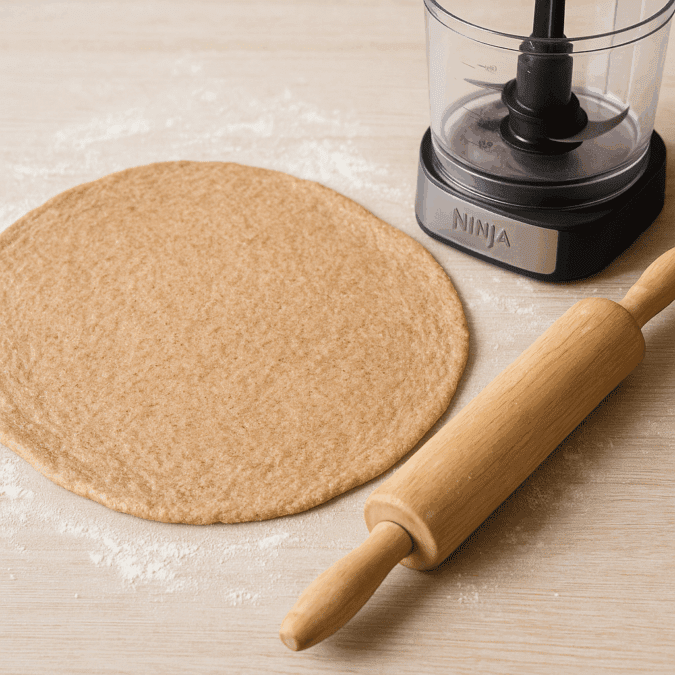
Table of Contents
Ingredients (Yields 2 Medium Crusts)
- 1¼ cups warm water, about 110°F
- 2¼ teaspoons active dry yeast
- 1 tablespoon honey or sugar
- 1½ cups whole wheat flour
- 1½ cups all-purpose flour
- 1 tablespoon olive oil
- 1 teaspoon salt
- Optional cornmeal for dusting
Step-by-Step Instructions With Dough Cues
1 Activate Yeast Properly
Combine warm water, yeast, and honey. Let it sit for 5 to 10 minutes until foamy. Foam means yeast is active.
Blending cue: If no foam appears, restart with fresh yeast.
2 Install the Dough Blade
Lock the dough blade into the Precision Processor bowl. Make sure it sits fully on the shaft.
This blade compresses and folds rather than slices.
3 Combine Dry Ingredients
Add whole wheat flour, all-purpose flour, and salt. Pulse twice to distribute evenly.
Avoid over-pulsing. Flour aeration changes hydration slightly.
4 Add Liquids and Knead
Pour in the yeast mixture and olive oil. Pulse 3 to 4 times. Then run Dough mode or low speed for 30 to 60 seconds.
Blending cue: The dough should clump, then gather into a single ball that pulls away from the sides.
If the dough sticks heavily to the wall, add flour 1 tablespoon at a time. If it looks dry and crumbly, add 1 teaspoon of water at a time.
5 First Rise
Transfer dough to a lightly oiled bowl. Cover and let rise 1 to 1½ hours until doubled.
Rising is where gluten relaxes and structure stabilizes.
6 Shape and Bake
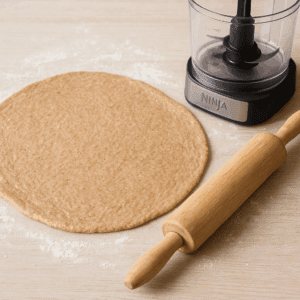
Punch down the dough. Divide into two balls. Roll into 10 to 12-inch rounds.
Bake at 475°F for 10 to 12 minutes with toppings.
Why It Works in the Ninja Compact Kitchen System
Compact processors often struggle with dense dough. They either stall or heat up too quickly. The Ninja Compact Kitchen System balances moderate wattage with a bowl design that keeps dough centralized.
The dough blade’s curved arms fold the mass inward instead of chopping randomly. That promotes gluten formation without tearing.
For a deeper mechanical evaluation of how this system handles dough, sauces, and high-resistance mixtures across multiple attachments, review the hands-on Ninja Compact Kitchen System performance analysis focused on dough blade efficiency and motor load stability.
Hydration Control in Whole Wheat Dough
Whole wheat flour absorbs more liquid than white flour. If the dough looks tight after kneading, let it rest 5 minutes before adding more water. Bran softens slightly during that rest.
Overhydrating too early makes the dough sticky and hard to shape later.
How to Avoid Over-Kneading in a Processor
Processor kneading is faster than hand kneading. Too much time builds excess heat and tightens gluten.
Limit kneading to 60 seconds. If unsure, stop early. You can always knead by hand for 1 minute to finish.
Can You Use 100 Percent Whole Wheat
Yes, but expect denser crust. Increase water by 1 to 2 tablespoons and knead slightly longer. Flavor will be deeper and texture more rustic.
Storage and Batch Planning
Refrigerator: Store dough up to 3 days. Cold fermentation improves flavor.
Freezer: Freeze after the first rise. Wrap tightly. Thaw overnight in the refrigerator.
Meal prep: Par-bake crusts for 5 minutes, cool, then freeze. Add toppings later and finish baking.
If you enjoy building complete meals using your processor system, explore the full recipe lineup that includes doughs, sauces, dips, and blended dressings organized by appliance function.
Beyond Pizza: Expanding Dough Applications
This dough can become:
- Flatbread
- Breadsticks
- Calzones
- Focaccia-style rounds
Roll thinner for crisp results. Roll thicker for chew.
Pair your finished crust with fresh sauces for maximum flavor. For example, use the Ninja Compact basil pesto recipe that tests herb emulsification and oil suspension in the same system to build a vibrant green base.
Spacing your dough and sauce tests across attachments helps you understand the full capability of the machine.
Dough Handling Questions Home Cooks Ask
Can I skip yeast activation?
If using instant yeast, yes. Mix directly with flour. The activation step is mainly for active dry yeast.
Why is my dough sticky?
Whole wheat absorbs slowly. Let the dough rest 5 minutes before adjusting. Add flour gradually if still too wet.
Can I double the recipe?
You can, but process in batches if the bowl exceeds the maximum dough line. Overfilling reduces kneading efficiency.
How do I get a crispier crust?
Preheat a pizza stone thoroughly. Bake at high heat. Avoid overloading wet toppings.
Why is my crust dense?
Likely under-risen or overworked. Ensure full rise and avoid extended processor kneading.
Skill Building: Understanding Gluten Development in Compact Systems
Making whole wheat dough in a compact processor teaches you how gluten feels at each stage. You learn when the ball forms, when it tightens, and when to stop.
That knowledge transfers to bread dough, focaccia, and even enriched doughs.
Final Takeaway
Whole Wheat Pizza Dough in the Ninja Compact Kitchen System is not just convenient. It is a controlled kneading exercise. When you balance hydration, blade time, and flour ratio, you get a chewy crust with nutty depth and reliable structure.
Master this dough, and you unlock confident processor-based baking without a stand mixer.