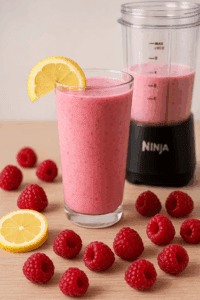
Lemon changes the structure of a protein shake immediately. It lowers pH, thins the liquid behavior, and exposes weak circulation fast. Frozen raspberries add seed resistance. Protein powder thickens the mixture within seconds.
This Raspberry Lemon Protein Shake is designed as a seed-refinement and protein-dispersion test for the Ninja BN401. It evaluates how well a compact personal blender sustains vertical circulation when acidity, fiber, and viscosity increase together.
If you are comparing compact systems based on measurable extraction behavior instead of marketing wattage claims, review blender load testing and seed reduction data across models before choosing your next machine.
This shake teaches you how viscosity shifts vortex stability inside narrow blending chambers.
Performance Framing: Why Raspberry + Lemon Stresses Personal Blenders
Raspberries contain fine but stubborn seeds. Lemon zest introduces peel fiber that resists fast breakdown. Protein powder hydrates unevenly if layered incorrectly.
Together, they demand that the blender:
• Maintain stable RPM under rising thickness
• Prevent dry protein pockets
• Keep micro-seeds circulating vertically
• Limit surface aeration
The BN401’s 24-ounce cup increases ingredient lift because of its vertical design. Small batches stay concentrated around the blade stack rather than spreading across wide surfaces.
Liquid balance is critical. Too much liquid masks inefficiency. Too little causes cavitation.
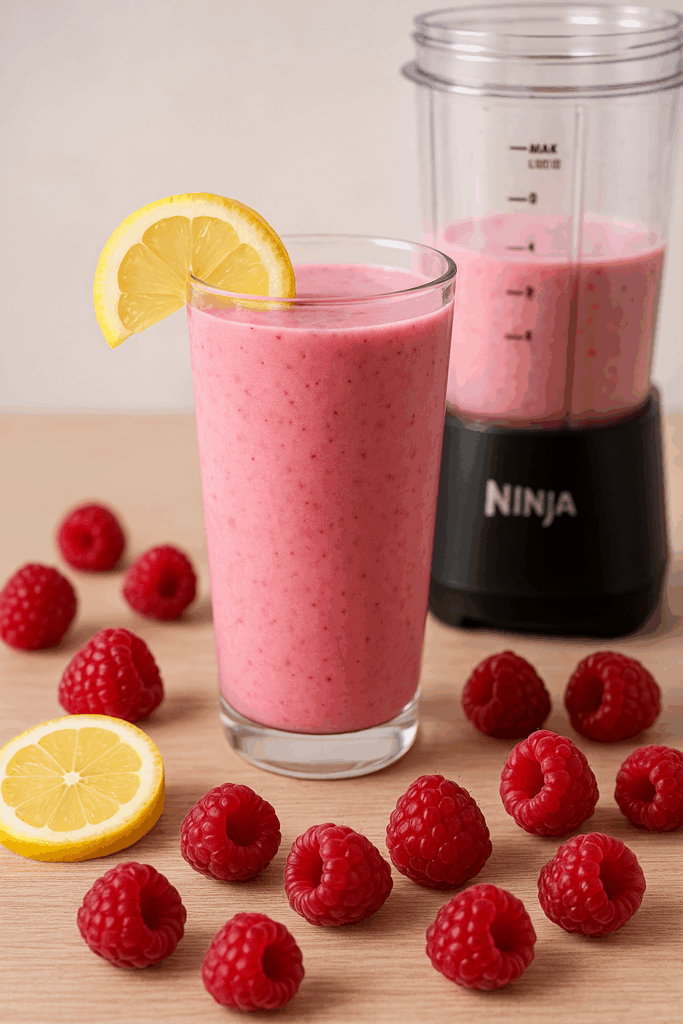
Table of Contents
Ingredients (Serves 1)
¾ cup frozen raspberries
1 scoop vanilla whey or plant protein
1 cup unsweetened almond milk
1 tablespoon fresh lemon juice
½ teaspoon lemon zest
1–2 teaspoons honey or maple syrup (optional)
1–2 ice cubes (optional)
Step-by-Step Instructions With Circulation Cues
1 Load for Hydration Stability
Add almond milk first.
Add protein powder second.
Add lemon juice and zest.
Add frozen raspberries last.
Protein layered above liquid hydrates properly instead of compacting beneath frozen fruit.
2 Engage Extract Mode Fully
Attach the blade lid securely. Lock into base. Select Extract.
Allow the cycle to complete without interruption.
Blending cue:
The sound shifts from sharp cracking to steady hum once seeds begin refining.
3 Inspect Texture
Look for visible seed specks on cup walls.
Texture should feel smooth with minimal grit.
If you want to explore additional blends categorized by resistance level and container format, study the Ninja blending recipe system organized by load behavior.
Why It Works Specifically in the Ninja BN401
The BN401 performs well here because the narrow cup intensifies vertical recirculation. Ingredients pass repeatedly through the blade stack instead of lingering along wide pitcher walls.
Auto-iQ timing stabilizes blending intervals. The preset prevents early shutdown before the protein fully integrates.
Under frozen berry load, the motor maintains consistent RPM without aggressive pulsing.
For a deeper mechanical breakdown of blade geometry and torque stability under frozen stress, review the Ninja BN401 resistance performance analysis.
Understanding these mechanics explains why proper layering prevents clumping.
Managing Protein Dispersion Without Foam
Protein powder traps air easily. Over-blending increases aeration.
To prevent foam:
• Avoid extending cycles unnecessarily
• Do not exceed the maximum fill line
• Use frozen fruit instead of excessive ice
If foam appears, allow the shake to rest for 60 seconds before drinking.
Seed Refinement Strategy in Personal Cups
Raspberry seeds are the primary texture variable.
To reduce grit:
• Blend slightly longer
• Maintain moderate liquid balance
• Avoid overfilling the cup
• Add a short finishing pulse
The narrow chamber increases blade contact frequency for small batches.
Liquid Ratio Adjustments
For a thicker consistency:
• Reduce almond milk by 2 tablespoons
• Skip added ice
• Use fully frozen fruit
For a thinner texture:
• Add 2–4 tablespoons of milk
• Pulse briefly
Small liquid changes dramatically affect flow behavior in compact systems.
Storage and Practical Use
Refrigerate up to 24 hours in a sealed cup. Shake before drinking.
To prep ahead, portion raspberries and zest into freezer packs. Add liquid and protein at blending time.
If you want to compare frozen protein extraction with dense vegetable fiber breakdown, prepare the broccoli cauliflower fiber stress blend for the BN401.
Comparing fruit load and cruciferous fiber load builds full system mastery.
Compact Blender Performance Questions
Will raspberry seeds feel gritty?
Not when blended through a full Extract cycle with correct layering. The BN401’s vertical cup design increases seed recirculation, allowing micro-seeds to pass repeatedly through the blade stack. If grit remains, a short 10-second finishing pulse usually resolves it without over-aerating the shake.
Can I double the recipe?
Yes, but use the larger pitcher attachment rather than overfilling the personal cup. Increase the liquid slightly to maintain vortex stability in the wider container. Compact cups rely on concentrated vertical lift, which changes when batch size increases.
Is it good post-workout?
Yes. The protein supports muscle repair, while raspberries provide antioxidants that may help reduce oxidative stress after training. Lemon adds brightness without heavy sugars, making this blend light enough for immediate recovery without digestive sluggishness.
Why does foam appear?
Foam forms when excess air becomes trapped in protein mixtures during extended blending. Narrow cups can introduce aeration if the blend runs longer than necessary. Stopping once the sound stabilizes prevents unnecessary air incorporation.
Will frozen fruit strain the motor?
Not within recommended capacity limits. The BN401 is built to handle moderate frozen loads when liquid is layered properly at the base. Avoid exceeding the max fill line, and allow brief rest periods between multiple batches to preserve long-term motor health.
Skill Development: Mastering Viscosity Control
This recipe teaches how protein density alters blade load response in compact systems. As viscosity rises, circulation slows unless ingredient order supports hydration and lift. Recognizing the shift from sharp cracking to steady hum tells you when dispersion is complete.
Once you master citrus-based protein blends, thicker recipes like nut butters or frozen smoothie bowls become more predictable. You understand how layering, liquid ratio, and cycle timing influence torque stability.
That awareness transforms you from recipe follower to appliance operator.
Final Takeaway
The Raspberry Lemon Protein Shake is more than a refreshing drink. It is a controlled seed-refinement and protein-dispersion test for the Ninja BN401.
Layer ingredients intentionally. Let the full Extract cycle complete. Listen for sound transitions that indicate a complete breakdown.
When you understand how acidity, fiber, and viscosity interact inside a narrow blending chamber, every future blend becomes consistent, efficient, and repeatable.