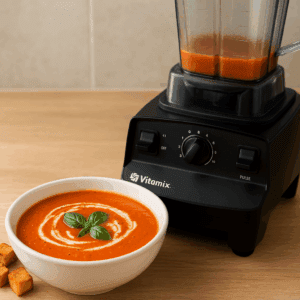
This soup is not simmered for an hour. It is heated by blade friction inside the jar. That is the capability we are testing.
Roasted red peppers and fire-roasted tomatoes create a dense vegetable base. Onion and garlic add structure. The Vitamix E310 turns that mixture into steaming soup using speed and torque alone. No stovetop required.
If you are comparing which machines truly generate heat through sustained high-speed blending instead of just pureeing warm ingredients, review the controlled hot soup stress comparisons across major blender brands to see how different motors perform under extended friction loads.
This recipe demonstrates thermal build through mechanical energy.
Performance Framing: Why This Soup Works in the Vitamix E310
Hot soup blending tests three things:
- Sustained high RPM stability
- Friction heat tolerance
- Vortex consistency with semi thick ingredients
The E310’s 2-horsepower motor maintains blade speed even as viscosity increases. As the mixture thickens, weaker blenders slow down. Slower speed means less friction. Less friction means no heat buildup.
This recipe is structured to allow full vortex formation before heat generation begins.
If you want more blends organized by motor behavior, density handling, and heating capability, explore the appliance-specific recipe archive structured around real performance traits.
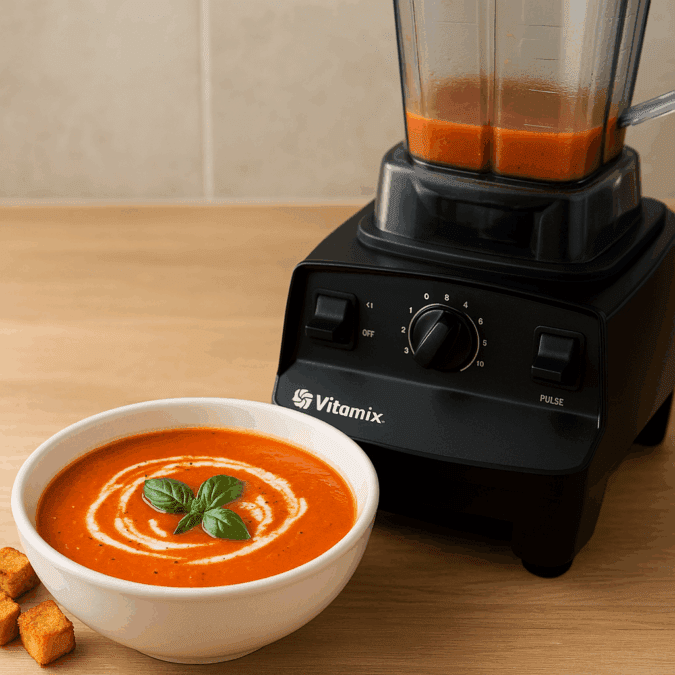
Table of Contents
Ingredients: Serves 2 to 3
- 1½ cups fire-roasted diced tomatoes
- 2 large roasted red bell peppers
- 1 small garlic clove
- ½ small yellow onion, roughly chopped
- 1 cup hot low-sodium vegetable broth
- ¼ cup heavy cream or full-fat coconut milk
- 1 tablespoon olive oil
- ½ teaspoon salt
- ¼ teaspoon black pepper
- ¼ teaspoon smoked paprika
- Optional garnish: basil, croutons, ora drizzle of cream

Step-by-Step Instructions With Heat Building Cues
1 Prepare Ingredients for Smooth Circulation
Drain roasted peppers well. Excess surface liquid can thin the base too early and reduce heating efficiency.
Chop the onion roughly but evenly so it breaks down at the same rate as the peppers.
2 Load in the Correct Order
Add hot broth first. Then peppers, tomatoes, onion, garlic, olive oil, and spices.
Liquid at the bottom ensures immediate blade contact and prevents early cavitation.
3 Blend and Allow Friction Heat to Develop
Start at speed 1. Increase gradually to speed 10 over 20 seconds.
Blend for 5 to 6 minutes.
You will see steam rising from the lid opening. The sound will shift from chopping to smooth circulation.
This is friction heat in action.
4 Add Cream Without Disrupting Emulsion
Reduce speed to 3. Remove the lid plug and pour in the cream slowly.
Blend 15 to 20 seconds just until incorporated.
Overblending dairy can slightly dull the fresh-roasted flavor.
5 Serve Immediately
Pour into bowls and garnish as desired.
Texture should be velvety with no vegetable fragments.
Why It Works Specifically in the Vitamix E310
The compact 48-ounce container creates a tight vortex column. That circulation keeps ingredients passing through the blade path repeatedly.
As resistance builds, the E310 maintains torque instead of slowing. That sustained velocity creates a measurable temperature rise.
If you want the complete durability and torque consistency breakdown across soups, nut butters, and dense smoothies, read the hands-on Vitamix E310 performance analysis that documents long cycle blending stability.
To compare how this motor handles raw fiber instead of heat-building blends, make the tropical beet detox smoothie engineered to test cellulose reduction under frozen load next.
How Friction Heating Actually Works
High-speed blades transfer kinetic energy into the liquid.
That energy becomes heat through:
- Particle collision
- Blade resistance
- Internal friction
Thicker mixtures heat faster because they create more resistance.
This soup sits in the ideal viscosity range for safe friction heating.
How to Avoid Overheating or Flavor Loss
Blending beyond 6 minutes can slightly concentrate flavor and reduce brightness.
If the soup becomes too thick:
- Add 1 to 2 tablespoons of hot water
- Blend 10 seconds at medium speed
Monitor steam output. Visible steam means sufficient heat has developed.
Can You Start With Cold Broth
Yes, but heating will take longer. Starting with warm broth shortens the total cycle time and reduces strain.
The E310 can bring cold liquid to serving temperature, but total blend time may extend by 60 to 90 seconds.
What If the Soup Is Too Thin
Thin texture usually means excess liquid or under-roasted vegetables.
To thicken:
- Add a small handful of soaked cashews
- Blend 30 seconds at high speed
This increases the body without flour or starch.
Storage Scaling and Practical Use
Refrigerator
Store in an airtight container up to 4 days. Reheat gently or reblend for 30 seconds to restore smoothness.
Freezer
Freeze in individual portions up to 2 months. Thaw overnight and blend briefly to re-emulsify.
Scaling
Do not exceed 75 percent of container capacity when making hot soups. Adequate headspace allows safe steam circulation.
Performance and Texture Questions Vitamix E310 Owners Actually Ask
Can I use raw tomatoes instead of canned?
Yes, but the soup will be lighter and slightly thinner. Add a spoon of tomato paste if you want a deeper roasted flavor and a stronger body.
Is this soup vegan?
It becomes vegan when using coconut milk instead of cream. The base ingredients are already plant-based.
Can I add protein?
White beans blend smoothly into this base and increase thickness. Add ¼ cup and blend an extra 30 seconds at high speed.
How spicy is it?
As written, it is mild and smoky. Add cayenne or red pepper flakes for more heat without affecting texture.
Can the E310 really heat soup without a stove?
Yes. Sustained high-speed blending for 5 to 6 minutes generates enough friction heat to produce visible steam and serve a hot soup.
Final Takeaway
This Roasted Red Pepper and Tomato Soup is not just comfort food. It is a friction heat demonstration that proves the Vitamix E310 can blend and heat simultaneously.
You learn how viscosity affects temperature rise, how vortex stability maintains torque, and how to control texture without starch thickeners.
Master this soup, and you understand how your blender converts motion into heat. That knowledge carries into sauces, purees, and other high-resistance blends.
That is appliance mastery built through practice.