The BLACK+DECKER Purifry Air Fryer 4QT is positioned as a compact solution for people who want crisp food without the time, oil, and heat of traditional frying. It promises faster meals, simple controls, and a footprint that fits small kitchens comfortably.
On the surface, it looks like an easy upgrade from oven cooking. It heats quickly, uses less energy for small meals, and reduces cleanup compared to sheet pans.
The deeper question is whether four quarts is enough long-term. Will this simplify your dinner routine, or will capacity limits create frustration after a few months?
This review breaks that down clearly so you can make a confident decision.
If you want to see how this model compares across different size categories and cooking needs, explore our complete air fryer reviews hub organized by kitchen size and meal style, to understand where compact units truly fit.
Verdict
The BLACK+DECKER Purifry 4QT is an excellent fit for singles and couples who prepare small meals consistently. It delivers fast cooking, manageable noise, and a minimal learning curve.
It is not built for larger households or for cooking multiple components simultaneously. Capacity becomes the limiting factor.
If you cook for one or two most nights, this is practical and efficient. If you regularly cook for four or more, consider sizing up before buying.
Table of Contents
What This Air Fryer Actually Solves
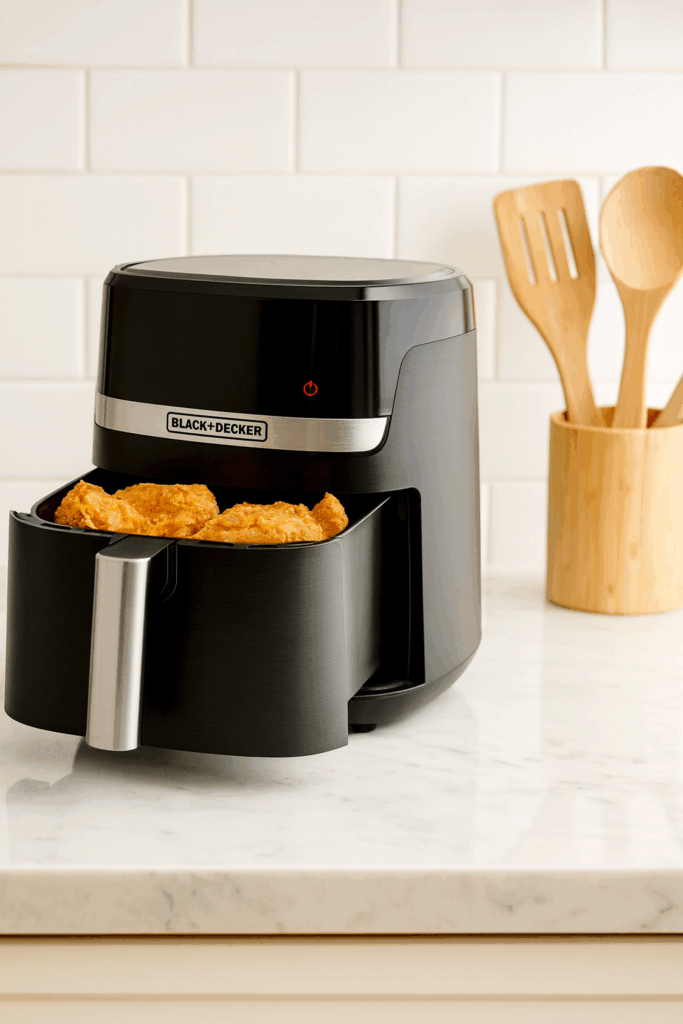
This model addresses three specific frustrations.
First, long oven preheat times for small meals.
Second, heating the entire kitchen just to cook one dish.
Third, greasy sheet pans that require soaking and scrubbing.
It does not solve large family meal coordination. It is not a full oven replacement for holiday trays or multi-course dinners.
It works best as a fast, focused cooking tool for modest portions.
Understanding that positioning prevents unrealistic expectations.
4QT Capacity Explained in Real Food Terms
Four quarts can sound larger than they feel.
In practice, it comfortably holds two medium chicken breasts, two salmon fillets, eight to ten wings, or roughly one pound of fries without overcrowding.
That feeds two adults easily. It can stretch to four smaller portions, but not without tighter spacing.
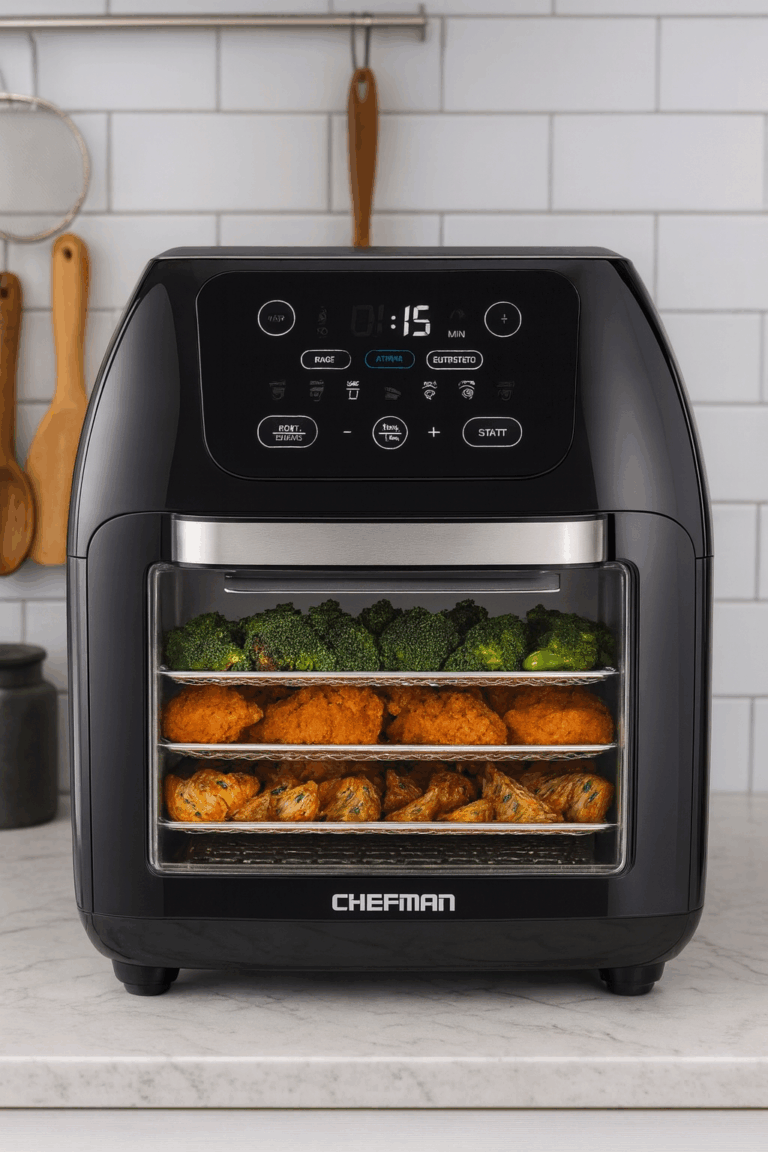
It cannot cook protein and vegetables together without batching. That is where larger single-basket or dual-basket systems begin to justify their size.
If you are unsure which category fits your routine, our air fryer comparison guide breaking down compact versus family-capacity models, walks through sizing logic step by step.
Does This Stay on the Counter or Go Back in the Cabinet?
Size is not just about food volume. It is about permanence.
The Purifry 4QT is compact enough to store in most standard cabinets, but whether you actually put it away depends on how often you use it. If you cook with it three to four times per week, it typically earns permanent counter space.
It is lighter and easier to move than larger 6QT or dual-basket systems. That makes occasional storage realistic rather than frustrating.
For very small kitchens, the footprint feels proportional. It does not dominate prep space. However, if counter space is already limited, even a compact appliance can feel intrusive.
If you want a unit that can be stored easily between uses, this size category works well. If you expect it to replace multiple appliances and stay out permanently, counter planning still matters.
When 4QT Starts to Feel Too Small
Four quarts feels generous when cooking for one or two people. It begins to feel restrictive when portions increase or meals become more coordinated.
If you cook for teenagers, host guests, or try to prepare protein and vegetables at the same time, you will notice the limit quickly. The basket does not comfortably support large batch cooking without stacking.
Meal prep also exposes the ceiling. Cooking multiple servings in one session requires cooking in rounds, which removes the time-saving advantage.
If your routine regularly includes more than two full portions per meal, sizing up prevents frustration later.
Real Weeknight Cooking Scenario
Let’s test a realistic dinner.
Chicken tenders with roasted zucchini.
Preparation takes about five minutes. Set the temperature to 390 degrees and cook for eighteen minutes, flipping once halfway.
Total time, including a brief preheat, is roughly twenty minutes.
Now compare that to a conventional oven. Preheat typically takes twelve minutes. Cook time adds twenty-five minutes. Total time approaches thirty-seven minutes.
The air fryer saves approximately fifteen minutes and produces significantly less ambient heat.
The tradeoff is coordination. You cook one component at a time rather than finishing multiple dishes simultaneously.
Cooking Technology and Performance
The Purifry uses high-speed convection airflow that reaches up to 400 degrees. Hot air circulates rapidly around the food, creating a crisp texture with minimal oil.
For frozen foods such as fries, nuggets, and wings, results are consistently golden when the basket is not overcrowded.
For thicker proteins, flipping once midway improves even browning.
Air fryers rely heavily on circulation. Overlapping food restricts airflow and reduces crisping. Keeping food in a single layer maintains performance.
The technology is effective within portion limits. It does not eliminate the need for spacing or mid-cycle interaction.
Speed and Efficiency Compared to an Oven
This unit draws approximately 1500 watts. Conventional ovens typically draw between 2400 and 5000 watts.
Preheat time averages two to three minutes for the Purifry, compared to ten to fifteen minutes for most ovens.
For small meals, this results in lower energy usage and faster turnaround. It also reduces kitchen heat, which becomes especially noticeable during warmer months.
For large sheet pan meals or bulk baking, the oven still handles volume more efficiently.
Bottom line: It is highly efficient for small portions but not a complete replacement for oven capacity.
Controls and Ease of Use
The control system uses manual dials rather than a touchscreen. Temperature and time are set mechanically.
For users who prefer simplicity, this design feels intuitive. There are no layered menus and no digital presets to interpret.
Some buyers prefer digital displays and food-specific buttons. This model favors straightforward operation instead.
If you value low friction and quick setup, the simplicity becomes a strength.
Cleaning and Maintenance
The basket features a nonstick coating that releases food residue easily. Most mess wipes away with a damp cloth if cleaned soon after cooking.
Parts are dishwasher safe, though hand washing can extend coating life.
Regular interior wiping prevents grease buildup that could restrict airflow over time.
Maintenance is simple when done consistently. Neglect increases effort later.
How Long Does the Nonstick Coating Realistically Lasts
The basket coating holds up well with proper care. Avoiding metal utensils significantly extends its lifespan.
Frequent dishwasher use can gradually reduce coating integrity over time. Hand washing tends to preserve the surface longer.
With moderate use and proper maintenance, most owners can expect three to four years of consistent performance.
Performance decline usually appears gradually through minor sticking or reduced airflow from buildup rather than sudden failure.
Understanding this lifespan helps set realistic expectations before purchasing.
Noise and Kitchen Environment
The fan produces a steady convection hum similar to a small countertop oven. It is audible but not disruptive.
It is quieter than most dual-basket systems due to its smaller airflow chamber.
Heat remains localized around the appliance rather than spreading through the entire kitchen as ovens often do.
For apartments or small kitchens, this environmental difference is meaningful.
What Changes After 60 Days of Ownership
The first few weeks with the Purifry often feel like a meaningful upgrade from oven cooking. Meals finish faster, cleanup feels easier, and crisp texture without oil becomes the new normal.
After about two months, usage patterns stabilize. It becomes the default tool for frozen foods, quick proteins, and leftovers. It rarely replaces the oven entirely, but it reduces how often you turn it on for small dinners.
This is also when capacity clarity sets in. If you consistently cook for one or two people, the size continues to feel appropriate. If you cook for four, batching begins to feel more noticeable.
Durability expectations also become clearer over time. The nonstick coating holds up well when metal utensils are avoided, and cleaning is consistent. Minor sticking, if it occurs, usually appears gradually rather than suddenly.
With moderate weekly use, most owners can expect three to four years of reliable performance before noticeable wear affects convenience. That aligns with most compact air fryers in this price range.
By this stage, the appliance either becomes a routine fixture in your kitchen or an occasional helper. Long-term satisfaction depends almost entirely on whether your portion size matches its design.
If your routine aligns with small-batch cooking, it remains a high-frequency appliance. If not, this is typically when buyers begin researching larger capacity upgrades.
What This Replaces in Your Kitchen
For small households, the Purifry often replaces a toaster oven. It heats faster and produces a crisp texture more efficiently.
It also reduces reliance on the microwave for reheating foods that benefit from restored crispness.
For light dinners, it can replace oven use entirely. For large trays, casseroles, or holiday cooking, the oven remains necessary.
If you currently use a 3QT air fryer, this feels like a moderate upgrade in space but not a dramatic jump in capacity.
It replaces small, inefficient cooking habits rather than large-scale meal preparation.
4QT vs 3QT vs 6QT: What Actually Changes?
The difference between 3QT and 4QT feels small on paper but noticeable in practice. The extra quart allows slightly larger proteins and better spacing for fries, reducing overcrowding.
Moving from 4QT to 6QT creates a more meaningful jump. You gain the ability to cook larger proteins without tight spacing and reduce batching for three or four servings.
However, larger baskets also take up more counter space and feel heavier to store. For singles and couples, 6QT can feel oversized for daily use.
The 4QT sits in the middle ground. It offers more breathing room than ultra-compact models without committing to full family capacity.
Choosing correctly depends on your portion reality, not your occasional dinner guest.
When Sizing Up Makes More Sense
The 4QT model works well when meals stay small and simple. It becomes restrictive when portion size or coordination needs increase.
If you cook for four or more people regularly, a 6QT basket provides noticeably more breathing room. Larger proteins fit without crowding, and fries crisp more evenly with improved spacing.
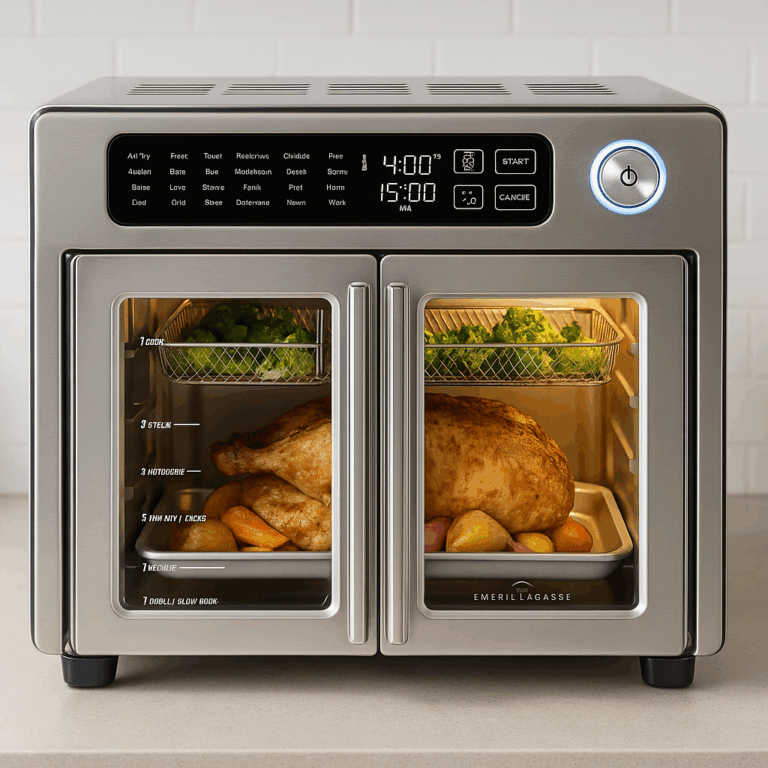
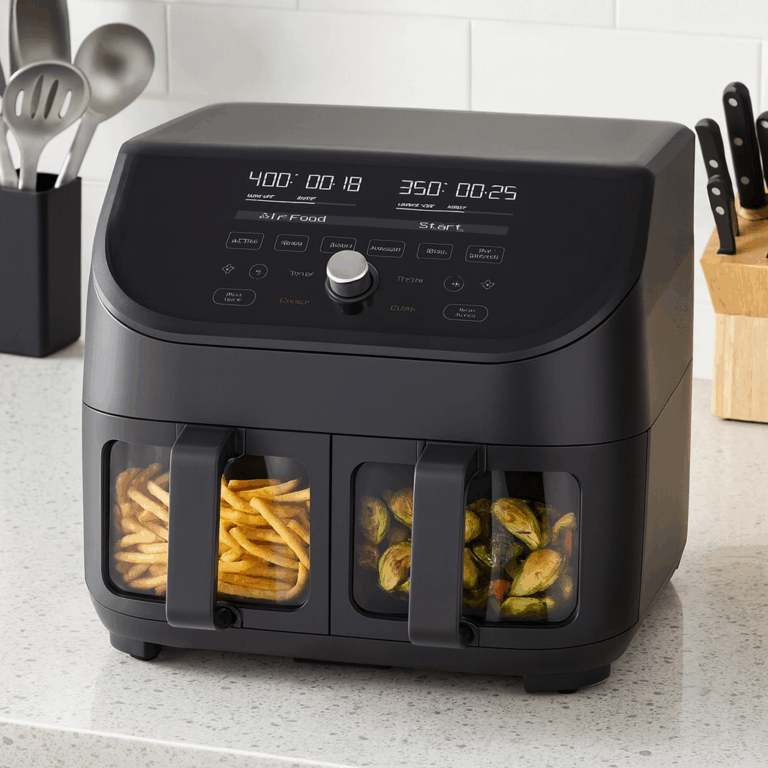
If finishing protein and vegetables at the same time matters to you, an 8QT dual-basket model changes workflow entirely. Separate temperature zones allow synchronized cooking without batching.
Meal preppers also benefit from a larger capacity. Cooking multiple servings in one session preserves the time-saving advantage that smaller baskets lose when used in rounds.
However, larger models demand more counter space and feel heavier to store. For singles or couples, oversized capacity can feel inefficient and unnecessary.
The right decision depends on your consistent routine, not occasional events. If most of your dinners serve one or two people, 4QT remains practical. If your meals regularly exceed that, sizing up once prevents upgrading later.
Pros
The compact footprint fits small kitchens comfortably.
Cooking speed reduces overall dinner time.
Energy usage is lower than that of a conventional oven for small meals.
Manual controls simplify operation.
Nonstick basket makes cleanup manageable.
Purchase price is accessible compared to larger systems.
Cons
Capacity is limited to small or moderate portions.
No dual-zone cooking for simultaneous dishes.
Manual dials may feel basic to users preferring digital displays.
Overcrowding reduces crisping performance.
Who Quietly Regrets Buying This Model
Buyers who cook for four or more people nightly often feel restricted within weeks. The need to cook in rounds removes some of the speed advantage.
Meal preppers who prefer bulk cooking may find the basket too limiting for efficient batching.
Those expecting a complete oven replacement for all dinners typically adjust expectations quickly.
Food quality is rarely the issue. Volume and coordination are.
If your meals consistently exceed small-batch cooking, starting with a larger capacity prevents future upgrade costs.
What Buyers Often Ask Before Purchasing
Is 4QT enough for a family of four?
It can work for lighter meals but typically requires cooking in batches. For consistent family dinners, a larger capacity model is more practical.
Can it cook frozen food without thawing?
Yes. Frozen fries, nuggets, and wings cook well directly from frozen. Shaking once midway improves texture.
Does it require preheating?
Preheating improves crisping slightly but is not mandatory. Two to three minutes is usually sufficient.
Is it noisy compared to other air fryers?
It produces moderate convection sound. It is quieter than most larger dual-basket models but not silent.
Can it replace my oven?
For small meals, yes. For large trays, casseroles, or holiday cooking, it cannot match oven capacity.
Is It Worth the Price Over Three Years?
Purchase price alone does not determine value. Usage frequency does.
If used three times per week, this unit handles more than 450 cooking sessions over three years. That spreads the cost across hundreds of meals.
Energy savings compared to oven use for small portions also add incremental value. Faster cook times reduce electricity usage for routine dinners.
The risk comes from underuse. If capacity feels limiting and you upgrade within a year, overall value declines.
For households that match its size, the cost-to-use ratio remains strong. For growing families, sizing up initially prevents double-spending.
Final Takeaway
The BLACK+DECKER Purifry Air Fryer 4QT succeeds when used within its intended scope. It is compact, efficient, and easy to operate.
It does not aim to be a family-scale powerhouse or a synchronized cooking solution. Its strength lies in quick, focused meal preparation for one or two people.
If your routine revolves around small, frequent meals and you value simplicity, this model fits naturally into your kitchen.
If your cooking regularly exceeds small-batch portions, a larger air fryer will serve you better long term.