Multicookers have become one of the most popular kitchen appliances because they combine several cooking methods into one machine. Instead of juggling a slow cooker, stovetop pot, and rice cooker, one appliance can handle most daily cooking tasks.
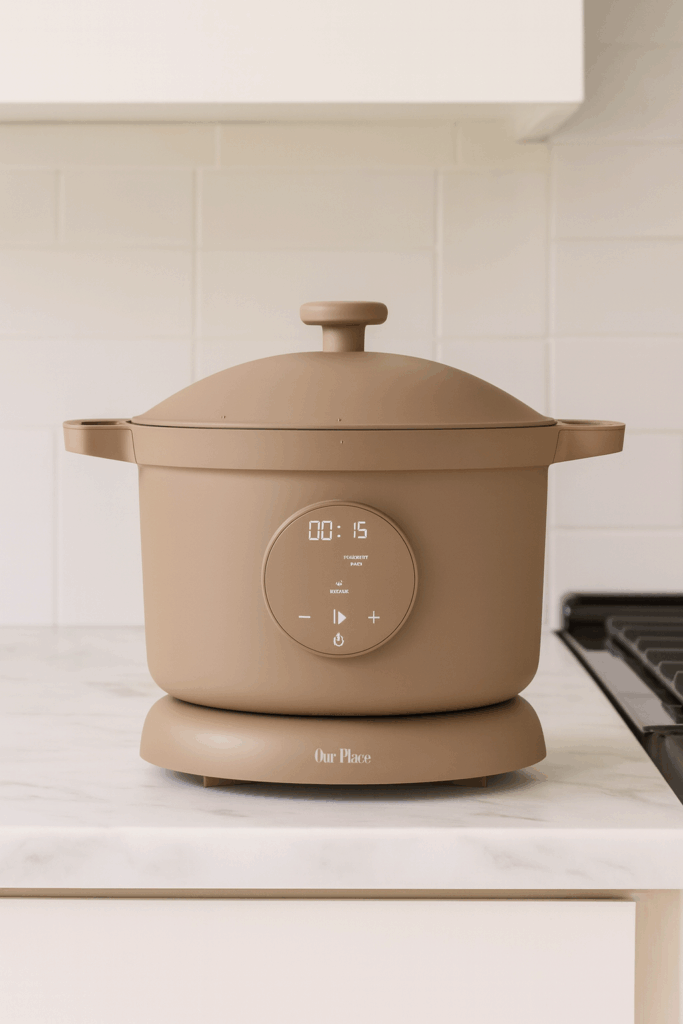
The Our Place Dream Cooker 6-Quart Multicooker focuses on simplicity and design. It offers a small number of cooking modes, intuitive controls, and a modern look meant to stay on the countertop.
In this review, we break down how the Dream Cooker performs in real kitchen situations. We will look at cooking speed, cleaning, long-term durability, and how it compares with popular alternatives like Instant Pot and Ninja multicookers.
If you want to explore additional models in this category, our collection of in-depth pressure cooker reviews and real cooking performance comparisons provides a broader look at the appliances competing in this space.
Verdict: Is the Dream Cooker Worth Buying?
The Our Place Dream Cooker is best for cooks who want a clean, minimal multicooker that handles everyday meals efficiently.
It excels in several areas:
- simple control interface
- attractive countertop design
- reliable pressure cooking
- easy-to-clean nonstick inner pot
However, there are tradeoffs.
It costs more than many competing multicookers and offers fewer preset programs. Some cooks may prefer the expanded features available in other models.
If you value design, simplicity, and reliable performance for common meals, the Dream Cooker is a strong option in this category. For readers comparing multiple models before deciding, our full library of pressure cooker reviews and real cooking performance comparisons explores how different multicookers perform in everyday kitchens.
Table of Contents
What Problems Does the Dream Cooker Solve
Modern home cooking often comes down to time.
Preparing meals after work or during busy evenings can be difficult when traditional cooking methods take hours. Pressure cookers solve this problem by dramatically reducing cooking time.
The Dream Cooker focuses on four essential functions:
- Pressure cooking
- Slow cooking
- Sear and sauté
- Keep warm
This combination allows cooks to prepare soups, stews, grains, and meats without needing multiple appliances.
Instead of offering dozens of confusing presets, the Dream Cooker focuses on the core cooking methods most people use regularly.
Understanding the 6-Quart Capacity
The 6-quart size is considered the standard multicooker capacity for most households.
In practical terms, the Dream Cooker can handle:
- chili or soup for 4 to 6 people
- a 3-pound beef roast
- shredded chicken for tacos or salads
- rice and grain dishes for family meals
- large batches of pasta sauce
For couples and small families, this size provides enough flexibility for both everyday dinners and meal preparation.
Single cooks may find it slightly large, while larger families may prefer a bigger multicooker.
Counter Space and Kitchen Placement
One of the Dream Cooker’s biggest differences from other multicookers is its appearance.
Many pressure cookers look like industrial kitchen equipment. The Dream Cooker takes a more modern design approach.
Its rounded edges, soft colors, and minimalist control panel help it blend into contemporary kitchens.
The overall footprint is similar to that of other 6-quart multicookers, but the design encourages leaving it on the counter rather than storing it away.
You should allow about 15 inches of vertical clearance so steam can release safely during cooking.
Real Cooking Scenario: Weeknight Chicken and Rice
To understand how a multicooker performs, a simple one-pot dinner test works well.
Chicken and rice is a common pressure cooker meal and highlights the strengths of this cooking method.
Start by selecting sauté mode and browning seasoned chicken thighs. Add onions and garlic to develop flavor. Once the ingredients soften, stir in rice and chicken broth.
Seal the lid and select pressure cooking for eight minutes.
The cooker takes about eight to ten minutes to reach full pressure.
When cooking finishes, the automatic steam release activates. The final dish comes out tender and evenly cooked.
The entire process takes about 25 minutes. The same meal on a stovetop usually takes closer to 50 minutes.
Best Meals That Work Well in the Dream Cooker
One of the biggest advantages of pressure cookers is how well they handle foods that normally require long cooking times. The Dream Cooker performs best with dishes that benefit from moist heat and sealed cooking environments.
Soups and stews are among the easiest meals to prepare. Pressure cooking quickly breaks down vegetables and tenderizes meat, producing rich flavor in a fraction of the usual time. Chili, lentil soup, and chicken noodle soup all work particularly well.
Beans and legumes also benefit from pressure cooking. Dry beans that would normally simmer for over an hour can become tender in about 30 minutes. This makes it easier to prepare homemade black beans, chickpeas, or refried beans without soaking overnight.
Braised meats are another strong use case. Cuts like beef chuck, pork shoulder, and short ribs soften quickly under pressure, creating tender results similar to slow braising.
Rice and grain dishes are also reliable. White rice, brown rice, quinoa, and risotto-style meals cook evenly while staying moist.
In practice, the Dream Cooker works best when used for hearty meals that rely on moisture, broth, or sauces.
How the Dream Cooker Generates Heat and Pressure
Electric pressure cookers operate using sealed steam pressure.
Once the lid locks and the cooker heats the liquid inside the pot, steam builds and raises the internal temperature above normal boiling levels.
Water typically boils at 212°F.
Inside a pressure cooker, temperatures rise to roughly 240°F.
This increase speeds up cooking dramatically while keeping moisture sealed inside the pot.
The Dream Cooker uses electronic sensors to maintain stable temperature and pressure during the cooking cycle.
Cooking Speed Compared With Traditional Methods
Pressure cooking reduces cooking time for many common dishes.
Here are typical comparisons:
Beef stew: about 2 to 3 hours on the stovetop versus roughly 35 minutes in a pressure cooker.
Dried beans: about 90 minutes simmering versus around 30 minutes under pressure.
Chicken soup: about 90 minutes versus approximately 25 minutes.
Pulled pork: several hours in a slow cooker versus about one hour with pressure cooking.
These time savings are the main reason multicookers became popular in modern kitchens.
Controls and Ease of Use
The Dream Cooker keeps the control interface simple.
Instead of dozens of buttons, the panel focuses on a few adjustable settings:
- cooking mode
- time selection
- temperature control
This layout makes the appliance easier to learn compared with multicookers that rely heavily on preset programs.
Most users become comfortable with the controls after one or two uses.
Some advanced cooks may miss extra presets, but the simplified interface makes daily cooking more straightforward.
Cleaning and Ongoing Maintenance
Cleaning convenience often determines whether an appliance gets used frequently.
The Dream Cooker uses a toxin-free nonstick inner pot designed to reduce food sticking.
Typical cleaning involves removing the pot and washing it with warm water and mild soap. The smooth interior surface prevents most food from sticking, so cleanup usually takes only a few minutes.
The lid and steam valve should also be wiped regularly.
For detailed long-term care instructions, this practical pressure cooker maintenance and cleaning guide explains how to keep multicookers operating properly for years.
Noise and Kitchen Environment
Pressure cookers produce some sound during operation, but the Dream Cooker remains relatively quiet.
You may notice a gentle humming sound while the heating element operates. Occasional clicking sounds occur as the pressure regulator adjusts.
The automatic steam release produces a short burst of steam at the end of cooking.
Overall noise levels are comparable to most electric pressure cookers and are unlikely to disrupt conversation in the kitchen.
Ownership After 60–90 Days
After several months of regular use, most owners settle into a routine with the Dream Cooker.
Common meals prepared in the appliance include:
- soups and chili
- rice dishes
- braised meats
- shredded chicken
- bean dishes
The nonstick coating typically remains in good condition with proper care, and the simplified control system continues to make daily cooking convenient.
Because of its appearance, many owners leave the appliance on their countertop instead of storing it away.
Long-Term Durability
Most multicookers last four to six years with regular use.
The parts most likely to wear include the silicone sealing ring and occasionally the nonstick coating inside the cooking pot.
The Dream Cooker’s inner pot should last several years if metal utensils and abrasive scrubbers are avoided.
Replacement sealing rings are inexpensive and are commonly replaced during the lifespan of pressure cookers.
What This Multicooker Replaces in the Kitchen
One advantage of multicookers is their ability to replace several kitchen appliances.
The Dream Cooker can replace:
- a traditional slow cooker
- a stovetop pressure cooker
- a rice cooker
- a sauté pan for some dishes
However, it does not replace an air fryer, which is a feature found in some competing multicookers.
Situations Where This Multicooker May Not Be Ideal
While the Dream Cooker handles many cooking tasks well, it is not perfect for every type of meal.
Foods that rely on crisp textures usually require dry heat, which pressure cookers cannot provide. Fried foods, roasted vegetables, and crispy chicken skin will not achieve the same results inside a sealed cooking chamber.
Baked goods can also be difficult. Some pressure cookers support cake baking, but the Dream Cooker is not designed specifically for this purpose. Traditional ovens still produce better results for most baked desserts.
Delicate seafood can sometimes overcook under pressure because cooking happens very quickly. Fish and shrimp often require precise timing to prevent a rubbery texture.
Finally, the Dream Cooker does not include air frying capabilities. Appliances like the Ninja Foodi add air frying, which allows crisp cooking. The Dream Cooker focuses instead on pressure cooking and slow cooking.
For most households, these limitations are minor, but they are worth considering if crispy foods are a regular part of your cooking routine.
Size Comparison: How the 6-Quart Model Fits the Lineup
Choosing the correct multicooker size can affect cooking flexibility.
Three common multicooker sizes dominate the market.
Small 3- to 4-quart cookers work best for single cooks or couples. They save space but limit batch cooking.
Six-quart models provide the most versatility. They handle everyday family meals and meal prep without taking excessive space.
Eight-quart multicookers are designed for larger families or bulk cooking.
For most households, the 6-quart size offers the best balance between capacity and kitchen footprint.
When You Might Want a Larger Model
Some buyers may benefit from upgrading to a larger multicooker.
An 8-quart model makes sense if you: Cook for five or more people, regularly
prepare large batches of soup or chili, cook whole chickens or large cuts of meat.
If your meals typically serve two to four people, the 6-quart size remains the most practical option.
If you want to compare other models and sizes before choosing, exploring additional electric multicooker comparisons can provide a helpful perspective on the broader category.
Cost of Ownership Over Time
The Dream Cooker costs more upfront than many multicookers.
However, operating costs remain low.
Most pressure cooking cycles use roughly half to one kilowatt-hour of electricity. Over several years, total electricity costs have remained minimal.
Occasional replacement parts, such as sealing rings, may add a small expense.
Overall, multicookers remain one of the most efficient cooking appliances available.
Who This Cooker Is Best For
The Dream Cooker works best for cooks who appreciate simplicity and modern design.
It fits well for:
- busy households that need faster meal preparation
- people who dislike complicated control panels
- small kitchens that benefit from multifunction appliances
- home cooks who value aesthetic kitchen tools
Its simplified controls reduce the learning curve for everyday cooking.
Who Should Consider Other Options
The Dream Cooker may not suit everyone.
You may prefer another multicooker if you:
- want air frying functionality
- prefer a large number of preset cooking programs
- are looking for the lowest price option
Instant Pot and Ninja multicookers often offer additional cooking modes for those who want maximum versatility.
Common Questions People Ask Before Buying the Dream Cooker
What cooking modes does the Dream Cooker include?
It offers pressure cooking, slow cooking, searing and sautéing, and keep warm functions.
Does it cook faster than traditional cooking?
Yes. Pressure cooking can reduce cooking times by up to 80 percent.
Can frozen food be cooked in the Dream Cooker?
Yes. Pressure cooking works well for frozen meats, vegetables, and prepared foods.
Is the inner pot dishwasher safe?
Hand washing is recommended to protect the nonstick coating.
Does the cooker include air frying capability?
No. The Dream Cooker focuses on pressure cooking and slow cooking instead.
Final Takeaway
The Our Place Dream Cooker 6-Quart Multicooker offers a balanced combination of design and practical cooking performance.
It simplifies multicooker operation with a clean interface while still delivering the fast cooking results people expect from pressure cooking.
You should consider buying it if you want a straightforward multicooker that looks good on the countertop and handles everyday meals reliably.
You may want another option if you prefer appliances with more preset functions or built-in air frying.
For many kitchens, the Dream Cooker strikes a comfortable balance between modern style and dependable performance, making it a solid choice for everyday cooking.