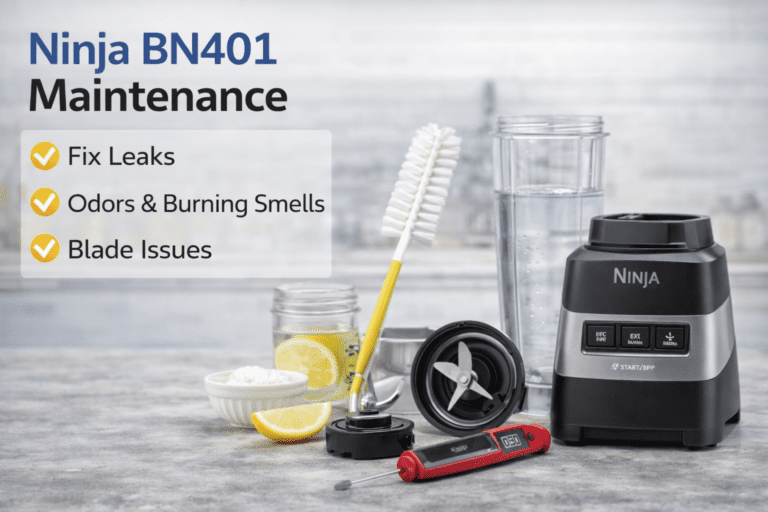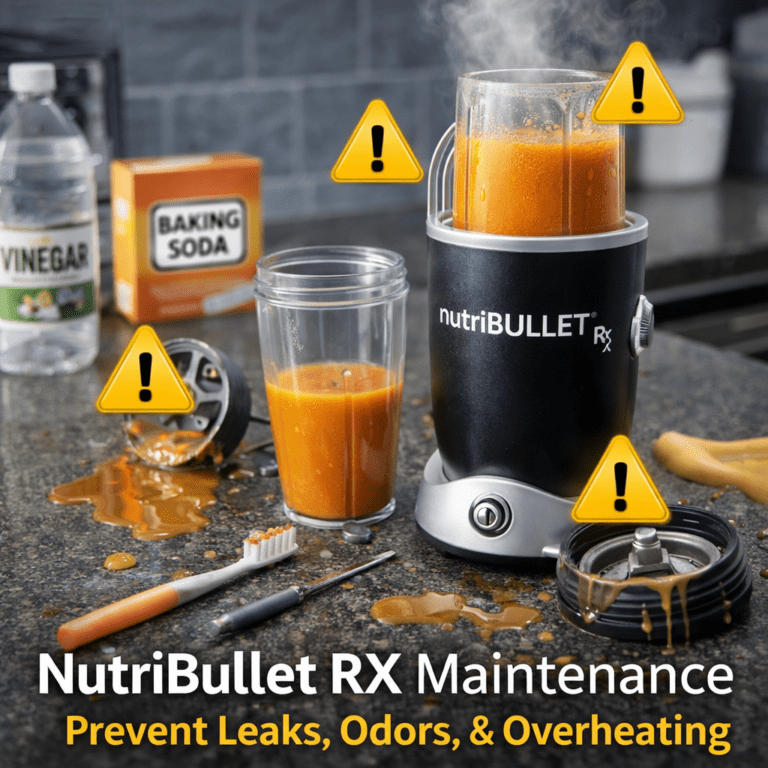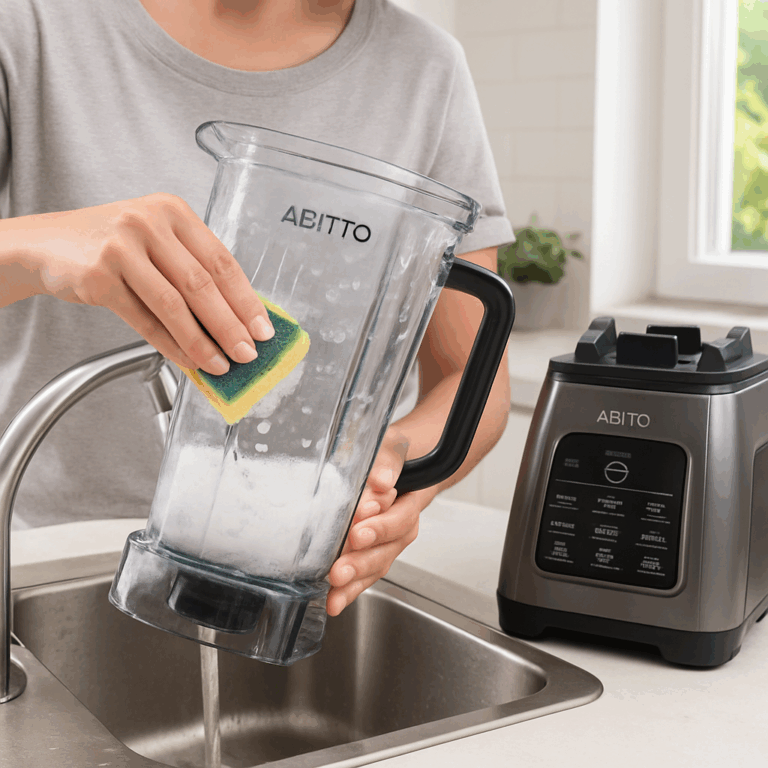
The Ninja Compact Kitchen System combines blending, food processing, and dough mixing into a counter-friendly platform. It handles smoothies, sauces, dough, frozen drinks, and meal prep without the footprint of larger systems.
But multi-function systems experience multi-point wear.
Owners commonly search:
- Ninja Compact Kitchen System is leaking from the bottom
- Ninja Compact Kitchen System smells like burning
- Ninja Compact Kitchen System not turning on
- Ninja Compact Kitchen System overheating
- Ninja Compact Kitchen System blade not spinning
This guide explains proper cleaning, mechanical preservation, airflow protection, gasket care, and long-term durability strategy.
If you want performance data, torque comparison, and real-world testing first, review the full Ninja Compact Kitchen System performance breakdown and hands-on testing before diving into maintenance strategy.
Now let’s protect it properly.
Table of Contents
Why Maintenance Matters on the Compact Kitchen System
This system runs multiple blade types on a single motor base:
- Stacked blender blade
- Food processor chopping blade
- Dough blade
- Personal cup extractor blade
Each attachment loads the motor differently.
Dough creates torque stress.
Frozen blends create impact stress.
Personal cups create startup strain.
Heat is the common denominator.
Heat determines lifespan.
Here is what typically wears first:
- Blade assembly gasket
- Processor lid seal
- Drive coupling teeth
- Motor cooling vents
- Blade bearing housing
Most failures trace back to residue buildup and airflow restriction.
Maintenance prevents both.
Understanding the Mechanical Design
Before cleaning, understand how the system functions.
Multi-Attachment Locking System
Each container must align with safety tabs.
Misalignment prevents startup.
Food debris in locking tracks causes false “not turning on” errors.
Blade Hub and Gear Interface
The blade column connects to a drive socket.
If residue builds inside the blade base, resistance increases.
Resistance increases motor heat.
Compact Motor Airflow
Air enters through the underside vents.
Blocked vents cause overheating during heavy blends.
Daily Cleaning Routine After Every Use
Immediate cleaning prevents 80 percent of odor and leak issues.
Step 1: Disassemble Immediately
Remove pitcher or processor bowl.
Detach the blade assembly.
Remove lid and gasket if accessible.
Do not let the residue dry.
Step 2: Warm Rinse
Rinse containers under warm water.
Avoid sudden hot water after frozen blending.
Thermal shock stresses plastic.
Step 3: Soap Pulse Cycle
Fill the container halfway with warm water.
Add two drops of mild dish soap.
Pulse 20 to 30 seconds.
Rinse thoroughly.
Step 4: Air Dry Fully
Invert containers.
Store lids off.
Never store fully assembled while wet.
Moisture trapped in seals causes mold and odor.
For deeper seal protection methods and airflow preservation strategies across multi-function blender platforms, review complete blender maintenance and long-term care systems.
Weekly Deep Cleaning Protocol
Heavy users should deep clean weekly.
Especially after:
- Dough
- Nut butter
- Thick batters
- Protein smoothies
- Turmeric blends
Vinegar Breakdown Method
- Fill the container halfway with warm water
- Add 1 cup of white vinegar
- Soak for 20 to 30 minutes
- Scrub gently
- Rinse thoroughly
This breaks down oils and mineral buildup.
Gasket and Seal Cleaning
Remove gaskets carefully.
Wash with mild soap.
Rinse completely.
Dry fully before reinstalling.
Never stretch or twist seals.
Lemon Deodorizing Refresh
Blend lemon juice and water for 20 seconds.
Rinse and air dry.
Blade Assembly and Gear Care
The stacked blade tower and dough blade experience high torque.
Prevent drag with:
- Immediate rinse after use
- Weekly warm soak
- Soft brush cleaning under the blade hub
Never use metal utensils.
Never attempt sharpening.
Replace worn blade assemblies instead.
Motor Base Cleaning and Airflow Protection
Search trend: Ninja Compact Kitchen System overheating during dough mixing.
Most overheating issues relate to airflow blockage.
Monthly Vent Cleaning
- Unplug unit
- Turn upside down
- Use a soft brush or compressed air
- Wipe exterior with a damp microfiber cloth
Never submerge the motor base.
Never spray cleaner directly onto controls.
Why the Ninja Compact System Is Overheating
Overheating occurs when:
- The dough batch is too large
- Insufficient liquid during blending
- Continuous runtime exceeds 60 seconds
- Vents clogged
- Blade drag from residue
Allow 2 minutes’ rest between heavy cycles.
Repeated overheating shortens motor life.
Why It Smells Like Burning
Burning smell signals motor strain.
Common causes:
- Thick mixture without liquid
- Overfilled container
- Blocked airflow
- Jammed blade hub
Stop immediately.
Unplug.
Allow 20 to 30 minutes to cool.
Inspect blade movement manually.
Why It Is Not Turning On
If the system will not start:
- Confirm the container is fully locked
- Check lid alignment
- Clean locking tracks
- Allow cooldown if overheated
Safety interlocks prevent startup when misaligned.
Why It Is Leaking From the Bottom
Leaks usually originate at:
- Blade assembly gasket
- Processor lid seal
- Overtightened blade
- Cracked container
Inspect seals monthly.
Replace hardened gaskets immediately.
Never store a blade tightly screwed onto a cup long-term.
Unsafe Habits That Shorten Lifespan
Avoid:
- Running dry
- Blending boiling liquids
- Overfilling beyond the max line
- Ignoring vent cleaning
- Storing sealed while wet
- Using a processor bowl for large liquid batches
Compact systems require airflow discipline.
Monthly Maintenance Checklist
Once per month:
- Full vinegar soak
- Gasket inspection
- Vent cleaning
- Drive coupling inspection
- Blade drag test
If comparing compact multi-function systems to larger countertop platforms before upgrading, explore top-rated blenders by motor power and durability class to understand structural differences.
Troubleshooting Questions Compact System Owners Ask
Why does my Ninja Compact overheat during dough?
Dough creates sustained torque. Reduce batch size and allow rest between pulses.
Why is my Compact Kitchen System leaking?
A flattened or dirty gasket is likely. Remove, clean, and reseat the seal.
Why does it smell burnt after smoothies?
Motor strain or restricted airflow increases heat. Stop and inspect vents.
Why won’t it start even though it has power?
The container may not be fully locked. Clean locking tabs and retry.
How often should I replace blade assemblies?
Typically, every 2 to 4 years, depending on usage intensity.
Lifespan Expectations
With disciplined maintenance:
- Blade assemblies: 2 to 4 years
- Gaskets: 18 to 36 months
- Motor durability: 4 to 6 years
Heavy weekly dough mixing reduces lifespan without airflow discipline.
Ownership Optimization Strategy
The Ninja Compact Kitchen System performs best when:
- Cleaned immediately
- Air-dried fully
- Used within safe runtime windows
- Stored unsealed
- Vents cleaned monthly
Power is not the issue.
Heat is the issue.
Control heat and you control lifespan.