The Chefman Obliterator Blender is built for brute force blending. It crushes ice, pulverizes frozen fruit, and powers through nut butter without hesitation.
That power creates friction.
Friction creates heat.
Heat determines lifespan.
Owners frequently search:
- Chefman Obliterator is leaking from the bottom
- Chefman Obliterator smells like burning
- Chefman Obliterator not turning on
- Chefman Obliterator overheating during smoothies
- Chefman Obliterator blade not spinning
This guide covers every maintenance layer required to prevent those problems. You will learn daily care, deep cleaning methods, mechanical wear points, airflow protection, and long-term durability strategy.
If you want full motor specs and torque testing before diving into ownership care, review hands-on performance testing of the Chefman Obliterator blender for a breakdown of power delivery and build quality.
Now let’s focus on preserving that power.
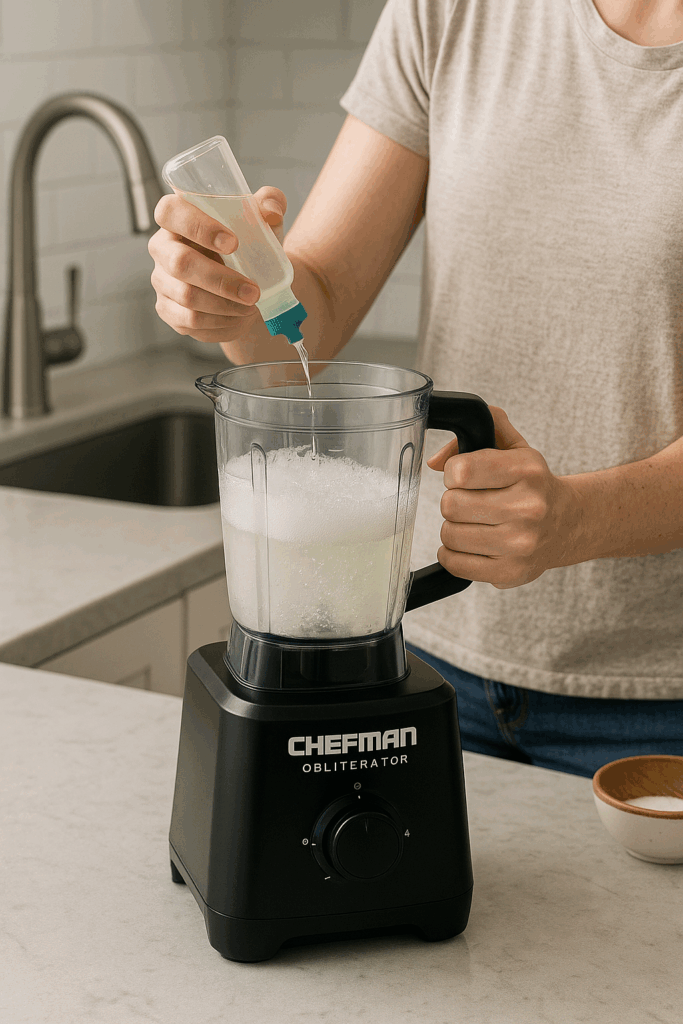
Table of Contents
Why Maintenance Is Critical for the Chefman Obliterator
The Obliterator is a high-torque countertop blender. It relies on sustained motor output under heavy loads.
Heavy loads create:
- Heat buildup
- Blade stress
- Seal compression
- Bearing strain
- Vent airflow demand
Here is what typically wears first:
- Rubber lid gasket
- Lower blade bearing housing
- Drive coupling teeth
- Internal cooling pathways
Neglect leads to:
- Odor retention
- Seal leaks
- Motor overheating
- Blade drag
- Premature shutdown
Maintenance prevents thermal stress accumulation.
Understanding the Obliterator’s Mechanical Design
Before cleaning, understand how this blender functions internally.
High-Torque Motor Core
This motor does not stall easily. It pushes through dense ingredients.
Unlike low-power units, it sustains high RPM under resistance.
Sustained resistance generates heat inside the motor housing.
Cooling vents underneath regulate the temperature.
Blocked vents equal rising heat.
Reinforced Blade Stack
The Obliterator uses hardened steel blades designed for ice and frozen ingredients.
However, even hardened steel dulls under residue accumulation.
Dried nut butter and protein film increase rotational resistance.
Resistance raises motor strain.
Strain increases heat.
Rubber Gasket Seal System
The lid and blade housing use compression gaskets.
Repeated high heat cycles compress silicone.
Compressed seals lose elasticity.
Loss of elasticity causes leaks.
Daily After-Use Cleaning Routine
Immediate cleaning reduces long-term wear by more than half.
Step 1: Empty Immediately
Do not allow ingredients to sit inside the jar.
Sugars and oils harden quickly.
Step 2: Warm Rinse
Rinse with warm water.
Avoid extremely hot water when blending frozen ingredients. Sudden expansion stresses plastic.
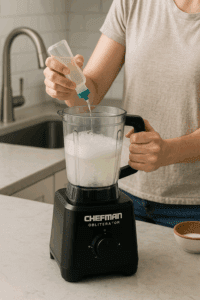
Step 3: Soap Self-Clean Cycle
Fill halfway with warm water.
Add one drop of dish soap.
Blend on low for 30 seconds.
This removes:
- Protein residue
- Green fiber buildup
- Nut oil film
Step 4: Thorough Rinse and Air Dry
Rinse completely.
Place upside down to air dry.
Leave the lid off.
Sealed moisture creates odor growth.
Weekly Deep Cleaning for Heavy Use
If you blend protein, turmeric, or fibrous greens, perform weekly deep cleaning.
Removing Strong Odors
Odors come from oil absorption in micro-scratches.
Procedure:
- Mix equal parts white vinegar and warm water
- Fill halfway
- Soak 20 minutes
- Blend for 20 seconds
- Rinse and air dry
Vinegar neutralizes oil molecules without damaging plastic.
For broader material-specific deep cleaning techniques across different blender builds, study long-term blender cleaning and maintenance methods for every motor class to refine your care routine.
Removing Turmeric and Protein Stains
Make a baking soda paste.
Apply gently with a soft sponge.
Focus near the blade base.
Avoid abrasive pads.
Scratches trap future residue.
Blade and Bearing Maintenance
The blade assembly is the most mechanically stressed component.
Preventing Blade Drag
If blades feel resistant:
- Soak the jar in hot, soapy water for 15 minutes
- Rinse thoroughly
- Rotate gently using base contact only
Never insert metal tools.
Metal contact alters blade alignment.
Misalignment increases vibration.
Vibration stresses bearings.
Inspecting the Lower Bearing Housing
Check monthly for:
- Uneven rotation
- Grinding sound
- Resistance during manual spin
Early detection prevents motor strain.
Gasket Care and Leak Prevention
Search behavior shows frequent leak complaints.
Most leaks occur from:
- Overfilling
- Improper lid alignment
- Compressed gasket
- Heat warping
Weekly Gasket Inspection
Remove the gasket.
Wash with mild soap.
Rinse thoroughly.
Air dry completely before reinstalling.
Never store with the lid tightly sealed.
Continuous compression flattens elasticity.
Motor Base Cleaning and Airflow Protection
Overheating complaints spike when vents clog.
The Obliterator pulls air from the underside vents.
Dust blocks airflow.
Airflow reduction increases internal temperature.
Safe Motor Base Cleaning Steps
- Unplug unit
- Turn upside down
- Use a soft brush to clean vents
- Wipe exterior with a damp microfiber cloth
Never submerge the motor base.
Never spray liquid into seams.
Moisture damages circuitry.
Why the Chefman Obliterator Is Overheating
Overheating occurs when torque demand exceeds cooling capacity.
Common triggers:
- Thick smoothie bowls
- Overfilled jar
- Continuous blending beyond 60 seconds
- Blocked vents
Allow at least 2 minutes rest between heavy cycles.
Thermal protection may shut the unit down automatically.
Repeated overheating weakens insulation.
Why the Chefman Obliterator Smells Like Burning
A burning smell indicates excessive heat.
Possible causes:
- Jammed blade
- Excessive load
- Restricted airflow
- Worn bearing housing
Stop immediately.
Unplug.
Allow 20 minutes to cool.
Inspect blade rotation manually.
Why the Obliterator Is Not Turning On
If the unit does not start:
- Confirm jar alignment
- Confirm the lid is secure
- Test outlet
- Unplug for 30 seconds
If overheating occurred, thermal protection may still be active.
Allow full cooldown.
Why the Blade Is Not Spinning
Common reasons:
- Hardened residue
- Frozen ingredient block
- Motor overheating lock
- Loose blade assembly
Remove contents.
Inspect the rotation from the base.
If resistance persists, soak and clean thoroughly.
Unsafe Habits That Shorten Lifespan
Avoid these behaviors:
- Storing with a sealed lid
- Using metal utensils inside a jar
- Ignoring odor buildup
- Blocking the underside vents
- Running continuous cycles without rest
Mechanical longevity depends on heat control.
Monthly Inspection and Deep Maintenance
Once per month:
- Full vinegar soak
- Gasket removal
- Vent cleaning
- Drive coupling inspection
- Blade rotation test
If the drive teeth show rounding, monitor carefully.
Early wear signals future slippage.
If you are comparing durability and build structure across brands before upgrading, explore high-performance countertop blenders organized by motor strength and design to understand structural differences.
Long-Term Storage Guidelines
If storing for extended periods:
- Clean thoroughly
- Dry all components
- Remove gasket
- Store the lid separately
- Lightly cover the base
Never trap moisture inside a sealed jar.
Lifespan Expectations With Proper Care
With disciplined maintenance:
- Gasket lifespan: 18 to 30 months
- Blade peak sharpness: 3 to 4 years
- Motor durability: 4 to 6 years
Heavy daily protein blending reduces lifespan without airflow discipline.
Troubleshooting Questions Owners Search About the Chefman Obliterator
Why is my Chefman Obliterator overheating during smoothies?
Thick blends increase torque load. If airflow is restricted, internal temperature rises quickly. Reduce batch size and allow cooldown between cycles.
Why is my Obliterator leaking from the bottom?
Gasket compression or improper seating is common. Remove, clean, and reseat the seal properly.
Why does my blender smell like smoke?
Excess load or blade drag causes heat buildup. Stop immediately and allow cooling before inspecting the rotation.
Why is the blade sticking or grinding?
Dried residue around the bearing housing increases friction. Soak and clean thoroughly before using again.
Why does the motor shut off mid-blend?
Thermal protection activates when overheating occurs. Wait at least 20 minutes before restarting.
Ownership Optimization Strategy
The Chefman Obliterator performs best when:
- Cleaned immediately
- Air-dried fully
- Operated within safe runtime limits
- Stored unsealed
Power is not the problem.
Heat is the problem.
Control heat, and you extend lifespan.