Frozen berries are deceptive. They look soft, but once solid, they create sharp resistance against compact motors. Add protein powder and seeds, and you introduce dispersion and micro-particle reduction into the mix. A weak system leaves seed grit. An uneven blade design creates air pockets in narrow cups.
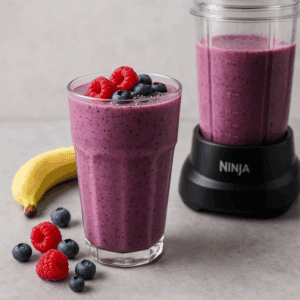
This Triple Berry Power Smoothie is engineered as a frozen-fruit circulation test for the Ninja Compact Kitchen System. It evaluates how well the personal cup manages berry skin breakdown, seed refinement, and protein dispersion in a tight blending chamber.
If you are comparing compact systems for real frozen-fruit extraction instead of just marketing wattage claims, review the hands-on blender performance comparisons that examine ice crushing, seed reduction, and single-serve cup efficiency across brands before choosing your next model.
This smoothie teaches you how vortex behavior changes in smaller blending vessels.
Performance Framing: Why Triple Berries Stress Compact Systems
Berries contain tiny seeds and thick skins. Strawberries break down easily. Blueberries resist slightly more. Raspberries contain delicate seeds that often survive weak blending cycles.
When you combine all three with protein powder and flaxseed, you are asking the system to:
- Crush frozen fruit
- Refine seed texture
- Disperse fine protein particles
- Maintain smooth drinkability
The Ninja Compact personal cup is narrow, which improves vertical ingredient movement. That design reduces seed accumulation along sidewalls.
This recipe intentionally keeps the liquid moderate. Too much liquid hides blade inefficiency. Too little stalls the motor. Balance is critical.
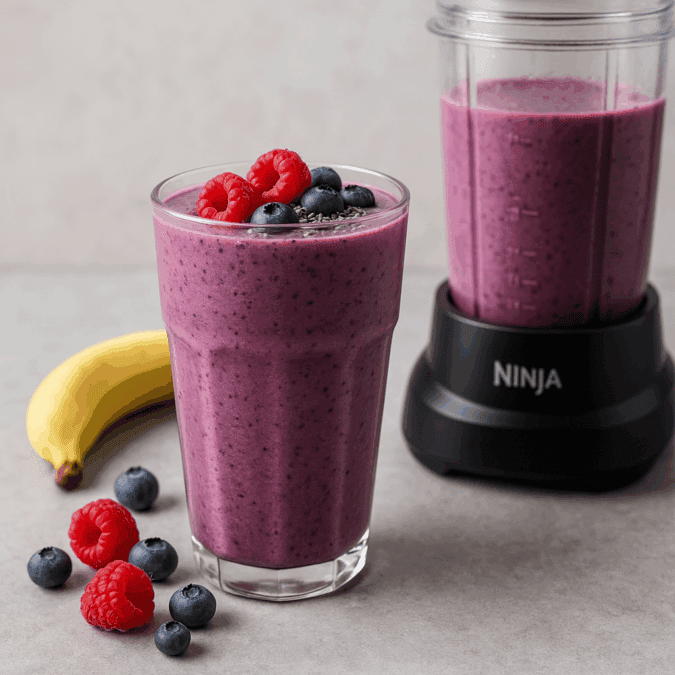
Table of Contents
Ingredients (Serves 1 to 2)
- ¾ cup frozen strawberries
- ½ cup frozen blueberries
- ½ cup frozen raspberries
- ½ frozen banana
- ¾ cup almond milk
- 1 scoop vanilla or berry protein powder
- 1 tablespoon ground flaxseed or chia
- Optional honey or agave
- Optional ice cubes
Step-by-Step Instructions With Extraction Cues
1 Load for Optimal Circulation
Add almond milk first. Then protein powder. Then the banana and seeds. Add frozen berries last.
Liquid at the base prevents early blade cavitation.
2 Secure and Engage Personal Cup Mode
Attach the blade assembly firmly. Lock the cup into the base. Use the Smoothie or Extract setting.
Allow full cycle completion. Avoid interrupting mid-cycle unless movement stops entirely.
Blending cue: Sound should shift from sharp cracking to steady whirl once berries break down.
3 Inspect Texture
Look for visible seed specks on cup walls. If present, run an additional 10-second blend.
Texture should feel smooth with minimal grit.
If you enjoy testing different compact-system blends that focus on texture precision, explore the curated Ninja recipe collection organized by blending function, resistance type, and container format.
Why It Works in the Ninja Compact Kitchen System
The 24-ounce personal cup improves seed recirculation because ingredients travel vertically rather than spreading outward in a wide pitcher. That concentrated motion enhances skin breakdown.
The 850-watt motor is sufficient for small frozen loads when ingredient layering is correct. Overloading the cup reduces vortex efficiency.
For a detailed evaluation of motor stability, blade geometry, and attachment performance across dough, smoothies, and sauces, examine the complete Ninja Compact Kitchen System performance review with load-based testing and durability insights.
Spacing review links between recipe demonstrations reinforces real ownership learning.
Managing Seed Texture in Berry Smoothies
Raspberry seeds are the main texture challenge. To reduce seed feel:
- Blend slightly longer
- Use fully frozen fruit
- Avoid overfilling the cup
- Add liquid first
If seed sensitivity is high, strain the smoothie after blending. However, proper extraction usually eliminates that need.
Protein Powder Dispersion Without Clumping
Protein powder compacts easily under frozen weight. Adding it directly on top of berries often creates dry pockets.
Always place protein after liquid and before frozen fruit. That allows immediate hydration.
Short additional pulses improve integration without overheating.
Liquid Ratio for Thick vs Drinkable Texture
For a thicker consistency:
- Reduce almond milk by 2 tablespoons
- Skip ice
- Use a fully frozen banana
For a thinner consistency:
- Add 2 to 4 tablespoons of milk
- Blend briefly again
Small adjustments dramatically affect flow in narrow cups.
Storage and Practical Use
Refrigerator: Store up to 24 hours in a sealed cup. Shake vigorously before drinking.
Freezer Packs: Pre-measure berries and seeds. Add fresh milk and protein at blending time.
Scaling: Double the recipe in the full pitcher for multiple servings. Add slightly more liquid to maintain circulation in a wider bowl.
If you want to contrast frozen fruit vortex behavior with dough torque control, try the whole wheat pizza dough recipe crafted to test kneading efficiency in the Ninja Compact Kitchen System for a completely different stress profile.
Understanding both frozen blending and dough kneading builds full system mastery.
Common Questions About Compact Smoothie Blending
Can I use fresh berries instead of frozen?
Yes, but the texture will be thinner. Add ice or reduce milk slightly to maintain thickness.
Why does my smoothie feel grainy?
Graininess usually comes from incomplete seed reduction or under-blending protein powder. Run a short additional cycle to refine.
Will this work in the full-size pitcher instead?
It will, but the quantity is small. We recommend doubling the recipe for the best blending flow in the large pitcher.
Can I skip the banana?
Yes. Replace with Greek yogurt or frozen avocado for creaminess. Adjust sweetness as needed.
Is this recipe good for post-workout recovery?
Yes. Berries provide antioxidants, and protein powder supports muscle repair. Adjust portion size based on activity level.
Will the personal cup overheat with frozen fruit?
Not with correct loading and moderate volume. Avoid filling past the maximum line and allow a brief rest between cycles if blending multiple batches.
Skill Development: Mastering Frozen Fruit Extraction
This smoothie teaches you how ingredient density affects vortex behavior in compact blending cups. You learn to recognize sound shifts that signal complete breakdown and how layering prevents dry clumping.
Once you master berry extraction, tougher blends like nut butters and thick dips become easier because you understand circulation control.
Final Takeaway
The Triple Berry Power Smoothie is more than a breakfast drink. It is a frozen-fruit refinement test for the Ninja Compact Kitchen System.
When layered properly and blended through a full cycle, it produces a smooth texture, minimal seed grit, and balanced thickness. Master this technique, and every compact smoothie you make afterward becomes predictable and consistent.