A thick smoothie can feel satisfying and creamy, but there is a point where good texture becomes a problem. If your smoothie blends successfully but ends up too dense to drink through a straw, the issue usually comes from ingredient ratios rather than blender performance.
This is especially common with frozen fruit smoothies, protein shakes, meal replacement drinks, and smoothie bowls that accidentally cross into spoon-only territory. Many people keep adding frozen ingredients in pursuit of a thicker texture without realizing they have reduced the liquid balance too far.
Fortunately, fixing an overly thick smoothie is usually simple once you understand which ingredients create density and how they interact during blending.
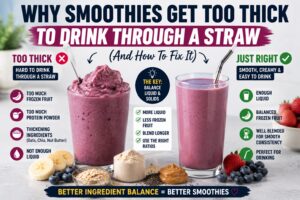
Quick Fix For Overly Thick Smoothies
If your smoothie is too thick to drink comfortably, try:
- Adding a small amount of liquid.
- Reducing frozen fruit slightly.
- Using fewer thickening ingredients.
- Increasing fresh fruit ratios.
- Blending longer to improve circulation.
Most smoothies only need minor adjustments to return to a drinkable consistency.
Table of Contents
Why Smoothies Become Too Thick
Smoothie thickness comes from the balance between liquids and solids. Every frozen ingredient adds density while every liquid ingredient increases flow.
Problems begin when ingredients like frozen bananas, frozen berries, protein powder, oats, chia seeds, flaxseed, nut butters, yogurt, and ice accumulate faster than liquid is added.
Many smoothie recipes online prioritize thickness because thick smoothies photograph well. However, what looks appealing in a photo may not always produce the easiest drinking experience.
The goal is not simply to make a thick smoothie. The goal is to create a texture that remains smooth, balanced, and easy to enjoy.
Frozen Bananas Are Often The Biggest Contributor
Frozen bananas are one of the most effective smoothie thickeners available. They create creaminess, sweetness, and body while helping smoothies feel richer.
The problem is that multiple frozen bananas can quickly push a recipe beyond normal drinking consistency.
A smoothie containing frozen bananas, frozen berries, protein powder, and yogurt may become extremely dense even before additional ingredients are added.
This is one reason many smoothie shops carefully control banana portions rather than relying on unlimited frozen fruit.
Thickening Ingredients Often Stack Together
Many people unknowingly combine several thickening ingredients in a single recipe.
Protein powder, oats, chia seeds, flaxseed, nut butter, Greek yogurt, frozen fruit, and ice all increase smoothie density. Individually, each ingredient works well. Together, they can create a texture closer to pudding than a drink.
This stacking effect explains why some smoothies feel surprisingly thick even when they contain what appears to be a reasonable amount of liquid.
Smoothie Bowls And Drinking Smoothies Need Different Ratios
One of the biggest causes of thickness problems comes from using smoothie bowl recipes as drinking smoothie recipes.
Smoothie bowls intentionally contain less liquid because they are designed to be eaten with a spoon. Drinking smoothies requires more flow and circulation.
A recipe that works perfectly for a smoothie bowl may feel impossible to drink through even a large smoothie straw.
Understanding the difference between these two categories immediately improves recipe consistency.
Why Protein Shakes Become Hard To Drink
Protein shakes often become thicker after blending because many protein powders continue absorbing moisture for several minutes.
This effect becomes even stronger when combined with:
- Oats
- Chia Seeds
- Flaxseed
- Greek Yogurt
- Frozen Fruit
A shake that initially appears drinkable may become noticeably thicker while sitting on the counter.
If your smoothies regularly develop texture issues, circulation problems, or ingredient balance challenges, these smoothie troubleshooting guides for blending consistency and frozen ingredient performance can help.
Why Liquid Choice Matters
Not all liquids behave the same inside a smoothie.
Water produces thinner smoothies, while milk, plant-based milk, kefir, and yogurt contribute additional body. Some liquids create a creamier texture without dramatically increasing thickness, while others can make smoothies feel heavier.
Small changes in liquid selection often produce noticeable differences in drinkability.
Why Blender Performance Still Plays A Role
Although recipe balance remains the biggest factor, blender performance still influences final texture.
Strong circulation helps distribute ingredients more evenly throughout the jar. Better circulation often reduces dense pockets of frozen fruit and improves consistency from top to bottom.
A smoother blend frequently feels easier to drink because ingredients are broken down more uniformly.
If you are comparing machines for frozen fruit smoothies, thicker recipes, and overall blending consistency, explore these blender reviews focused on smoothie texture and circulation performance.
Best Blender Types For Thick Smoothies
Some blenders handle dense recipes better than others because they maintain stronger circulation and ingredient movement.
High-Performance Blenders For Dense Smoothie Recipes
When recipes contain large amounts of frozen fruit and minimal liquid, strong circulation becomes extremely important.
If you want a high-performance blender for dense smoothie recipes and frozen ingredient blending, the Vitamix VX1 is designed to maintain consistent ingredient movement while creating a smooth texture.
Blenders Designed For Balancing Frozen Ingredients
Many smoothie users need a machine that can handle varying ingredient ratios without frequent stalling.
If you want a blender for balancing frozen ingredients and liquid ratios, the Ninja Compact Kitchen System offers flexibility for both smoothies and frozen drinks.
Premium Blenders For Smoothie Bowls And Thick Blends
Some users intentionally prefer thicker recipes but still want smooth circulation and consistent blending.
If you need a premium blender for smoothie bowls and thick frozen blends, the Vitamix Ascent X5 is built for demanding recipes and high-performance smoothie preparation.
Common Smoothie Thickness Mistakes
Many texture problems come from repeatedly adding ingredients that increase density without adjusting liquid levels.
Adding extra frozen fruit, protein powder, oats, chia seeds, or nut butters may improve nutrition, but each addition affects consistency. Another common mistake is assuming thicker always means better.
In reality, the best smoothies balance creaminess, flavor, nutrition, and drinkability at the same time.
Frequently Asked Questions
Why Is My Smoothie Too Thick To Drink?
Too many frozen or thickening ingredients usually create excessive density.
How Do You Thin A Smoothie Without Ruining It?
Adding small amounts of liquid gradually often restores drinkable consistency.
Why Do Protein Shakes Get Thicker Over Time?
Many protein powders continue absorbing moisture after blending.
Are Smoothie Bowls Supposed To Be Thicker?
Yes. Smoothie bowls intentionally use less liquid and are designed for spoon consumption.
Do Frozen Bananas Make Smoothies Thicker?
Yes. Frozen bananas are one of the strongest natural smoothie thickeners.
Can A Better Blender Fix Thick Smoothies?
A better blender improves circulation and consistency, but ingredient balance remains the primary factor.
Final Thoughts
Most smoothies become too thick because ingredient density increases faster than liquid volume. Frozen fruit, protein powder, oats, yogurt, seeds, and nut butters all contribute to thickness, and their effects often compound when used together.
Understanding how ingredients influence texture helps create smoothies that remain creamy, satisfying, and easy to drink instead of becoming overly dense. Small adjustments in liquid ratios and ingredient balance usually produce the best results without sacrificing flavor or nutrition.