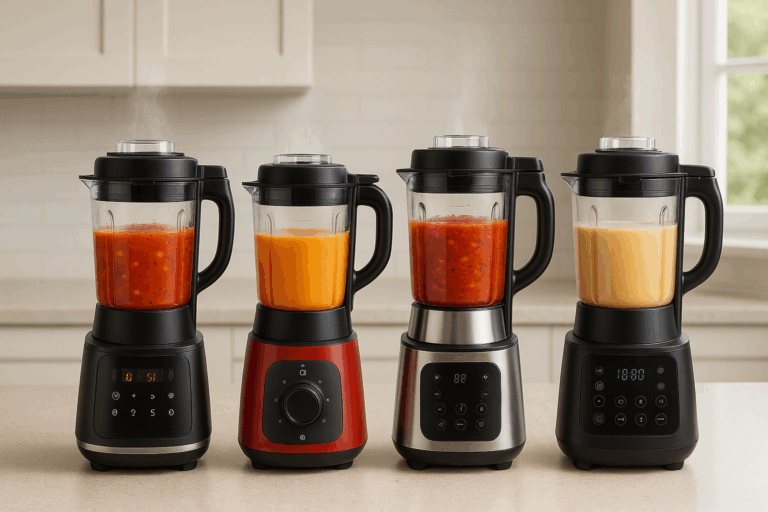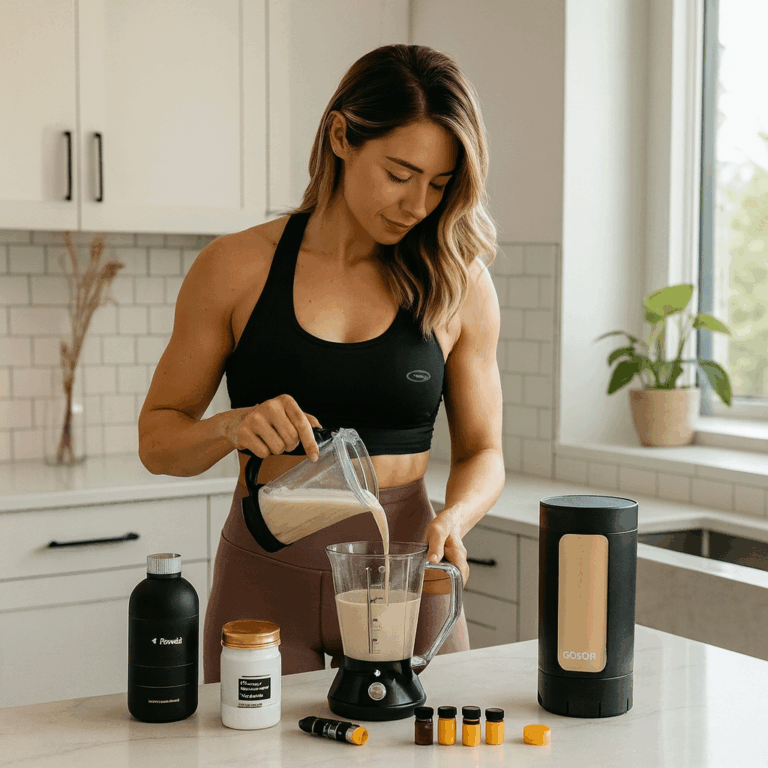
Smoothies expose blender weaknesses quickly. Frozen fruit resists circulation, leafy greens trap air pockets, and seeds reveal poor blade design. In 2026, the best smoothie blenders are defined by consistency under load, not peak wattage claims.
This guide focuses on blenders that produce smooth, repeatable results across frozen fruit, greens, seeds, and ice. Each recommendation is based on real kitchen use, texture outcomes, and long-term reliability. If you want a broader context before choosing, start with which blender designs perform best across everyday kitchen tasks to understand how smoothie performance fits into other blending needs.
Table of Contents
What Actually Determines Smoothie Quality
Sustained Torque Matters More Than Power Labels
Smoothies thicken as ingredients break down. Blenders that hold blade speed under resistance finish faster and more smoothly.
Jar Geometry Controls Circulation
Tall containers pull ingredients downward and prevent dry pockets. Wide jars require more torque to stay efficient.
Blade Design Affects Texture
Effective blades lift and recirculate ingredients instead of whipping air into the blend.
Cleanup Friction Impacts Daily Use
Blenders that rinse clean quickly are used more often. Convenience drives consistency.
Why Some Smoothies Stay Gritty Even With Powerful Blenders
Many users assume gritty smoothies are caused by weak motors. In practice, grit is more often caused by poor ingredient circulation.
Seeds, fibrous greens, and frozen fruit fragments escape blade contact when vortex formation breaks down. This happens when jars are too wide for the motor torque available or when blade lift is insufficient.
Blenders that solve this issue maintain a consistent downward pull throughout the blend. They keep ingredients cycling through the blades instead of letting them float or stick to the walls. This is why two blenders with similar power ratings can produce very different textures.
If gritty texture is a recurring issue, the problem is usually circulation, not power.
Frozen Fruit Versus Ice Is a Critical Distinction
Ice and frozen fruit behave very differently in a blender.
Ice fractures cleanly and breaks into predictable shards. Frozen fruit bends, absorbs energy, and releases fiber as it breaks down. This creates resistance that increases throughout the blend.
Blenders that excel at smoothies are those that handle increasing resistance without slowing blade speed. Models designed only to crush ice may still struggle with frozen berries or mango.
If smoothies rely heavily on frozen fruit, prioritize torque stability over peak power claims.
Leafy Greens, Seeds, and Fiber Load
Smoothies that include spinach, kale, flaxseed, or chia expose weaknesses quickly.
Leafy greens trap air and form mats that block circulation. Seeds are small enough to escape blades unless the vortex remains stable. As fiber breaks down, the blend thickens and increases motor load.
Blenders that perform well with greens share two traits:
- Blade designs that lift ingredients instead of chopping downward only
- Jar shapes that force recirculation rather than relying on gravity
This is why green smoothies often separate good blenders from average ones.
Foam, Heat, and Flavor Degradation
Foam is a sign of excess air introduction, not better blending.
High speeds whip air too early into the mixture before the ingredients break down. This creates foam, dulls flavor, and warms the blend unnecessarily.
Efficient smoothie blenders break down ingredients quickly, which reduces blending time and heat buildup. Less heat preserves flavor and texture, especially in fruit-forward smoothies.
If smoothies consistently taste flat or overly airy, the issue is usually speed control or circulation rather than ingredients.
Noise Levels and Daily Smoothie Habits
Noise directly affects the consistency of use.
Early morning routines, shared kitchens, and apartments change how often blenders get used. Many people abandon smoothies not because of performance, but because the noise feels disruptive.
Blenders that finish faster often produce less total noise exposure even if peak volume is high. Shorter blend cycles matter more than raw decibel ratings.
This explains why some high-powered blenders feel quieter in practice than weaker models that run longer.
Capacity Decisions That Affect Texture
Jar size impacts more than batch volume.
Small batches in oversized jars often blend poorly because ingredients do not engage the blades consistently. Conversely, overfilled jars restrict circulation.
For smoothies, optimal performance usually occurs when jars are filled between one-third and two-thirds capacity. Blenders designed for this range deliver more consistent texture with less effort.
Choosing the wrong jar size for your typical serving is a common cause of inconsistent results.
Why Cleanup Friction Determines Long-Term Use
Smoothie routines fail when cleanup feels annoying.
Blenders that rinse clean in seconds get used more often than those with complex lids, sharp blade stacks, or awkward seals. Dishwasher-safe parts help, but quick rinse cleaning matters more for daily use.
From a long-term perspective, the best smoothie blender is the one you actually use consistently.
When a Smoothie Blender Upgrade Makes Sense
An upgrade is justified when:
- Smoothies are made four or more times per week
- Frozen fruit or greens are used daily
- Texture consistency matters more than speed alone
If smoothies are occasional or ingredient lists are simple, many mid-range blenders perform adequately.
Understanding this prevents overbuying and post-purchase regret.
Top Blenders for Smoothies in 2026
Vitamix 5200
The Vitamix 5200 remains a reference point for smoothie texture. Its motor maintains speed as blends thicken, and the tall container keeps frozen fruit and greens circulating until fully broken down.
Shorter blend times reduce heat and foam, which preserves flavor and mouthfeel.
Why it works for smoothies
Stable circulation creates consistently creamy results, even with seeds and fibrous greens.
Best for
Daily smoothie drinkers who want long-term durability and texture control.
Tradeoff
Manual controls and a premium price.
Ninja BN701 Professional Plus
The Ninja BN701 delivers strong smoothie performance at a lower price point. Its large pitcher and stacked blade design handle frozen fruit and ice well, especially for multi-serving blends.
It performs best with fuller jars, where circulation is strongest.
Why it works for smoothies
Aggressive blade geometry breaks frozen ingredients quickly.
Best for
Families and batch smoothie preparation.
Tradeoff
Higher noise levels and less refinement with small servings.
If value is a priority, our review of budget-friendly batch smoothie blending with the Ninja BN701 explains its strengths and limits.
Blendtec Total Classic Original
The Blendtec Total Classic approaches smoothies through force and automation. Its blunt blades and preset cycles produce fast, repeatable results with minimal user input.
The wide jar handles volume well, though smaller batches may require scraping.
Why it works for smoothies
Preset programs finish blends quickly and consistently.
Best for
Users who prefer one-touch blending without manual adjustment.
Tradeoff
Louder operation during frozen cycles.
Aeitto 1500W Blender
The Aeitto 1500W blender offers strong smoothie performance at a mid-range price. Its motor maintains torque with frozen fruit, and the large jar supports family-size batches.
While less refined than premium models, it performs reliably for daily smoothie routines.
Why it works for smoothies
Consistent torque prevents stalling as blends thicken.
Best for
Users who want power without premium pricing.
Tradeoff
Bulky footprint and higher noise output.
For comparison context, see how it stacks up in our overview of mid-priced blenders handling thick smoothie loads.
Matching a Smoothie Blender to Your Routine
Green Smoothies
Look for sustained torque and strong circulation to fully break down leafy greens and seeds.
Frozen Fruit Smoothies
Jar shape and torque matter more than blade sharpness.
Batch Preparation
Larger pitchers and cooling efficiency become more important than compact size.
Quiet Morning Use
Faster blends often reduce total noise exposure despite higher peak volume.
How Smoothie Blenders Compare Across Categories
Some users prefer personal blenders for convenience. Others choose full-size models for texture control and batch prep. Understanding these tradeoffs prevents buyer regret.
For a broader buying perspective beyond smoothie-only performance, reviewing the best overall blenders ranked for smoothie consistency, frozen fruit handling, and everyday reliability helps clarify which format truly fits your kitchen.
Practical Questions Before Choosing
What makes a smoothie creamy instead of gritty?
Stable circulation prevents seeds and fibers from escaping the blades.
Do presets matter for smoothies?
They help consistency, but cannot replace torque and jar design.
Is a budget blender enough?
Yes, for frozen fruit and ice. Greens benefit from stronger motors.
Does longer blending improve texture?
Not always. Efficient circulation finishes blends faster and more smoothly.
Final Recommendation
Choose the Vitamix 5200 for the smoothest texture and long-term durability. Choose the Ninja BN701 for large batches at a lower cost. Choose the Blendtec Total Classic for preset-driven convenience. Choose the Aeitto 1500W for strong mid-range performance.
If you want to explore beyond smoothie-focused models, review which blender designs perform best across everyday kitchen tasks to see how each category fits your kitchen.
Bottom Line
In 2026, the best smoothie blender is defined by how well it maintains circulation as blends thicken. When torque, jar geometry, and cleanup ease align, smooth results become consistent rather than occasional.