Frozen fruit is one of the easiest ways to make thick, cold smoothies at home. It adds texture, saves prep time, and often replaces the need for ice. But many people run into the same problem: the blender stalls, leaves chunks, or struggles to pull ingredients into the blades.
If your blender has trouble with frozen fruit, you are not alone. This is one of the most common smoothie issues, especially with berries, mango, pineapple, and frozen banana.
The good news is that most frozen fruit blending problems are caused by loading order, low liquid levels, or the wrong speed settings. Small changes can often fix the issue immediately.
If you want more help improving smoothie results at home, explore our step-by-step blender help guides for smoother frozen fruit and daily blending.
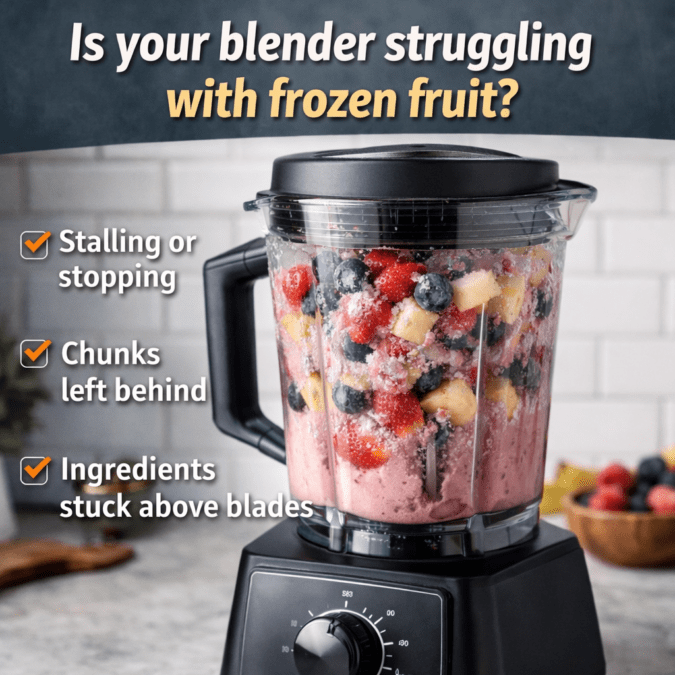
Table of Contents
How to Blend Frozen Fruit Smoothly in Any Blender
Use enough liquid, add frozen fruit last, start on low speed, then increase gradually. Use pulse mode first if ingredients get stuck. Blend in smaller batches when needed.
Why Frozen Fruit Is Harder for Blenders to Handle
Frozen fruit is dense, cold, and solid.
That creates more resistance than fresh fruit. The motor works harder, and weaker circulation can leave ingredients sitting above the blades.
This often causes:
- Chunks left behind
- Blender stalling
- Need to stop and stir
- Uneven texture
- Overheating with thick blends
The hardest frozen ingredients often include:
- Frozen strawberries
- Banana chunks
- Mango cubes
- Pineapple chunks
- Mixed berries frozen together
The issue is usually not the fruit itself. It is how it is blended.
Easy Frozen Fruits vs Harder Fruits to Blend
Some frozen fruits blend more easily than others.
Easier Frozen Fruits
- Banana slices
- Blueberries
- Peaches
- Raspberries
Harder Frozen Fruits
- Mango cubes
- Pineapple chunks
- Large strawberries
- Fruit frozen into one solid block
If your blender struggles often, ingredient type may be part of the issue.
Best Ingredient Order to Blend Frozen Fruit Without Chunks
Use this order:
- Liquid
- Yogurt or soft fruit
- Greens
- Powders or seeds
- Frozen fruit
- Ice if needed
Why it works:
Liquid reaches the blades first. Softer foods begin circulation. Frozen fruit then gets pulled downward as the vortex builds.
If frozen fruit goes in first, it can block movement and create chunks.
How Much Liquid to Add When Blending Frozen Fruit
Too little liquid is the top reason frozen fruit smoothies fail.
Start with:
- 1 cup for thinner smoothies
- 1.25 cups for medium thickness
- 1.5 cups for thick frozen blends
Good liquid options:
- Water
- Milk
- Almond milk
- Oat milk
- Coconut water
- Juice
If the blender stalls, add a small splash more.
Many people want extra-thick smoothies, but low-liquid blends create strain fast.
Best Blender Speed for Frozen Fruit Smoothies
Many users press high speed right away.
That can push frozen fruit upward before circulation begins.
Use this method:
- Start low for 10 seconds
- Increase to medium
- Finish on high for 20 to 40 seconds
This helps the blades break down frozen ingredients gradually.
How to Use Pulse Mode for Frozen Fruit That Gets Stuck
Pulse mode is useful for dense frozen fruit and ice.
Use pulse first when blending:
- Frozen strawberries
- Mango cubes
- Ice-heavy smoothies
- Fruit stuck above the blades
Try:
- 3 to 5 quick pulses
- Then blend normally
This often fixes stalling quickly.
Why Your Blender Gets Stuck on Frozen Fruit
Sometimes the blades spin, but the ingredients stay above them.
This usually happens when frozen fruit bridges together and blocks downward flow.
Common causes:
- Too little liquid
- Overfilled jar
- Large frozen chunks
- Ingredients are packed too tightly
Stopping the blender, stirring safely, and adding a small splash of liquid often fixes it.
Why Frozen Berries Leave Chunks in Smoothies
Frozen berries are small, but they often clump together.
Berry skins and seeds can also create a rough texture in weaker blenders.
For smoother berry blends:
- Add extra liquid
- Blend longer
- Use pulse first
- Let berries sit out 2 to 3 minutes first
Homes making daily berry smoothies often compare stronger machines in our best blender reviews for crushing frozen fruit and making smooth daily smoothies.
Why Your Blender Stalls on Frozen Fruit (Real Example)
A common stalled smoothie recipe is:
- Frozen banana
- Frozen strawberries
- Peanut butter
- Protein powder
- Very little milk
This creates a thick frozen mass near the blades.
Adding half a cup of extra liquid or blending in two smaller batches often solves the issue immediately.
Best Blender Types for Frozen Fruit Smoothies
Some machines handle frozen ingredients better than others.
Full-Size Performance Blenders
Best for:
- Thick smoothies
- Daily frozen fruit use
- Family batches
Users wanting premium results often consider the premium blender for frozen fruit smoothies and silky texture results.
Mid-Range Value Blenders
Best for homes wanting strong performance without premium pricing.
Many shoppers look for the best budget blender for frozen fruit smoothies and ice crushing.
Compact High-Power Blenders
Good for smaller kitchens and lighter daily use.
Many users choose the compact high-power blender for frozen fruit and small kitchens.
Can Personal Blenders Handle Frozen Fruit?
Some personal blenders can handle frozen fruit well, especially softer berries and bananas.
However, smaller jars and lighter motors may struggle with:
- Large frozen chunks
- Thick smoothie bowls
- Ice-heavy blends
- Daily heavy use
They are often best for smaller servings with enough liquid.
Common Frozen Fruit Blending Mistakes That Cause Chunks
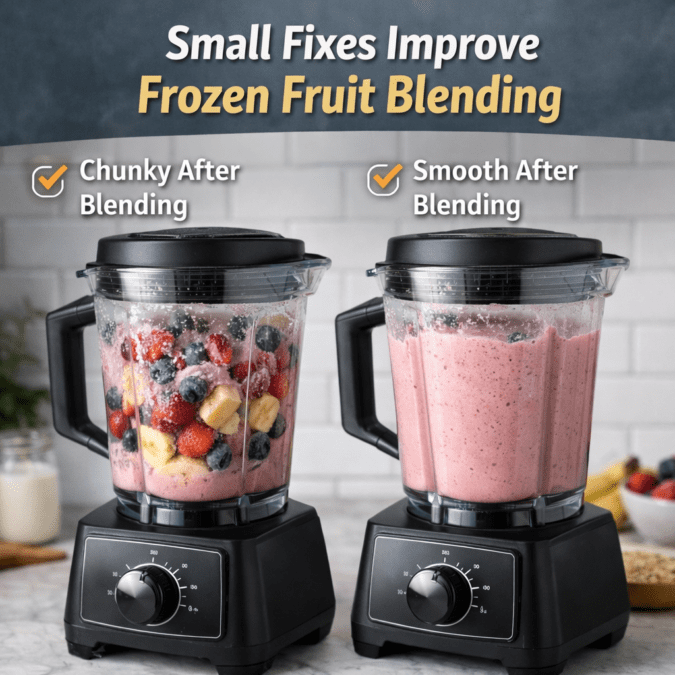
Small blending mistakes often cause frozen fruit smoothies to come out chunky, uneven, or hard to blend. Fixing these common issues can improve texture quickly.
Adding Frozen Fruit First
Adding frozen fruit first can block the blades before circulation starts. Put liquid and softer ingredients in first so the vortex forms properly.
Using Too Little Liquid
This is the most common issue with frozen smoothies. Even a small splash of extra liquid can help ingredients move and blend smoothly.
Overfilling the Jar
Packed jars create dead zones where fruit never reaches the blades. Blend smaller batches if the container is tightly full.
Stopping Too Soon
Many frozen smoothies need 45 to 60 seconds for full smoothness. If circulation has started, blend a little longer before stopping.
Using Giant Frozen Chunks
Large frozen pieces take longer to break down and can stall weaker blenders. Smaller fruit pieces blend faster and reduce strain.
How to Prepare Frozen Fruit So It Blends Faster
Simple prep helps a lot.
Use these tips:
- Slice bananas before freezing
- Freeze berries flat in bags
- Break apart fruit clumps first
- Let the fruit thaw for 2 to 3 minutes
- Use smaller cubes when possible
This reduces strain and speeds blending.
Daily Blender Habits That Improve Frozen Fruit Results
Good habits protect the motor and improve results.
- Add liquid first
- Use pulse for hard ingredients
- Blend in smaller batches
- Clean the jar after use
- Let the motor rest between heavy blends
These habits help nearly every blender perform better.
Why Your Smoothie Is Still Chunky After Blending
If your smoothie is still chunky after blending, the cause is usually one of these:
- Not enough liquid
- Blend time too short
- Frozen fruit added first
- Ingredients stuck above the blades
- Weak blender power
Try blending 15 to 20 seconds longer after circulation begins.
Common Questions
Why won’t my blender blend frozen fruit?
Usually because there is too little liquid or the frozen fruit is packed too tightly.
Should I thaw frozen fruit first?
Not fully, but 2 to 3 minutes at room temperature can help.
Is ice needed if using frozen fruit?
Usually no. Frozen fruit already chills the smoothie.
Why is my smoothie chunky with frozen berries?
Berry skins, seeds, and clumping are common causes.
Do stronger blenders make smoother frozen fruit smoothies?
Often yes. Better motors and blade systems help.
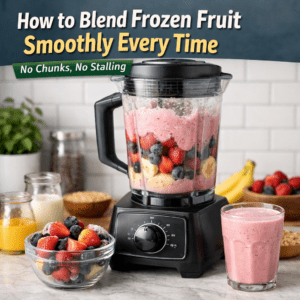
How to Blend Frozen Fruit Smoothly Every Time
Frozen fruit should make smoothies better, not harder.
Start with these fixes:
- Add enough liquid
- Load frozen fruit last
- Start low speed
- Pulse first
- Blend longer
- Use smaller batches
Most frozen fruit problems come from technique, not the fruit itself.