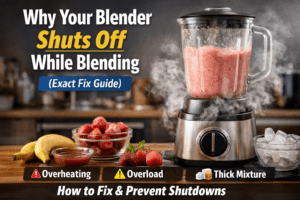
Your blender should run smoothly through a normal smoothie, frozen drink, or sauce recipe. If your blender shuts off while blending, stops mid-cycle, or loses power with thick ingredients, you are not alone.
This is a common problem caused by overheating, overload, or mixtures that are too thick. Many blenders shut off automatically to protect the motor from damage.
The good news is that most shutdown problems are easy to fix. This guide explains the top causes, quick solutions, and how to stop future shutdowns.
Why Your Blender Shuts Off While Blending
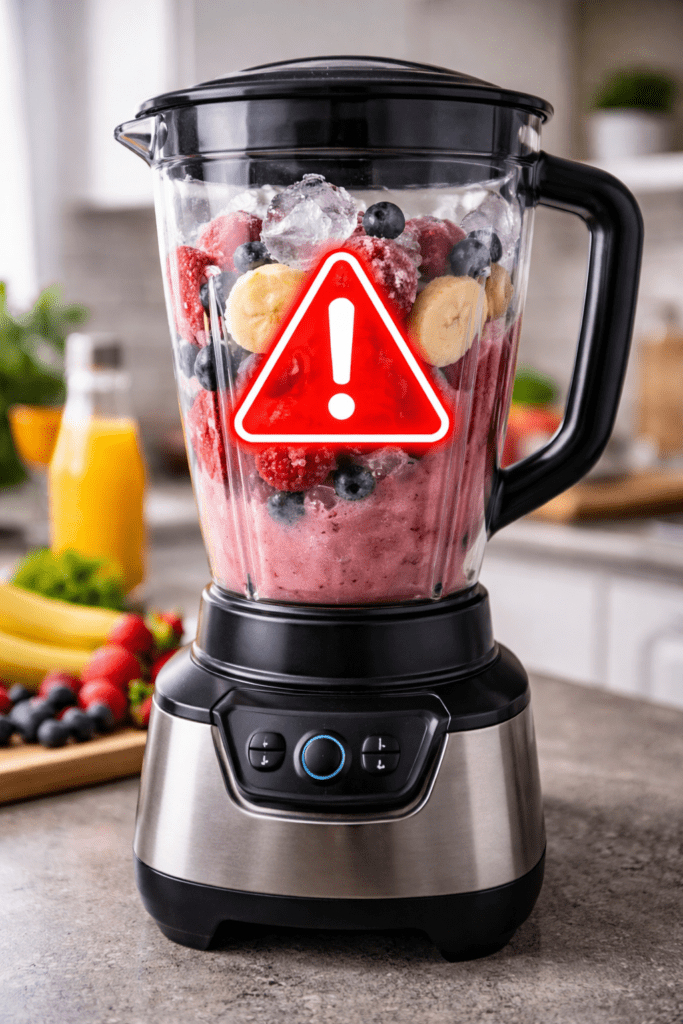
Your blender usually shuts off because of overheating, overload, or thick ingredients like frozen fruit. Many blenders have a safety feature that turns the motor off to prevent damage. Let it cool down, add more liquid, and reduce batch size before restarting.
If you want more help with blender ownership issues, explore our blender troubleshooting tips for common blending problems and better daily results.
Table of Contents
Why Your Blender Stops Mid-Blend
Most blenders shut off because the motor is under stress.
That stress usually comes from:
- Heat buildup
- Thick ingredients
- Large batch sizes
- Poor airflow
- Long run times
- Aging internal parts
Quick Causes and Fixes
| Problem | Likely Cause | Quick Fix |
|---|---|---|
| Shuts off after 30 seconds | Overheating | Let it cool 20–30 minutes |
| Stops during smoothies | Mixture too thick | Add more liquid |
| Struggles with frozen fruit | Motor overload | Use pulse first |
| Works again later | Thermal reset | Normal safety feature |
| Stops with full jar | Overfilled container | Blend smaller batches |
Many modern blenders include thermal protection. When the motor gets too hot, the blender shuts off automatically to avoid damage.
This is common during:
- Frozen fruit smoothies
- Thick smoothie bowls
- Nut butter recipes
- Large family servings
- Repeated back-to-back blends
A shutdown can be annoying, but it often means the protection system is doing its job.
Why Your Blender Overheats and Shuts Off While Blending
Heat is the top reason blenders stop while running.
Inside the base, the motor creates heat as it spins. Thick mixtures force the motor to work harder, which raises heat quickly.
Signs overheating is the issue:
- Blender feels hot near the base
- Stops after 20 to 60 seconds
- Runs again after cooling
- Slight hot motor smell
- Happens more with thick recipes
If the blender works again after resting, overheating is highly likely.
What to Do If Your Blender Stops Mid-Blend Suddenly
If your blender shuts off:
1. Turn It Off
Move controls to off.
2. Unplug It
Let the unit rest safely.
3. Wait 15 to 30 Minutes
Many blenders reset after cooling.
4. Check the Mixture
If it is extremely thick, thin it out before restarting.
5. Try a Smaller Batch
Large packed jars increase strain fast.
Thick Smoothies Are Hard on Motors
Many shutdowns happen during healthy smoothies because people use:
- Frozen banana
- Frozen berries
- Ice
- Peanut butter
- Protein powder
- Very little liquid
That creates heavy resistance.
The blades may spin slowly while the motor works too hard.
Real Example of Why It Happens
A common shutdown recipe is frozen banana, peanut butter, protein powder, ice, and very little liquid. That mix can become too dense for many mid-range blenders. Adding half a cup of extra liquid or blending in two smaller batches often solves the problem.
Blenders that shut off during thick smoothies often lack the motor strength or cooling capacity for dense daily use. Many users compare stronger options in our top-rated blender reviews for thicker smoothies frozen drinks and home kitchens.
Why It Happens More With Smoothies Than Thin Drinks
Blenders shut off more often with smoothies than with liquids like soup or juice.
That is because smoothies often contain:
- Frozen fruit
- Ice
- Nut butter
- Yogurt
- Protein powder
- Low liquid levels
These ingredients create thicker resistance. The motor works harder and builds heat faster.
Thin liquids move freely, so strain is lower.
If your blender only shuts off with smoothies, thickness is likely the main issue.
How to Reduce Motor Strain
Add More Liquid
A small splash of water, milk, or juice can lower resistance fast.
Start on Low Speed
Let ingredients break down before going high.
Use Pulse First
Pulse mode helps crack frozen fruit and ice.
Blend in Two Rounds
Two smaller batches are easier than one overloaded jar.
Let the Blender Rest
Heavy users should allow a short cooldown time between cycles.
Better Blending Habits Prevent Shutdowns
Daily habits matter more than people think.
Use this loading order:
- Liquid
- Soft fruit
- Greens
- Powders
- Frozen fruit
- Ice
This helps circulation and lowers stress.
If you regularly make large family batches or dense frozen smoothies, a stronger motor and larger jar can reduce shutdowns. Many households consider the best blender for large smoothie batches without overheating during blending.
Airflow Problems Many Owners Miss
Some blenders need open airflow around the base.
Heat escapes through vents.
If vents are blocked by dust or tight placement, heat rises faster.
Check for:
- Dust buildup
- Towel under the machine
- Tight wall corner placement
- Grease around vents
Clean vents gently and keep an open space around the base.
This small step helps many owners.
Is It Safe If My Blender Keeps Shutting Off?
Usually, automatic shutdown is a protection feature.
Many blenders shut off to prevent:
- Motor damage
- Excess heat
- Electrical stress
That is safer than forcing the machine to run.
However, repeated shutdowns should not be ignored.
If the blender smells burnt, sparks, or shuts off with thin liquids, stop using it until inspected or replaced.
Reset Button vs Thermal Shutoff Explained
Some blenders have a manual reset button on the bottom.
Others reset automatically after cooling.
Thermal Shutoff
The machine stops when hot, then works later.
Manual Reset
You may need to press a button after cooling.
Check your owner’s manual for your model.
Signs Your Blender Is Too Weak for Thick Smoothies
Sometimes the issue is not technique. It is capacity.
Signs your blender may be too light-duty for your needs:
- Shuts off weekly
- Struggles with frozen fruit
- Loud strained sound
- Need to stir constantly
- Stops with medium-thick recipes
- Smells hot often
That usually means your blending habits exceed the machine’s design.
If you want a versatile blender for daily smoothies plus personal cups, some users move to the best ninja blender with a full-size jar and smoothie cups for daily use.
Best Blender Types for Daily Smoothies and Heavy Use
Some users blend once a week.
Others blend:
- Morning smoothies
- Protein shakes
- Sauces
- Frozen drinks
- Meal prep batches
That level of use needs stronger equipment.
Frequent users blending frozen fruit, nut butters, and thicker recipes often prefer the best heavy-duty blender for thick smoothies, frozen fruit, and tough ingredients.
Mistakes That Trigger Shutdowns Fast
Running Too Long
Many recipes do not need two minutes.
Dry Blending Thick Mixes
Always use enough liquid.
Overfilling the Jar
Packed jars reduce movement.
Restarting Too Soon
Let the motor cool first.
Ignoring Warning Sounds
Strained sounds often come before shutdown.
How to Make Your Blender Last Longer
Use these habits:
- Keep vents clean
- Blend in sensible batch sizes
- Use enough liquid
- Avoid repeated overloads
- Let the motor cool after heavy use
- Do not force thick dry mixes
These habits reduce wear over time.
Common Questions
Why does my blender stop with frozen fruit?
Frozen fruit creates heavy resistance, especially with low liquid.
Why does it work later?
Many blenders have thermal reset protection.
Is the motor failing?
Not always. Overheating is more common.
Should I keep restarting it?
No. Let it cool first.
Do stronger blenders shut off less?
Often yes. Better motors handle thick loads more easily.
Why does my blender shut off after a few seconds?
This usually happens when the mixture is too thick, the motor overheats quickly, or the jar is overloaded. Add more liquid and reduce batch size.
Signs It May Be Time to Replace the Blender
Sometimes the blender is telling you it is worn out.
Signs include:
- Shuts off every week
- Loud grinding sounds
- Burning smell often
- Blade slows with easy recipes
- Leaks from the base
- Stops with thin mixtures too
At that point, replacement may save time and frustration.
Best Blender Types for Daily Smoothie Use
If you blend often, stronger machines help.
Full-Size Performance Blenders
Best for frozen fruit, thick smoothies, and family batches.
Mid-Range Multi-Use Blenders
Best for most homes needing value and versatility.
Personal Blenders
Best for quick, lighter smoothies, but some struggle with thick mixes.
How to Stop Your Blender From Shutting Off Again
Start with simple fixes:
- Add more liquid
- Use smaller batches
- Start low speed
- Pulse frozen ingredients first
- Keep vents clear
- Allow cooldown time
If shutdowns happen often, the machine may be too weak or worn out for your routine.