If your smoothie tastes bitter, earthy, grassy, or unpleasant after blending, the problem usually comes from ingredient balance instead of the blender itself. Bitter smoothies are extremely common in green smoothies, protein shakes, and low-sugar frozen blends, where stronger ingredients overpower the sweeter parts of the recipe.
This often happens when ingredients like kale, spinach, protein powder, cocoa, citrus peel, or underripe fruit dominate the mixture without enough natural sweetness or creamy texture to balance the flavor.
The good news is that most bitter smoothies are easy to improve once you understand what ingredients create bitterness during blending.
Quick Fix For Bitter Smoothies
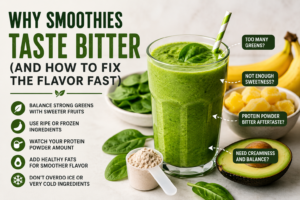
If your smoothie tastes bitter or harsh, try these adjustments first:
- Add Sweeter Frozen Fruit
- Reduce Strong Greens Slightly
- Use Riper Bananas
- Add Creamier Ingredients
- Avoid Overusing Protein Powder
- Balance Bitter Ingredients With Healthy Fats
Small ingredient changes often improve smoothie flavor immediately.
Table of Contents
Why Smoothies Become Bitter
Smoothies usually taste bitter when stronger ingredients overpower the natural sweetness inside the blend. Leafy greens, plant proteins, cacao powder, coffee, matcha, citrus peel, ginger, turmeric, and some seeds naturally contain bitter compounds that become more noticeable after blending.
This becomes even stronger when recipes contain:
- Too Little Fruit
- Excess Greens
- Unsweetened Protein Powder
- Too Much Ice
- Low Fat Content
- Unripe Fruit
Many smoothies technically blend smoothly but still taste unpleasant because the ingredient balance leans too heavily toward bitter flavors.
Kale Smoothies Become Bitter Faster Than Spinach Smoothies
Kale naturally contains stronger earthy and bitter compounds than baby spinach. While kale can work well in smoothies, larger amounts often create a harsher aftertaste if the recipe lacks enough sweetness or creamy ingredients to balance the flavor.
Baby spinach usually creates milder green smoothies because its flavor stays softer during blending.
Frozen bananas, mango, pineapple, dates, or berries often help soften stronger greens naturally.
Protein Powder Is A Common Cause Of Bitter Smoothies
Many protein powders leave a bitter or chalky aftertaste during blending, especially:
- Plant Protein Powders
- Unsweetened Whey Protein
- Collagen Blends
- Low-Carb Protein Mixes
This becomes more noticeable when the smoothie contains too much liquid or not enough frozen fruit to balance the flavor.
Protein shakes that taste thin often allow bitterness to stand out even more strongly.
If your smoothies regularly taste bitter, thin, earthy, or unbalanced, these smoothie troubleshooting guides for texture, frozen blending, and ingredient balance may help.
Frozen Fruit Usually Fixes Bitter Smoothies Faster Than Sweeteners
Many people immediately add sugar or honey when smoothies taste bitter. However, frozen fruit usually improves flavor balance much more naturally.
Frozen bananas, mango, strawberries, blueberries, pineapple, peaches, and cherries all help:
- Increase Natural Sweetness
- Improve Smoothie Body
- Reduce Harsh Aftertaste
- Balance Greens Better
- Improve Creaminess
This creates richer smoothies without making the drink overly sugary.
Why Ripe Fruit Matters So Much
Underripe bananas and fruit often contain less sweetness and a stronger starch flavor during blending.
Very ripe bananas naturally create:
- Better Sweetness
- Creamier Texture
- Softer Flavor Balance
- Smoother Green Smoothies
This is one reason smoothie shops frequently use heavily ripened frozen bananas in thicker smoothie recipes.
Some Smoothies Taste Bitter Because Of Oxidation
Blending introduces air into smoothies, especially during high-speed blending. Some ingredients slightly change flavor after blending because oxidation alters their taste profile over time.
Greens, herbs, matcha, cacao, and some fruits may develop stronger earthy or bitter notes if smoothies sit too long after blending.
Fresh smoothies usually taste best shortly after preparation.
How To Make Bitter Smoothies Taste Better
Use Sweeter Frozen Fruit
Frozen fruit naturally balances bitterness much better than simply adding more liquid or ice.
Bananas, mango, pineapple, peaches, cherries, and berries all help soften stronger ingredients during blending.
Add Healthy Fats
Healthy fats help smooth out harsh flavor edges inside smoothies.
Ingredients like:
- Peanut Butter
- Almond Butter
- Avocado
- Coconut Milk
- Greek Yogurt
often improve flavor balance dramatically.
Reduce Greens Slightly
Many green smoothies simply contain too much kale or spinach relative to the fruit.
Even small reductions in greens often create noticeably smoother flavor.
Avoid Overblending
Long blend cycles can increase bitterness slightly in some smoothies because additional air exposure changes flavor balance during blending.
Shorter blend times often preserve fresher flavor.
Why Blender Design Affects Smoothie Flavor
Some blenders create smoother circulation and more even ingredient breakdown than others. Better circulation often improves ingredient suspension and reduces uneven pockets of concentrated greens or protein powder during blending.
Stronger circulation usually creates:
- Smoother Texture
- Better Fruit Breakdown
- More Balanced Flavor
- Less Grit
- Better Ingredient Suspension
If you are comparing smoothie machines for greener smoothies, smoother circulation, and better frozen fruit blending, explore these blender reviews focused on balanced smoothie texture and ingredient blending performance.
Best Blender Types For Better-Tasting Green Smoothies
Some blenders naturally create smoother frozen textures and more balanced ingredient blending than others.
The right blender can improve circulation, reduce gritty texture, and help blend stronger ingredients more evenly throughout the smoothie.
Compact High-Speed Blenders For Green Smoothies
High-speed blending often helps break greens down more evenly, reducing harsh texture and improving ingredient balance.
If you want a compact high-speed blender for smoother green smoothies, the Vitamix E310 Explorian is built for frozen blending, greens, and dense smoothie texture.
Quieter Blenders For Balanced Smoothie Texture
Some smoothie users prefer blenders that create a smoother texture without aggressively overprocessing ingredients during blending.
If you need a quieter blender for balanced smoothie texture and flavor, the KitchenAid K400 is designed for frozen drinks, smoother circulation, and everyday smoothie preparation.
Compact Premium Blenders For Fruit And Protein Smoothies
Smaller premium blenders often fit well into modern kitchens while still handling frozen smoothies and protein drinks consistently.
If you want a compact premium blender for fresh fruit and protein smoothies, the Beast Mighty 850 Plus focuses on smoother single-serve blending and modern countertop convenience.
Common Smoothie Flavor Mistakes
Many bitter smoothie problems come from ingredient imbalance rather than blender failure.
Using too many greens, too little frozen fruit, excessive protein powder, or insufficient healthy fats often creates a harsh smoothie flavor.
Another common mistake is assuming healthier smoothies must taste extremely earthy or bitter to be nutritious.
Small ingredient adjustments usually improve smoothie flavor dramatically.
Frequently Searched Questions
Why Does My Green Smoothie Taste Bitter?
Too many greens or insufficient sweet ingredients usually create a bitter smoothie flavor.
Does Kale Taste More Bitter Than Spinach?
Yes. Kale naturally has stronger earthy and bitter compounds than spinach.
How Do You Fix Bitter Smoothies?
Adding frozen fruit, healthy fats, and creamier ingredients usually improves flavor balance quickly.
Why Does Protein Powder Taste Bitter In Smoothies?
Some protein powders naturally create a bitter or chalky aftertaste during blending.
Does Frozen Fruit Help Bitter Smoothies?
Yes. Frozen fruit improves sweetness, texture, and overall flavor balance.
Why Do Smoothies Taste Worse After Sitting?
Oxidation and ingredient separation can slightly change smoothie flavor over time.
Final Thoughts
Bitter smoothies are usually caused by excessive greens, unbalanced ingredient ratios, harsh protein powders, or insufficient frozen fruit during blending.
Small changes like improving sweetness balance, reducing bitter ingredients slightly, adding healthy fats, and using smoother frozen fruit combinations can dramatically improve smoothie flavor and texture.
Understanding how ingredients interact during blending helps create fresher, smoother smoothies with better balance, richer flavor, and less harsh aftertaste.