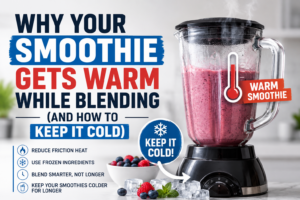
If your frozen smoothie starts cold but turns slightly warm or melted during blending, you are not imagining it. Many smoothies lose their cold texture because blending naturally creates heat through blade friction, motor speed, and ingredient movement.
This becomes especially noticeable in frozen fruit smoothies, protein shakes, smoothie bowls, and thicker blended drinks, where blending takes longer to fully break down ingredients.
In most cases, warm smoothies are caused by excessive blending time, weak circulation, insufficient frozen ingredients, or too much friction inside the blender jar.
The good news is that colder, thicker smoothies are usually possible with better blending techniques and ingredient balance.
Quick Fix For Warm Smoothies
If your smoothie gets warm too quickly, try these adjustments first:
- Use More Frozen Ingredients
- Reduce Excess Blending Time
- Start At Lower Speeds
- Add Ice Last
- Use Smaller Frozen Fruit Pieces
- Blend In Short Bursts Instead Of Continuously
Small changes in blending technique often keep smoothies noticeably colder.
Table of Contents
Why Smoothies Heat Up During Blending
Blenders naturally generate heat during operation. As the blades spin at high speeds, friction builds between ingredients, liquids, and the blade assembly itself.
This friction creates warmth inside the smoothie over time, especially when:
- Blending Thick Smoothies
- Crushing Ice
- Processing Frozen Fruit
- Using High Speeds Constantly
- Running Long Blend Cycles
The longer ingredients remain circulating at high speed, the more heat builds inside the mixture.
Thick Smoothies Create More Friction
Dense smoothies usually heat up faster than thinner drinks.
Frozen bananas, nut butter, protein powder, oats, frozen berries, and smoothie bowl ingredients create heavy resistance inside the blender jar. This forces the blades and motor to work harder, increasing friction and temperature during blending.
Very thick mixtures also slow circulation, which means ingredients stay near the blades longer instead of moving smoothly throughout the jar.
Weak Circulation Can Increase Heat Buildup
Poor vortex circulation often causes smoothies to warm faster.
When ingredients stop moving properly, the blades continue spinning underneath while repeatedly grinding against the same frozen ingredients. This creates concentrated friction in one area instead of smooth ingredient flow.
If your smoothies regularly stall, lose circulation, or warm up too quickly during blending, these smoothie troubleshooting guides for frozen blending, vortex problems, and texture consistency may help.
Overblending Is One Of The Biggest Problems
Many users continue blending long after the smoothie is already combined.
Once ingredients fully break down, extra blending often adds more heat instead of improving texture. This is especially common with high-powered blenders that can fully process frozen fruit very quickly.
Overblending may also:
- Melt Ice Faster
- Thin Out Texture
- Increase Foam
- Reduce Smoothie Thickness
- Create Watery Consistency
Shorter blending cycles usually produce colder smoothies with better texture.
Ice Melts Faster In Thin Smoothies
Smoothies with too much liquid often warm up more quickly because the ice and frozen fruit melt faster during blending.
Water, juice, almond milk, and coconut water all transfer heat more easily than thicker frozen ingredients. This is one reason thicker smoothies often stay colder longer than thin drink-style blends.
Many frozen smoothie temperature problems actually begin before blending starts. Using room-temperature ingredients, oversized frozen fruit chunks, or excessive liquid can cause smoothies to melt faster during circulation. Shorter blend cycles and colder starting ingredients usually help preserve a thicker frozen texture longer.
Blender Speed Affects Smoothie Temperature
High-speed blending creates stronger friction and faster circulation, but it also increases heat buildup more rapidly.
Starting at lower speeds and increasing gradually often helps establish smoother circulation without instantly creating excessive friction inside the jar.
This technique can improve:
- Frozen Fruit Breakdown
- Smoothie Thickness
- Temperature Control
- Ingredient Suspension
- Ice Retention
Better circulation usually reduces unnecessary heat buildup.
How To Keep Smoothies Colder Longer
Use Smaller Frozen Fruit Pieces
Smaller frozen fruit blends faster and more evenly than oversized frozen chunks.
This reduces total blending time and lowers the amount of friction needed to fully process ingredients.
Add Ice Near The End
Adding ice toward the end of blending often helps preserve a colder texture longer instead of melting too early during extended blend cycles.
Blend In Stages
Short blending bursts allow ingredients to circulate without generating continuous heat for long periods.
This technique works especially well for thick smoothies and smoothie bowls.
Chill Ingredients Before Blending
Using refrigerated liquids, yogurt, or fruit helps maintain a lower smoothie temperature throughout blending.
Cold starting ingredients naturally reduce overall heat buildup.
Why Blender Design Affects Smoothie Temperature
Some blenders naturally create smoother circulation with less unnecessary friction.
Blade shape, motor efficiency, vortex strength, and jar design all influence how quickly ingredients blend and how much heat builds during operation.
Better circulation often creates:
- Faster Frozen Breakdown
- Shorter Blend Times
- Less Friction
- Better Ice Retention
- Colder Smoothie Texture
If you are comparing smoothie machines for frozen blending, temperature control, and thicker cold smoothie performance, explore these blender reviews focused on frozen smoothies and colder blending consistency.
Best Blender Types For Colder Frozen Smoothies
Some blenders maintain smoother frozen blending with less unnecessary heat buildup.
The right blender can reduce friction, improve circulation, and preserve a colder smoothie texture during blending.
High-Performance Blenders For Colder Frozen Blends
Premium blenders often process frozen ingredients faster, reducing total blending time and excess friction buildup.
If you want a high-performance blender for colder, smoother frozen blends, the Vitamix Ascent X5 is designed for heavy frozen blending and strong vortex circulation.
Multi-Function Blenders For Frozen Drink Prep
Versatile blender systems can handle smoothies, frozen drinks, and thicker recipes while maintaining smoother ingredient flow.
If you need a multi-function blender for frozen drinks and smoothie prep, the Ninja Compact Kitchen System is built for smoothies, frozen ingredients, and larger blended recipes.
Portable Blenders For Quick Cold Smoothies
Portable blenders often use shorter blending cycles that naturally reduce heat buildup during smaller smoothie batches.
If you want a portable blender for quick cold smoothies on the go, the Ninja Blast Max is designed for fast single-serve blending and travel-friendly frozen drinks.
Common Smoothie Temperature Mistakes
Many warm smoothie problems are caused by blending habits instead of blender failure.
Using too much liquid, blending too long, overloading thick ingredients, or allowing circulation to stall often creates excess heat inside the smoothie.
Another common mistake is blending frozen smoothies continuously at maximum speed instead of gradually building circulation first.
Small adjustments usually improve smoothie temperature and texture quickly.
Frequently Searched Questions
Why Does My Smoothie Get Warm While Blending?
Blade friction and extended blending time naturally create heat inside the smoothie.
Does Overblending Make Smoothies Warm?
Yes. Extra blending increases friction and melts frozen ingredients faster.
Why Does Ice Melt So Quickly In My Blender?
Thin liquids and long blend cycles usually cause ice to melt faster.
How Do You Keep Smoothies Colder Longer?
Using more frozen ingredients, reducing blend time, and improving circulation usually help maintain a colder texture.
Does Blender Speed Affect Smoothie Temperature?
Yes. Higher speeds create more friction and faster heat buildup.
Why Do Thick Smoothies Heat Up Faster?
Dense ingredients create more resistance, forcing the blades and motor to work harder during blending.
Final Thoughts
Warm smoothies are usually caused by excessive blending time, friction buildup, weak circulation, or unbalanced frozen ingredient ratios.
Small adjustments like reducing blend time, improving vortex circulation, using smaller frozen fruit pieces, and balancing liquid properly can dramatically improve smoothie temperature and consistency.
Understanding how friction and circulation affect frozen blending helps create colder, thicker smoothies with better texture, less melting, and more consistent results.