If your smoothie turns foamy instead of smooth and creamy, the problem usually starts with trapped air, ingredient balance, or blending technique. Foamy smoothies are one of the most common texture complaints people experience when blending protein shakes, frozen fruit drinks, green smoothies, or meal replacement recipes.
The good news is that most smoothie foam problems are easy to fix once you understand what causes excess air during blending.
Quick Fix for Foamy Smoothies
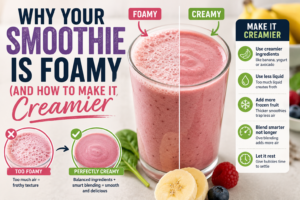
If your smoothie becomes too foamy, try these adjustments first:
- Blend At Lower Speeds Initially
- Reduce Watery Ingredients
- Add Creamier Ingredients Like Banana Or Yogurt
- Avoid Overblending
- Use Enough Frozen Ingredients
- Let The Smoothie Rest Briefly Before Drinking
Small changes in blending technique can dramatically improve smoothie texture consistency.
Table of Contents
Why Smoothies Become Foamy
Smoothie foam forms when excess air gets trapped inside the liquid during blending. As the blades spin, they pull air into the mixture along with ingredients. Some recipes naturally trap more air than others, depending on ingredient type, liquid balance, and blending speed.
Protein shakes, leafy green smoothies, and low-fat mixtures are especially likely to become foamy because they contain ingredients that hold tiny air bubbles more easily.
Overblending Introduces Too Much Air
One of the biggest causes of foamy smoothies is blending longer than necessary. Many people assume that longer blending automatically creates a smoother texture. In reality, excessive blending often whips additional air into the mixture.
This is especially common when:
- Using High Speeds Immediately
- Blending Thin Liquids
- Making Protein Shakes
- Using Large Amounts Of Greens
Once enough circulation develops, continuing to blend aggressively may increase foam instead of improving smoothness.
Protein Powder Creates Foam Easily
Protein powder is one of the most common smoothie foam triggers. Whey protein, collagen powders, and some plant-based proteins trap air very easily during blending. Thin liquids combined with protein powder often create a frothy texture near the top of the smoothie.
Adding creamier ingredients helps stabilize the mixture and reduce excess bubbles.
Watery Ingredients Increase Frothiness
Recipes with too much liquid often become thin and airy. Water, coconut water, almond milk, and juice can increase foam if the recipe lacks enough thickening ingredients to stabilize circulation.
Balancing liquids with bananas, yogurt, avocado, oats, or frozen fruit usually improves texture significantly.
Greens And Leafy Vegetables Trap Air
Spinach, kale, and leafy greens naturally introduce more air into smoothies. Fibrous greens create tiny pockets where air becomes trapped during blending. This is one reason green smoothies often look frothier compared to fruit-heavy smoothies.
Blending greens briefly before adding frozen ingredients sometimes helps reduce excess foam.
Why Frozen Fruit Helps Create Creamier Smoothies
Frozen fruit thickens smoothies naturally and reduces the amount of free air circulating inside the jar. Frozen bananas, mango, berries, and avocado help create a denser texture that feels smoother and creamier.
Smoothies with too little frozen fruit often become thin and airy instead of thick and rich.
If your smoothies regularly develop texture problems, these smoothie troubleshooting guides for circulation issues, air pockets, and blending consistency can help.
How To Make Smoothies Creamier
Use Frozen Bananas
Frozen bananas are one of the best ingredients for a creamy smoothie texture. They thicken the mixture naturally while helping stabilize air circulation during blending.
Add Yogurt Or Avocado
Greek yogurt and avocado both create a richer texture while reducing the frothy consistency. These ingredients help smooth out tiny air bubbles and create denser blends.
Blend In Stages
Starting slowly and increasing speed gradually often improves circulation without introducing excessive air too quickly. This helps ingredients combine more evenly before high-speed blending begins.
Avoid Too Much Liquid
Adding excessive liquid is one of the fastest ways to create thin, foamy smoothies. Thicker smoothies generally contain less trapped air and feel much smoother.
Why Blender Design Affects Smoothie Texture
Some blenders naturally create smoother circulation than others. Blade design, motor power, jar shape, and blending speed all influence how much air enters the mixture during blending.
Stronger circulation usually creates smoother ingredient movement with fewer trapped bubbles.
If you are comparing machines for smoother texture, frozen fruit blending, and better smoothie consistency, explore these blender reviews focused on smoothie texture, circulation, and frozen blending performance.
Best Blender Types For Creamier Smoothies
Some blenders are better suited for smooth texture and controlled circulation than others. The right machine can reduce excess foam while improving ingredient consistency during frozen blending.
Blenders Designed For Smoother Everyday Texture
Balanced blending systems often create creamier smoothies because they maintain steady circulation without aggressively whipping excess air into the mixture.
If you want a quiet blender for a smoother and creamier smoothie texture, the KitchenAid K400 is designed for balanced daily blending performance.
Compact Premium Blenders For Frozen Smoothie Consistency
Premium compact blenders often maintain strong vortex circulation while keeping ingredient movement smooth and controlled.
If you need a compact premium blender for smoother frozen smoothie consistency, the Vitamix Propel 510 is one of the strongest options for everyday frozen blending.
Personal Blenders For Protein Shakes And Smooth Blends
Personal smoothie blenders are commonly used for protein shakes, meal replacements, and smaller smoothie recipes.
If you want a personal smoothie blender for protein shakes and creamy blends, the NutriBullet RX remains a strong option for thicker single-serve smoothies.
Common Smoothie Texture Mistakes
Many smoothie texture problems come from ingredient imbalance rather than blender power alone. Using too much liquid, blending too long, or adding insufficient frozen ingredients often creates thin and frothy results.
Another common mistake is using only watery fruits without thicker stabilizing ingredients. Proper ingredient balance usually improves texture more than simply increasing blending speed.
Frequently Searched Questions
Why Is My Smoothie Foamy On Top?
Foam usually forms when excess air becomes trapped during blending.
Why Do Protein Shakes Become Frothy?
Protein powder traps air easily, especially when combined with thin liquids.
How Do You Make Smoothies Creamier?
Frozen bananas, yogurt, avocado, and proper liquid balance all help create a smoother texture.
Does Blending Too Long Cause Foam?
Yes. Overblending often whips additional air into the smoothie.
Why Are Green Smoothies More Foamy?
Leafy greens naturally trap more air during blending because of their fibrous structure.
Can Blender Speed Affect Smoothie Texture?
Yes. Starting too aggressively may introduce more air into the mixture.
Final Thoughts
Foamy smoothies are usually caused by excess air, thin ingredient balance, or overly aggressive blending. Small adjustments like reducing liquid, blending gradually, using creamier ingredients, and improving frozen fruit balance can dramatically improve smoothie texture.
Understanding how circulation and ingredient behavior affect blending helps create smoother, richer, and more consistent smoothies with less foam and better overall texture.