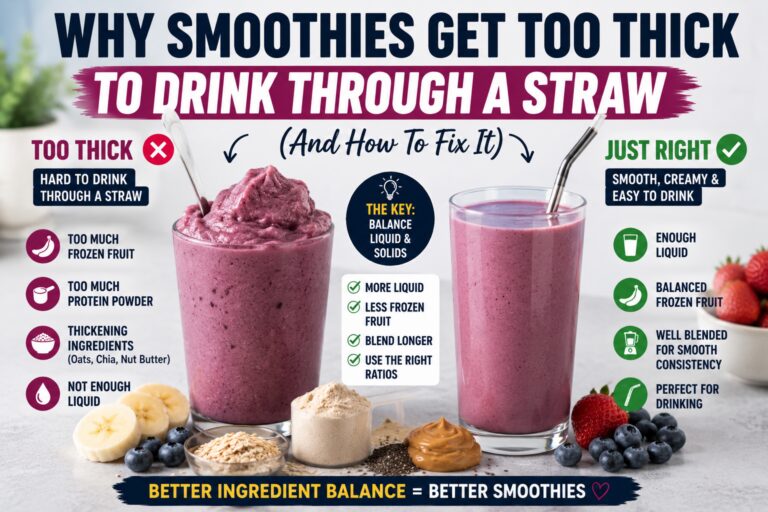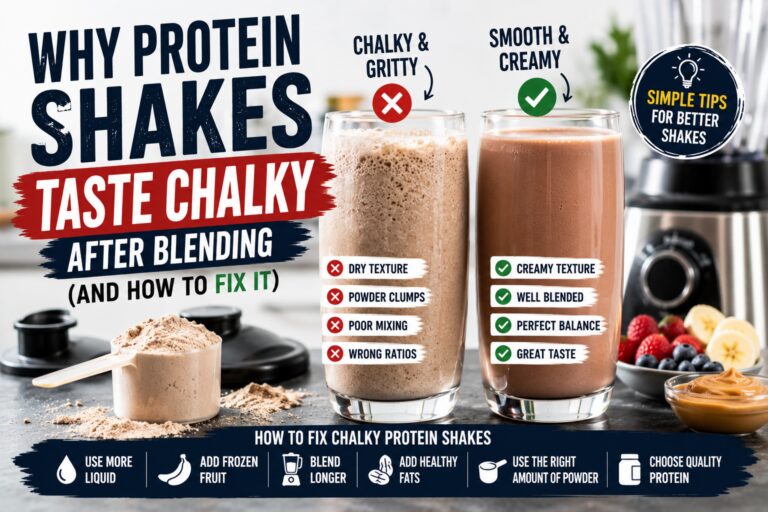
Smoothies should be smooth, creamy, and easy to drink. If your smoothie comes out chunky, gritty, or full of frozen bits, you are not alone. This is one of the most common blender problems people run into at home.
Many people assume the blender is weak or broken. Sometimes that is true, but most chunky smoothies happen because of loading order, ingredient balance, or blending technique.
The good news is that this problem is usually easy to fix. Small changes can create much smoother results on your next blend.
If you want more help solving blender problems at home, visit our how to fix common blender problems and improve blending results guide hub.
Why This Happens
A blender works by pulling ingredients down into the blades while creating a vortex. When that flow is strong, ingredients break down evenly.
When that flow is weak, chunks stay behind.
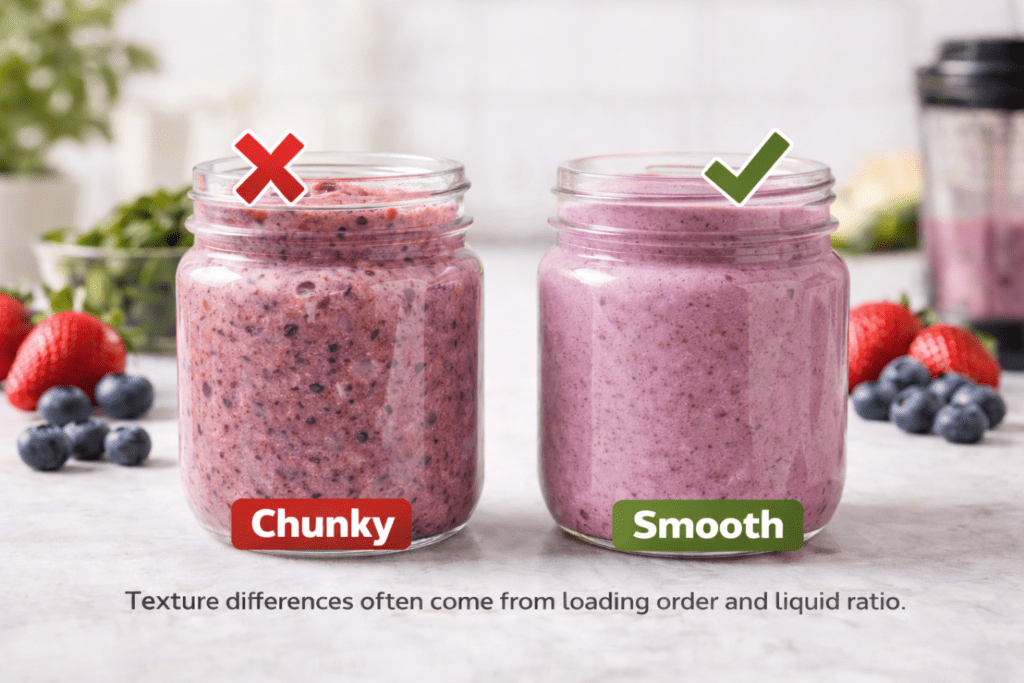
This usually happens for a few simple reasons:
- Too little liquid
- Frozen fruit was added in the wrong place
- Ingredients are packed too tightly
- Jar overfilled
- Blending stopped too early
- Weak motor power
- Ingredients sticking to the sides
Many users think they need a new machine when the real issue is technique.
Even high-end blenders can leave chunks if the jar is overloaded or the ingredients are layered poorly.
The #1 Mistake Most People Make
The most common mistake is adding frozen fruit first.
When frozen fruit sits directly on the blade area, it can lock together into one hard mass. The motor spins underneath, but the ingredients do not move properly.
This creates a tunnel in the center while large chunks stay on the outside.
That is why your smoothie may look blended in one spot but still contain solid pieces.
Instead, frozen ingredients should usually go in last. That lets the liquid and softer foods start circulation first.
This one change can improve texture immediately.
Exact Fix Guide (Step-by-Step)
Add Liquid First
Always place liquid into the jar before solids.
Good choices include:
- Water
- Milk
- Almond milk
- Oat milk
- Coconut water
- Juice
For a normal two-serving smoothie, start with 1 to 1.5 cups.
Too little liquid is one of the top causes of chunky smoothies. Without enough fluid, the blades cannot pull ingredients downward.
If the mixture looks stuck, add a small splash more.
Add Soft Ingredients Next
After liquid, add softer foods like:
- Banana
- Yogurt
- Avocado
- Peanut butter
- Honey
- Fresh berries
These ingredients help start movement quickly.
They also create a creamier base before frozen foods are added.
Many users skip this step and place everything in randomly. That often hurts blending performance.
Add Frozen Ingredients Last
Now add:
- Frozen berries
- Frozen mango
- Frozen pineapple
- Ice cubes
- Frozen banana slices
Keeping these items near the top allows gravity to feed them down slowly during blending.
That helps prevent hard clumps from forming near the blade assembly.
If frozen fruit is part of your daily routine, many users upgrade to the best blender for ultra-smooth smoothies with frozen fruit and ice.
Start Low, Then Increase Speed
Many people instantly press high speed.
That can force ingredients upward before proper circulation starts.
Try this instead:
- Blend on low for 10 seconds
- Increase to medium
- Finish on high for 20 to 40 seconds
This gradual method creates better movement inside the jar.
It also reduces trapped air pockets.
Use Pulse If Needed
If chunks remain, use pulse mode a few times.
Pulse helps break stubborn frozen pockets that regular blending may miss.
Try:
- 3 quick pulses
- Resume blending
- Check texture
This works especially well with berries and ice.
Stop and Stir Safely
Sometimes ingredients stick to the sides of the jar.
When that happens:
- Turn the blender off fully
- Remove lid
- Stir with a spoon or tamper
- Restart blending
Never place utensils near moving blades.
Many thick smoothies need one quick stir midway through the blend.
Best Ingredient Order for Smooth Results
For most smoothies, use this order:
- Liquid
- Yogurt or soft fruit
- Greens
- Powders or seeds
- Frozen fruit
- Ice
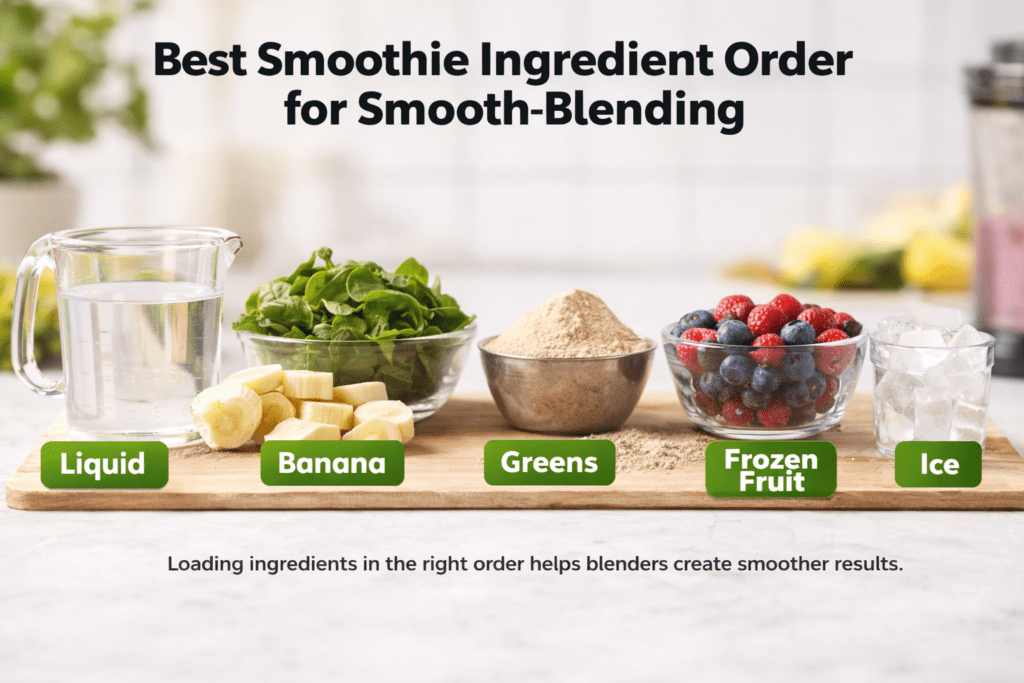
This method helps nearly every blender perform better.
It is one of the easiest upgrades you can make without spending money.
Families making larger batches often prefer the best ninja blender for thick smoothies, frozen drinks, and family use.
Common Ingredient Problems That Cause Chunks
Too Many Seeds
Chia, flax, and berry seeds can create texture issues.
Use smaller amounts first, then adjust later.
Thick Nut Butters
Large spoonfuls of peanut butter or almond butter may clump.
Place them near the liquid section.
Leafy Greens
Spinach blends easily. Kale often needs longer blending.
If using kale, remove thick stems first.
Protein Powder
Some powders clump fast.
Add powder after liquid but before frozen fruit.
When It’s the Blender (Not You)
Sometimes, technique is not the main issue.
Some blenders simply struggle with thick smoothies and frozen foods.
Signs your blender may be underpowered:
- Motor sounds strained
- Need to stop often
- Ingredients spin but do not blend
- Chunks remain after 60 seconds
- A burning smell appears
- Blender gets hot quickly
This is common with low-cost or smaller units used beyond their intended use.
If you make smoothies daily, upgrading can save time and frustration.
To compare stronger machines, browse our best blender reviews for smoothies, frozen fruit, and daily home use.
Which Blender Types Usually Blend Smoother?
Full-Size Countertop Blenders
Best for families, frozen fruit, and thicker blends.
Personal Blenders
Great for quick drinks, but some struggle with dense ingredients.
Busy users wanting single servings often choose the best personal blender for quick smoothies before work or the gym.
High-Performance Blenders
Best for silky smoothies, nut butters, and daily heavy use.
Users who blend every morning often notice a major difference when moving from entry-level units to stronger full-size models.
Pro Tips for Better Smoothies Every Time
Use Slightly Thawed Fruit
Let frozen fruit sit out for 3 to 5 minutes first.
This reduces stress on the motor.
Cut Fruit Smaller Before Freezing
Large frozen chunks take longer to break down.
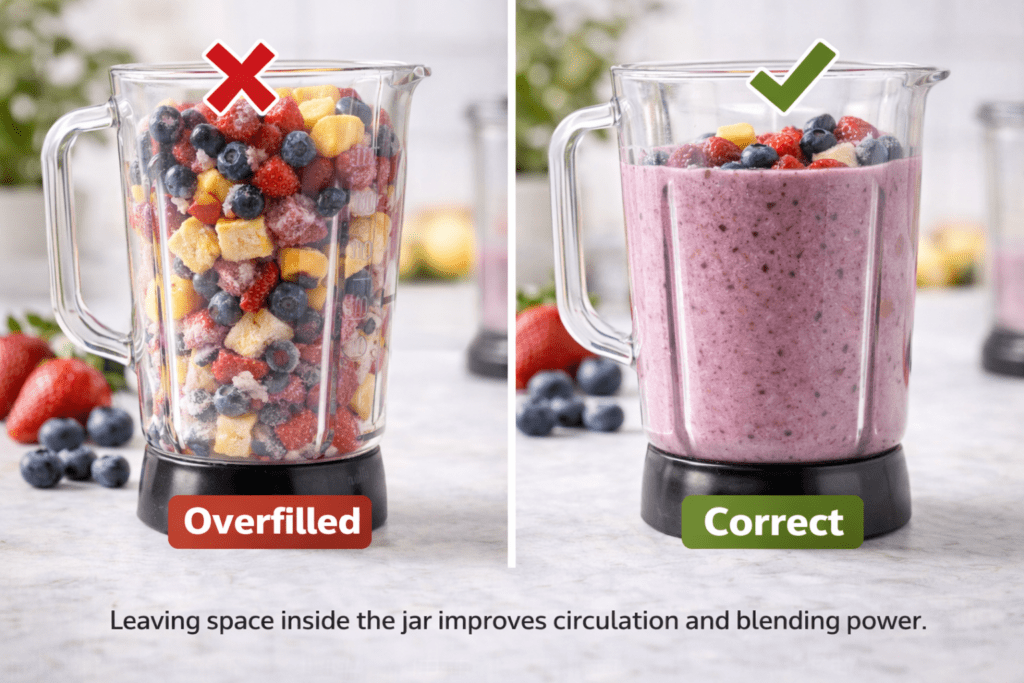
Do Not Overfill the Jar
Leave room for circulation.
Packed jars create dead zones where chunks hide.
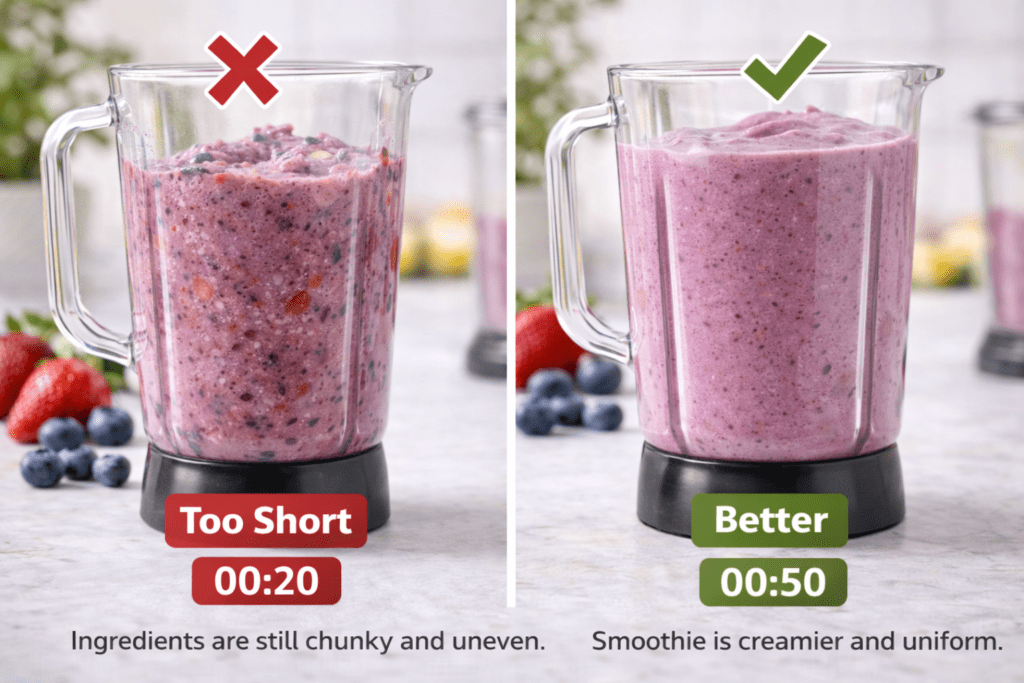
Blend Longer Than You Think
Many smoothies need 45 to 60 seconds for the best texture.
Add Ice Carefully
Too much ice can water down flavor and slow blending.
Use frozen fruit first when possible.
Common Questions
Why is my smoothie chunky after blending for one minute?
Usually, it is because there is too little liquid or the ingredients are packed too tightly.
Do frozen berries make smoothies chunkier?
Yes. They often clump together, especially when added first.
How much liquid should I use?
Start with 1 to 1.5 cups, then adjust based on thickness.
Does blender wattage matter?
Yes. More power usually helps with frozen fruit and thicker mixtures.
Should I crush ice first?
Not usually. Strong blenders handle ice well. Smaller units may need smaller cubes.
Final Thoughts
Chunky smoothies are usually caused by setup mistakes, not bad luck.
Start with these fixes:
- Liquid first
- Frozen ingredients last
- Blend low, then high
- Use enough liquid
- Do not overfill the jar
- Blend long enough
These simple steps solve the problem for many people right away.
If you still get poor results after using proper technique, your blender may be limiting performance.