Most smoothie blending problems begin before the blender even turns on. If ingredients are loaded in the wrong order, the blender may struggle to create proper circulation. This often causes chunky smoothies, trapped air pockets, stalled blending, uneven texture, poor ice crushing, and unnecessary motor strain.
Many people assume blender power alone determines smoothie quality. In reality, ingredient placement inside the jar has a major impact on how smoothly ingredients circulate around the blades. The good news is that correcting the blender loading order is simple and can dramatically improve blending performance.
Quick Answer: What Goes in a Blender First?
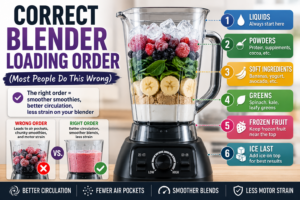
For smoother blending and better circulation, ingredients should usually be added in this order:
- Liquids
- Powders
- Soft Ingredients
- Greens
- Frozen Fruit
- Ice
This layering method helps the blades establish circulation immediately while reducing strain on the motor.
Why Blender Loading Order Matters
Correct ingredient placement helps the blender create a strong vortex that continuously pulls ingredients toward the blades. When liquids are added first, the blender can establish movement before dense frozen ingredients begin dropping downward. This improves circulation, reduces trapped air, and creates a smoother texture during blending.
Improper loading often forces the blender to work harder because frozen ingredients compact together before circulation begins. This increases the chances of overheating, stalling, and uneven blending.
If you are comparing smoothie machines for frozen fruit blending, thick smoothie consistency, and everyday circulation performance, explore these detailed blender reviews for smoothies, ice crushing, and frozen ingredient blending.
Why Frozen Fruit Should Not Go First
Frozen fruit is one of the heaviest ingredients commonly added to smoothies. If frozen strawberries, frozen bananas, or mango chunks sit directly against the blades before circulation starts, the blender may struggle to pull ingredients downward effectively.
This often leads to:
- Chunky Smoothies
- Air Pockets
- Stalled Blending
- Poor Ingredient Flow
- Excess Motor Strain
Many smoothie consistency problems happen because users load frozen ingredients first without enough liquid underneath. Starting with liquids allows the vortex to form before heavy ingredients begin moving toward the blades.
The Best Blender Loading Order for Smoothies
1. Liquids First
Liquids should almost always go into the blender first. Water, milk, almond milk, coconut water, juice, and yogurt help the blades establish movement immediately during startup. This improves circulation and reduces resistance during blending.
Without enough liquid near the blades, frozen ingredients often compact together and stop moving properly.
2. Powders and Supplements
Protein powder, collagen, cocoa powder, and supplements should usually be added after liquids. This helps prevent powders from sticking directly beneath the blade assembly, where they may thicken too quickly and reduce circulation.
3. Soft Ingredients
Soft ingredients create smoother movement between liquids and frozen ingredients. Good examples include bananas, yogurt, avocado, and softer fruits. These ingredients blend easily and help maintain steady circulation inside the jar.
4. Greens
Spinach, kale, and leafy greens blend more evenly when placed above softer ingredients but below frozen fruit. This prevents greens from compacting tightly against frozen ingredients during startup.
5. Frozen Fruit
Frozen fruit should usually sit near the top of the jar. This allows the blender to establish circulation first before dense ingredients begin dropping toward the blades.
Loading frozen fruit correctly can dramatically improve smoothie texture consistency.
6. Ice Last
Ice should normally be added last. Keeping ice near the top reduces blade obstruction during startup and improves circulation underneath.
This often creates smoother blending while reducing motor strain.
Common Blender Loading Mistakes
One of the biggest mistakes people make is overloading the blender with frozen ingredients before adding enough liquid. This blocks circulation almost immediately and increases the likelihood of trapped air pockets forming near the blades.
Another common problem is overfilling the blender jar. Ingredients need room to move freely during blending. When the jar becomes packed too tightly, circulation weakens, and the motor works harder than necessary.
Some users also start the blender at maximum speed immediately. Slower startup speeds often help ingredients circulate more naturally before increasing power.
Why Correct Loading Order Helps Prevent Blender Problems
Proper ingredient layering does more than improve smoothie texture.
It also helps reduce:
- Overheating
- Motor Strain
- Air Pockets
- Uneven Blending
- Ingredient Stalling
When ingredients circulate correctly, the blender maintains smoother blade speed with less resistance.
If your smoothies regularly stop blending or develop trapped air pockets, these practical smoothie blending fixes for circulation problems, overheating, and frozen ingredient stalling may help.
Best Blender Types for Smooth Ingredient Circulation
Some blenders handle layered ingredients and frozen smoothies much better than others. The right blender design can improve circulation, reduce stalling, and maintain smoother blending performance during thicker recipes.
Blenders Designed for Thick Smoothie Bowls
Smoothie bowls create extremely dense blending conditions that require stronger circulation and better ingredient control.
If you want a smoothie bowl blender that handles thick frozen ingredients with better circulation control, the Ninja SS151 TWISTi is specifically designed for denser recipes and layered blending.
Premium Blenders for Smooth Frozen Ingredient Flow
High-end blenders usually maintain smoother ingredient movement because they generate stronger vortex circulation under heavy loads.
If you need a premium blender for smoother frozen smoothie circulation and consistent ingredient flow, the Vitamix A2500 is one of the strongest options for everyday blending performance.
Best Smoothie Ingredients for Better Blender Circulation
Some smoothie ingredients naturally improve circulation inside the blender jar. Bananas, yogurt, avocado, and coconut water help ingredients move more smoothly around the blades compared to extremely dense dry mixtures.
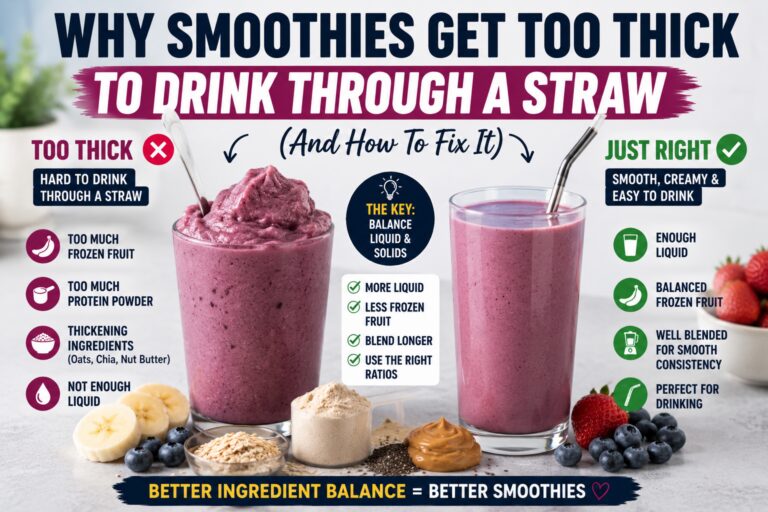
Recipes with too many frozen ingredients and too little liquid are much more likely to create air pockets or stalled blending. Balancing frozen ingredients with softer ingredients often creates a much smoother texture consistency.
How Blender Jar Shape Affects Ingredient Flow
The blender jar shape also influences circulation. Narrow vortex-style jars usually pull ingredients downward more efficiently than wide-bottom containers during thick blending.
This becomes especially noticeable when blending:
- Frozen Smoothies
- Thick Protein Shakes
- Nut Butters
- Smoothie Bowls
Better circulation reduces motor strain and helps ingredients blend more evenly.
Automatic Blending Programs vs Manual Control
Some blenders simplify loading order mistakes through automatic blending programs. Preset smoothie modes often adjust speed gradually to help establish circulation before fully increasing power.
This can help beginners avoid common blending problems caused by poor startup technique.
If you want a beginner smoothie blender with automatic blending programs for frozen drinks, the Ninja BN701 is a strong option for everyday smoothie use.
However, even automatic programs work best when ingredients are loaded correctly.
Frequently Searched Questions
What should go into a blender first?
Liquids should usually go in first to help establish circulation around the blades.
Why does my smoothie stop blending halfway through?
This often happens because frozen ingredients block circulation and create trapped air pockets near the blades.
Should ice go in first or last?
Ice should usually go in last to reduce obstruction during startup.
Why are my smoothies chunky?
Chunky smoothies are commonly caused by poor circulation, incorrect loading order, or too little liquid.
Does blender loading order really matter?
Yes. Proper ingredient layering improves circulation, texture consistency, and overall blending performance.
Why does frozen fruit stall my blender?
Frozen fruit is dense and slow to circulate. If loaded incorrectly, it can compact together and block movement near the blades.
Final Thoughts
Correct blender loading order plays a major role in smoothie texture, circulation, and overall blending performance. Small adjustments like adding liquids first, keeping frozen ingredients near the top, and avoiding overloaded jars can dramatically improve smoothie consistency while reducing motor strain.
Understanding how ingredients move inside the blender helps prevent chunky smoothies, trapped air pockets, overheating, and stalled blending during frozen recipes.